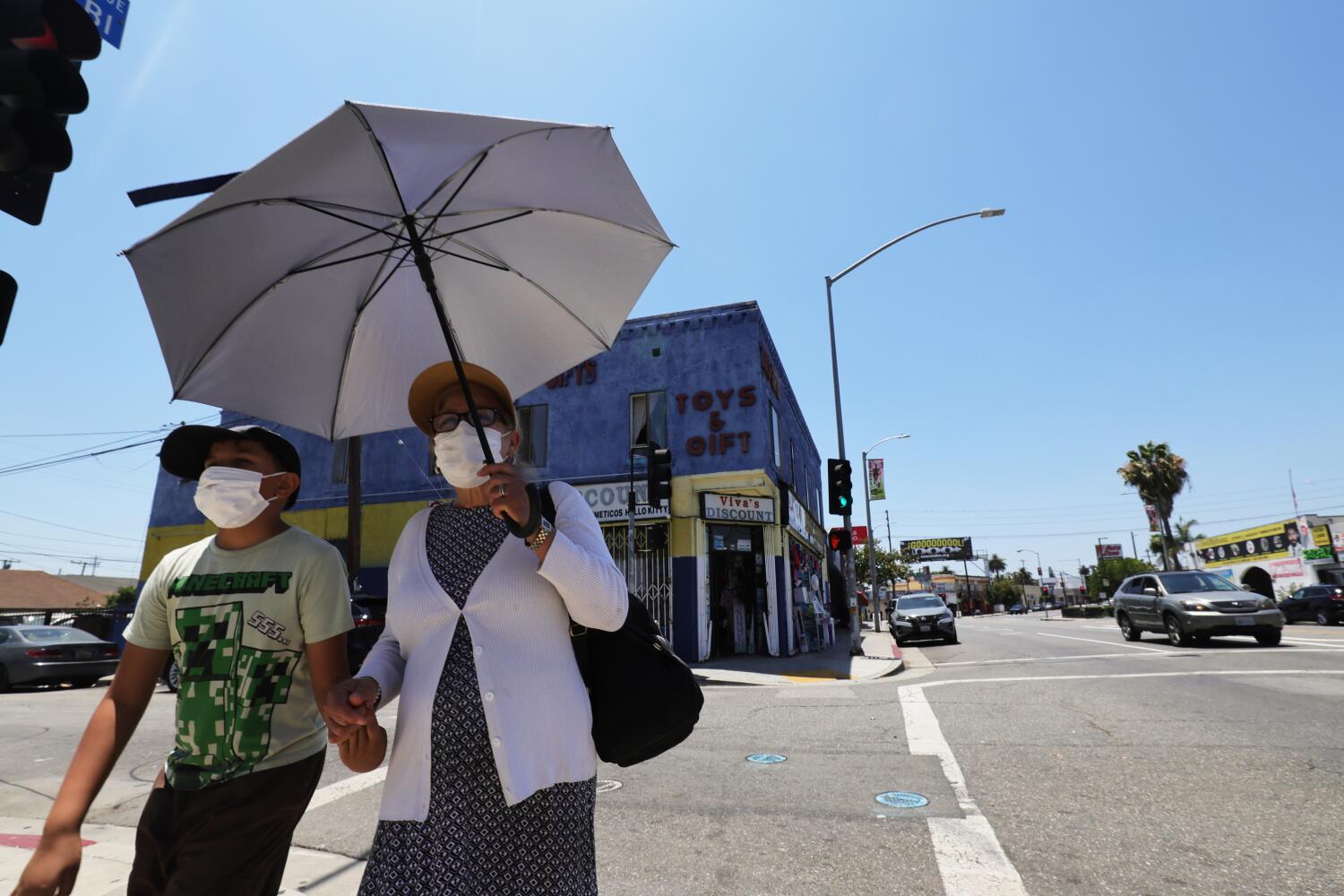
You check your phone, see a heat advisory, and prepare for the worst. Then you step outside in Santa Monica and it's a brisk 73 degrees. Meanwhile, your friend in Woodland Hills is melting in 102-degree heat.
Southern California weather doesn't play by the rules. When the National Weather Service issues an L.A. County heat advisory, it rarely means everyone is going to roast. It's all about microclimates. The high temperatures peak at different times, in different ways, depending entirely on how far you stand from the Pacific Ocean.
If you want to survive a SoCal summer without ruining your weekend plans, you have to look past the generic alerts.
The Reality Behind the L.A. County Heat Advisory
The latest L.A. County heat advisory focuses heavily on the inland areas, the valleys, and the mountain corridors. High pressure systems sitting over the region push the marine layer out to sea, trapping hot air inland.
During these spikes, daytime temperatures swing as much as 30 degrees between the coast and the inland valleys on the exact same afternoon. While downtown Los Angeles might hit a sweaty 85 degrees, places like Santa Clarita and Lancaster regularly push past 95 and 102 degrees.
Why the massive gap? The Santa Monica Mountains act as a giant wall. They block the cooling sea breeze from entering the San Fernando Valley. Air gets stuck in that valley pocket and bakes. Woodland Hills frequently breaks regional records for this exact reason. If you live inland, your peak heat window sits strictly between 11 a.m. and 4 p.m. That's when the sun does the most damage.
Why This Specific Heat Wave Caught Officials Off Guard
Meteorologists handle summer spikes every year, but recent advisories carry a different weight. The National Weather Service took the unusual step of issuing strict advisories for temperatures that normally wouldn't trigger them. An 85-degree day in downtown L.A. usually gets a shrug from locals. Not right now.
With massive outdoor events and crowds drawing visitors to the region, thousands of people unaccustomed to Southern California humidity are walking straight into a trap. Higher-than-normal humidity levels are preventing the human body from cooling itself through sweating.
Dr. Muntu Davis, the Los Angeles County Health Officer, repeatedly points out that heat causes more American deaths annually than floods, storms, and lightning combined. The risk isn't just the ambient number on your dashboard. It's the cumulative heat stress when nights stay warm and buildings don't cool down.
Spotting the Signs Before Things Turn Dangerous
Most people think they'll notice when they're overheating. You won't. Heat exhaustion creeps up quietly. You start feeling a little tired, maybe a bit nauseous, and you assume you just need a minute.
You need to know the clear line between heat exhaustion and heat stroke.
- Heat Exhaustion: You're sweating heavily. Your skin feels cold and clammy. You feel dizzy or have a headache. Your pulse is fast but weak.
- Heat Stroke: The sweating stops. Your skin turns hot, red, and dry. Your body temperature spikes to 103 degrees or higher. You become confused, lose focus, or pass out.
If someone hits the heat stroke phase, stop trying to fix it with a bottle of water. Call 911 immediately. Their internal cooling mechanism has failed completely, and it's a medical emergency.
Practical Steps to Outsmart the Temperature Spike
Forget the generic advice to "stay hydrated." If you wait until you're thirsty, you're already behind. Your body loses moisture rapidly in high-percentage humidity, even if you don't feel drenched.
First, adjust your indoor climate properly. Stop running your stove or oven during peak afternoon hours. It forces your air conditioner to work twice as hard, and if you don't have AC, it turns your apartment into a literal oven. Keep your blinds pulled shut on the east and south sides of your home starting at 9 a.m.
Second, utilize the local infrastructure. If your home air conditioning can't keep up with a 100-degree day in the valley, don't tough it out. Los Angeles County activates free public cooling centers, splash pads, and community pools during these alerts. You can call 211 to find the closest air-conditioned space to your zip code.
Finally, change your clothes and your schedule. Wear loose, light-colored clothing. Dark shirts absorb the heat wave's energy and hold it against your skin. Shift your outdoor workouts, dog walks, and heavy chores to the early morning hours or well after sunset. The asphalt stays hot long after the sun goes down, so check the ground with the back of your hand before letting your pets walk on it.