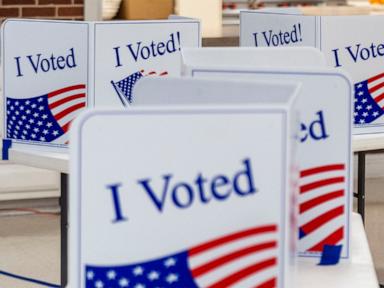
Five Southern Democratic state party chairs are demanding that the Democratic National Committee preserve South Carolina as the absolute first-in-the-nation presidential primary for the 2028 election cycle. Leaders from Alabama, Arkansas, Louisiana, Mississippi, and West Virginia sent a blunt letter to the national committee warning that stripping the state of its premier status would signal that Black voters are taken for granted. The move uncovers a massive, deep-seated regional rift over how the national party selects its presidential nominees and balances competing geographic interests.
This is not a simple administrative dispute over a calendar. It is an existential fight over which voters hold the keys to the nomination.
The Threat to the Southern Stronghold
The Democratic National Committee Rules and Bylaws Committee is meeting to hear pitches from 12 states competing for a spot in the coveted early voting window. While South Carolina enjoyed the top slot during the last election cycle, its position is under intense scrutiny. Competitive, diverse battlegrounds and modern swing states are arguing that a deep-red Southern state cannot adequately test a candidate's viability for a general election.
The coalition of Southern chairs is explicitly framing the calendar as a test of racial equity and party loyalty. In their joint letter, the chairs argued that South Carolina serves as a moral and political compass rather than just a geographic starting point.
The political math behind their anxiety is glaringly obvious. The American South contains the highest concentration of Black voters in the country, forming the reliable backbone of the modern Democratic base. For decades, the primary process began in overwhelmingly white states, forcing candidates to court electorates that looked nothing like the broader party. Elevating South Carolina was meant to fix that imbalance permanently.
Now, that progress feels fragile to regional leaders. Representative Bennie Thompson of Mississippi, who chairs the Congressional Black Caucus Institute, backed the coalition by declaring that diminishing South Carolina would tell Black voters their voices do not matter until a race is already decided. The language coming out of the South is no longer polite party diplomacy. It is a warning to national leadership.
The Swing State Counterweights
The core tension lies in a fundamental disagreement over what an early primary state is supposed to accomplish. Should the first state reward the party's most loyal, diverse base, or should it serve as a laboratory to test a candidate's appeal among the independent and moderate voters who actually decide general elections?
Twelve states filed official applications to participate in the early 2028 window. The geographic breakdown shows the immense pressure on the national committee to pivot toward the Midwest and West.
- East: New Hampshire, Delaware
- Midwest: Michigan, Illinois, Iowa
- South: South Carolina, Georgia, North Carolina, Virginia, Tennessee
- West: Nevada, New Mexico
Heavyweight battlegrounds like Michigan and Georgia are making formidable cases. Michigan features an incredibly diverse mix of Black urban voters, Arab American communities, rural working-class families, and organized labor unions. More importantly, Michigan actually swings in November.
South Carolina hasn't voted for a Democratic presidential nominee in a general election since 1976. Critics of the South Carolina first model argue that candidates spend millions of dollars and weeks of campaign time building organizations in a state that will inevitably deliver its electoral votes to the Republican column. They believe that time and capital are better spent in places like Atlanta, Detroit, or Las Vegas, where the infrastructure built during a February primary can be utilized directly during the November general election.
The Ghost of New Hampshire and Local Law
The national committee also faces a structural nightmare, because state parties do not always control their own primary dates. State legislatures do.
During the previous cycle, the national party tried to strip New Hampshire of its traditional spot and move South Carolina to the front. New Hampshire officials simply pointed to their state law, which mandates that their primary must occur at least seven days before any similar contest. The state held its election early anyway, forcing a messy situation where the sitting president won via a write-in campaign without technically appearing on the ballot.
If the national committee attempts a massive reshuffling for 2028, it faces the exact same resistance. Republican-controlled legislatures in states like Georgia or North Carolina have little incentive to alter state laws just to accommodate the national Democratic calendar. South Carolina succeeded previously because its state party possessed a unique level of control over its primary process, a logistical luxury that other diverse states cannot replicate easily.
The Long Campaign and the Risk of Alienation
Potential presidential contenders are already operating under the assumption that the South remains the gateway to the nomination. Ambitious Democrats have spent months visiting Columbia and Charleston, quietly building relationships with local pastors, state legislators, and civic leaders.
If the national committee strips South Carolina of its first-in-the-nation status later this summer, it risks a devastating suppression of enthusiasm among Southern organizers. The party's most loyal voters will feel abandoned, while a chaotic calendar fight could overshadow the eventual nominee's policy platform.
The five Southern chairs have forced a definitive choice. The national party must decide whether its primary process is a celebration of its historic base or a calculated, cold-eyed simulation of the November battlegrounds. The decision will shape the trajectory of the nomination and determine how the party speaks to its most critical coalition of voters.


