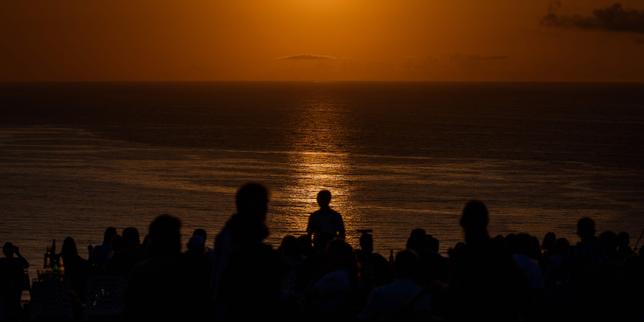
Total solar eclipses change the mood of an entire nation in a matter of minutes. When day turns into night across the Iberian Peninsula, millions of travelers, scientists, and locals stop what they are doing to witness the cosmic alignment. You aren't just looking up at the sky; you are standing in the shadow of the moon while normal life grabs a sudden pause.
Most people think a solar eclipse is just a quick two-minute spectacle you catch through a piece of cardboard. They book a hotel room anywhere, show up five minutes before totality, and wonder why their experience felt underwhelming. That is a massive mistake. If you want to understand why a total solar eclipse holds an entire country in a breathless chokehold, you have to look at the unique geography, the local culture, and the sheer logistics of moving millions of people into narrow bands of totality.
Spain is about to become the epicenter of astronomical tourism, and the excitement isn't just hype. It is a logistical scramble colliding with a rare celestial event.
The Geography of Totality Across Spain
Totality doesn't hit everywhere equally. The path of the upcoming total solar eclipses crossing Spain—including the notable events in August 2026 and August 2027—cuts a very specific line across the map. Cities like Zaragoza, Palma de Mallorca, and parts of the northern coast get front-row seats, while Madrid and Barcelona might only see partial phases depending on the exact trajectory.
You need to be inside the central shadow path. Move even a few kilometers outside that line, and you miss the corona entirely. You miss the drop in temperature. You miss the sudden, eerie silence of local wildlife.
Rural regions are already bracing for a massive influx of visitors. Small towns with populations under a thousand people are fielding hotel booking requests from astrophotographers and space enthusiasts from Tokyo to Toronto. Local mayors are scrambling to figure out how to handle water supplies, traffic routing, and emergency services when cars line every country road for miles.
Why This Eclipse Hits Different
Spain has a deep relationship with the sun. Outdoor culture dictates everything from late-night dinners to afternoon strolls. When you take the sun away for a few minutes in the middle of a hot afternoon, it feels personal.
Astronomical tourism has exploded over the last decade, but Spain offers something rare: reliable summer weather. Cloud cover ruins more eclipses than bad planning. Parts of central and northern Spain offer high statistical probabilities of clear skies during the peak summer months, making the country a magnet for serious observers who refuse to travel across the globe just to stare at a gray cloud.
Scientists are descending on the country too. Research teams from major universities and space agencies are setting up mobile observatories in remote valleys. They measure the solar corona, study shifts in animal behavior, and analyze upper-atmosphere ionization changes that only happen when the sun gets blocked out by the moon.
The Logistics Nightmare Nobody Talks About
Let’s be honest about what happens when millions of people try to drive down a two-lane Spanish country road at the exact same hour. Chaos.
Rental cars in key regions are booking out months in advance. Prices for rural guesthouses are skyrocketing. If you wait until the week of the event to figure out your transport, you will spend totality sitting in a massive traffic jam on a highway outside of Burgos or Teruel, watching the sky through your windshield while cursing your lack of preparation.
Smart travelers are treating this like a major military operation.
- Pick your viewing spot early, preferably somewhere with open horizons facing west-northwest depending on the time of day.
- Rent a vehicle with high clearance if you plan on escaping the main asphalt congestion by pulling off onto rural tracks.
- Bring your own food, water, and certified solar viewing glasses. Local shops in tiny villages will sell out of essentials within hours.
- Stay put for at least four hours after totality ends. The post-eclipse traffic gridlock rivals any major holiday exodus.
Navigating the Hype Versus Reality
Travel blogs love to paint eclipses as magical, effortless moments of pure zen. They aren't. They require patience, sweat, and a tolerance for heavy crowds. You will deal with heat, dust, and packed highways.
Yet, none of that matters once the diamond ring effect flashes in the sky. The ambient light shifts into a strange, metallic silver that you never see anywhere else on earth. Streetlights flicker on automatically. The horizon glows with a 360-degree sunset.
The nation holds its breath because moments like this remind us how small we are against the backdrop of the solar system. Plan your trip with absolute precision, beat the crowd, and keep your eyes locked on the horizon when the shadow finally falls.