Silence.
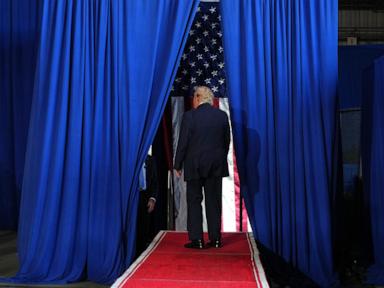
For anyone who has spent a crisp autumn weekend standing on the tarmac of a regional airport in the American Midwest, waiting for the distant hum of a Boeing 757 to pierce the clouds, silence is the one thing you never expect. You expect the roar of jet engines. You expect the low, rhythmic thrum of classic rock echoing off corrugated metal hangars, the smell of burnt coffee and diesel exhaust hanging in the cold air, and the electric, shoulder-to-shoulder press of ten thousand neighbors wearing identical red caps.
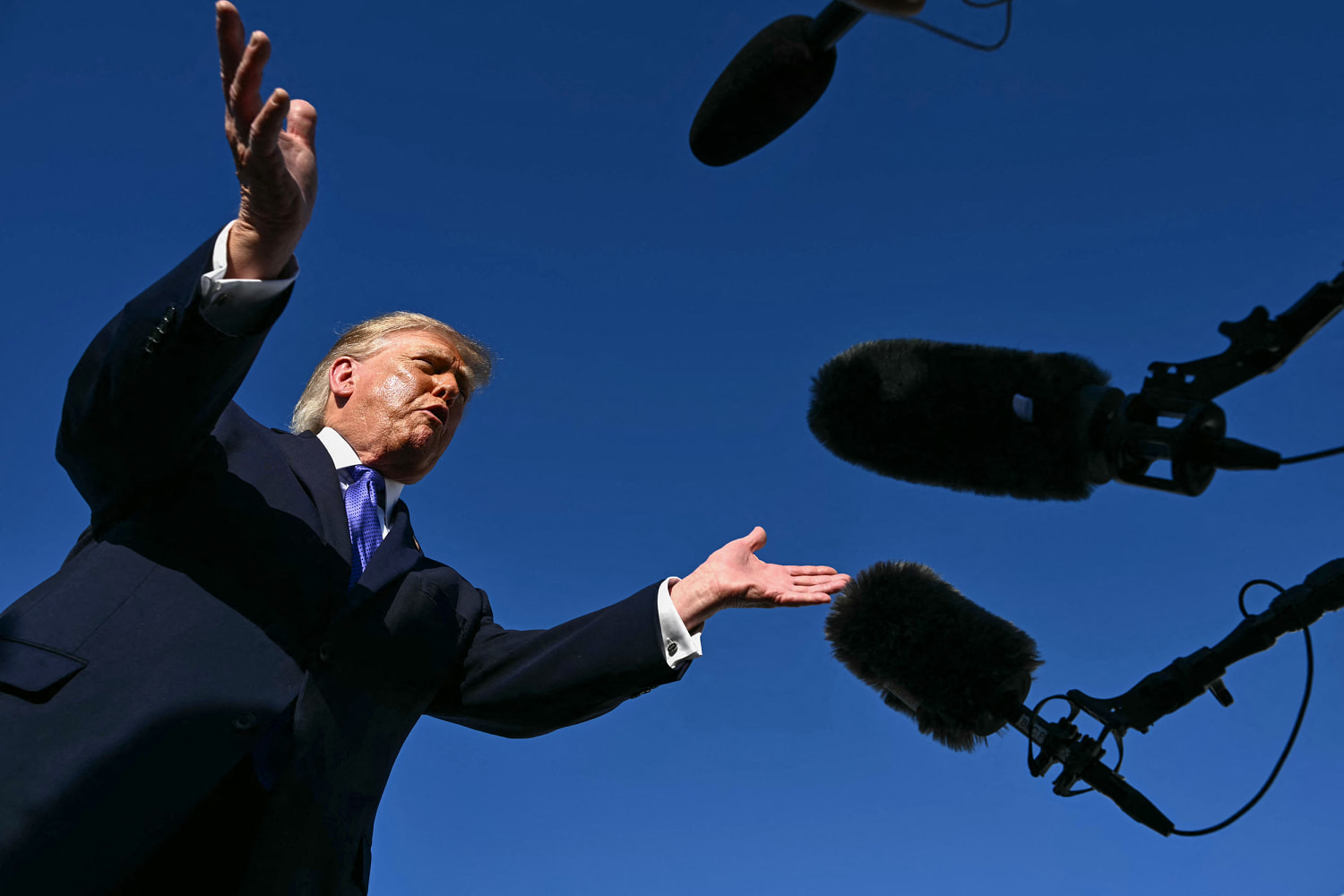
According to campaign schedules and political reporting, Donald Trump made a sudden, striking pivot in his closing-stretch strategy: canceling planned weekend rallies in Iowa and Kansas in favor of holding a rapid-fire series of tele-rallies. On paper, it reads like a routine logistical adjustment—a line item on a press release, a footnote in a busy election cycle. Yet if you step away from the cold arithmetic of campaign itineraries and look at what that decision actually alters on the ground, you witness a profound shift in the anatomy of modern American persuasion.
To understand what happens when a political movement trades the stadium for the telephone, consider a hypothetical voter—let’s call her Martha, a retired schoolteacher living in a quiet county outside Des Moines, Iowa. In the traditional script of presidential politics, Martha’s Saturday revolves around spectacle. She wakes up at five in the morning, packs a thermos, drives forty miles down a two-lane highway, and stands in a gravel parking lot for six hours just to catch a ninety-minute speech from a hundred yards away. She goes for the communal electricity—the visceral proof that she is not alone in her convictions.
Now, picture the alternative that replaces it. Martha stays home. The thermos remains in the cabinet. At seven in the evening, while she is clearing dinner plates from the kitchen table, her landline rings. When she picks up the receiver, there is no telemarketer reading from a damp script. Instead, the voice of the former president fills her kitchen, speaking directly to her county, followed by a live town-hall-style question-and-answer session with thousands of other Iowans listening on the exact same line.
The Architecture of the Invisible Crowd
Political strategists have long treated the physical rally as the ultimate display of strength—a visual metric designed for television cameras and social media feeds. A packed arena projects inevitability. Yet campaigns operate under the ruthless tyranny of two finite resources: hours on the clock and aviation fuel.
When a candidate flies into a single mid-sized city in Kansas or Iowa, the operation consumes an entire day. Advance teams spend weeks vetting venues, coordinating with local sheriffs, erecting steel barricades, and managing Secret Service perimeters. At the end of that monumental effort, the candidate speaks to perhaps five thousand or fifteen thousand people—most of whom are already the most committed, reliable voters in the state, the kind of partisans who would walk through a blizzard to cast a ballot anyway.
Tele-rallies invert that equation entirely.
Think of the difference between a traditional rally and a tele-rally as the difference between a theatrical stage play and a late-night radio broadcast. The stage play requires scaffolding, lighting rigs, and a massive physical footprint to dazzle the eyes of those who bought tickets. The radio broadcast bypasses the eyes altogether, slipping quietly through the walls of fifty thousand homes simultaneously.
According to campaign operatives who run these large-scale automated calls, a single tele-rally can dial out to hundreds of thousands of targeted households across multiple congressional districts in a matter of seconds. Even if only a fraction of those recipients stay on the line, a thirty-minute call routinely holds an audience of thirty thousand to eighty thousand listeners—dwarfing the capacity of almost any indoor arena in the heartland. And crucially, the candidate can execute four or five of these calls in a single evening from one microphone, reaching voters in Iowa, Kansas, and neighboring battlegrounds before midnight without ever boarding a plane.
Why Voters Answer the Ring
There is a persistent, cynical assumption in modern media that Americans no longer answer unknown numbers, that our phones have become fortresses guarded by spam filters and voicemail walls. For younger, urban demographics, that assumption largely holds true.
In rural and small-town America, however, the behavioral pattern looks remarkably different. Among older voters—the exact demographic that turns out in the highest percentages during every election cycle—a ringing phone still carries the weight of a knock on the front door. When an automated system dials a voter file curated specifically for high-propensity or persuadable households, the recipient doesn't hear a cold sales pitch; they hear a familiar voice inviting them into an exclusive, live conversation.
I remember sitting in a cramped campaign field office in Ohio several cycles ago, watching a regional director run a telephone town hall for the first time. I was deeply skeptical. Having spent years covering raucous, sweat-drenched gymnasium rallies, I assumed a phone call would feel sterile, flat, and lifeless—like listening to an audiobook on hold.
Within ten minutes, the data dashboard on the director's laptop proved me wrong. Thousands of callers stayed on the line not for two minutes, not for five, but for the entire forty-five-minute duration. When the operator opened the line for live polls—asking listeners to press "1" if inflation was their top concern or "2" if border security mattered most—tens of thousands of digits lit up the screen in real time. People weren't treating it like background noise. They were sitting at their kitchen tables with a notepad and a pen, waiting for their chance to press star-three to ask a question.
The Intimacy of the Spoken Voice
Why does an audio-only format hold attention when so much of modern politics is built on high-definition video and viral clips? Part of the answer lies in human psychology and the mechanics of auditory intimacy.
When you watch a politician on a television screen or from the nosebleed seats of an arena, you are an observer watching a performance. There is a physical and psychological proscenium arch separating the speaker from the audience. You see the teleprompters, the camera cranes, the staged signage behind the podium. Your brain naturally processes the event as theater.
When a voice arrives through a telephone receiver pressed against your ear, the brain processes the sensory input entirely differently. The distance collapses. There is no crowd roaring in your ears, no visual distraction of protester scuffles or waving signs. It mimics the cadence of a one-on-one conversation. For a voter in rural Kansas who feels perpetually overlooked by coastal media and distant Washington institutions, hearing a presidential contender address their specific state's agricultural economy or local congressional race directly over their home phone creates a powerful sense of personal recognition.
Furthermore, tele-rallies allow a level of micro-targeting that physical events can never match. At a rally in Des Moines, a candidate must speak broadly enough to satisfy television networks and national reporters traveling in the press pen. On a tele-rally dialed exclusively into a specific congressional district in Kansas, the message can be stripped of national broadsides and tailored down to local ballot measures, specific down-ballot candidates, and regional economic anxieties. The candidate isn't performing for the national press corps; in fact, reporters often aren't even invited onto the line.
What Gets Lost When the Tarmac Empties
Yet every strategic trade-off carries a hidden cost, and abandoning physical rallies in states like Iowa and Kansas is not without genuine risk.
Campaigns do not hold massive rallies merely to persuade the undecided; they hold them to manufacture momentum and harvest voter data. Every person who registers for a ticket to a Trump rally hands over their cell phone number, email address, and home zip code—gold dust for a campaign’s digital turnout operation. More importantly, physical rallies turn passive supporters into active evangelists. A voter who spends six hours in line with their neighbors goes home energized, puts a yard sign in the grass, and reminds five coworkers to vote on Tuesday morning.
A phone call, no matter how engaging, is a solitary experience. You listen alone in your living room, hang up the receiver, and turn off the kitchen light. There is no shared tailgate in the parking lot, no collective roar that sends chills down your spine, no viral video clip of tens of thousands of cheering supporters dominating the evening news broadcast.
There is also the unavoidable question of optics and stamina. In the relentless theater of presidential campaigns, canceling scheduled travel inevitably invites scrutiny from opponents and commentators alike. Critics immediately seize on canceled appearances as evidence of fatigue, shifting polling dynamics, or a defensive posture in states that a Republican contender would normally expect to win comfortably. When a candidate whose entire political brand was forged in the fire of massive, unbroken arena crowds suddenly swaps jet fuel for conference lines, observers naturally wonder whether the move reflects cold tactical efficiency or quiet vulnerability.
The Quiet Evolution of the Closing Argument
History suggests that the most decisive shifts in campaign mechanics rarely look dramatic while they are happening. In 1933, Franklin D. Roosevelt sat in front of a cluster of microphones in the White House diplomatic reception room and began his "fireside chats," bypassing hostile newspaper editors to speak directly into American living rooms via radio. Critics at the time doubted that calm, conversational radio talks could compete with the grand, theatrical whistle-stop train tours that had defined presidential politics for generations. Yet those broadcasts reshaped the relationship between the presidency and the public forever.
Nearly a century later, modern campaigns are discovering that in a fragmented media ecosystem—where millions of voters have tuned out cable news and grown numb to digital banner ads—the oldest personal device in the house remains one of the few unguarded gateways left.
By trading the tarmac of Iowa and Kansas for a bank of telephone lines, the campaign is making a calculated wager on mathematics over spectacle. Instead of spending twelve hours moving one man across two states to greet ten thousand die-hard loyalists, the operation can reach hundreds of thousands of targeted voters across multiple states before dinner gets cold.
The airport hangars remain locked. The metal barricades stay stacked in municipal warehouses. Out on the highway, no motorcade lights flash against the autumn dusk. Yet across thousands of quiet living rooms from Cedar Rapids to Wichita, the landline rings once, twice, and clicks open—carrying the unmistakable sound of a campaign that has decided the final battle won't be won in the stadium, but in the quiet space between a voice and an ear.