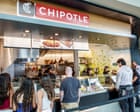
Wall Street loves a flashy narrative. The latest fantasy making the rounds claims Starbucks is eyeing a massive buyout of Chipotle. Analysts salivate over the shared playbook of digital dominance, high-volume throughput, and mobile app addiction. It sounds like a consultant's wet dream on paper. It is an operational disaster waiting to happen in reality.
I have watched conglomerates burn billions chasing cross-brand synergy that looked bulletproof in a PowerPoint deck. Merging a beverage titan with a fast-casual Mexican pioneer does not create an empire. It creates a multi-billion-dollar friction machine that destroys the core economics of both brands.
The lazy consensus says this makes sense because both companies own their digital real estate and handle massive queues. That argument ignores the physics of how food moves through a kitchen and what customers actually pay for.
The Operational Reality Nobody Wants to Admit
Let us look at the mechanics. Starbucks sells speed, consistency, and chemical precision. A barista pushes buttons on a calibrated espresso machine, steams milk to an exact temperature, and hands over a paper cup in under two minutes. The supply chain is optimized for ambient and refrigerated ingredients that require zero on-site cooking.
Chipotle is an entirely different beast. It is a light assembly line operating under high thermal and labor stress. Rice must be cooked and seasoned, chicken and steak grilled to precise food-safety standards, peppers chopped, and guacs mashed by hand daily. The prep kitchen is a high-turnover war zone.
Ask yourself what happens when you try to force a coffee-house culture to absorb a high-heat, high-prep culinary engine. You get managerial whiplash. Store managers at Starbucks are trained to manage labor ratios around beverage throughput and customer dwell time. Chipotle general managers are essentially running small-scale commercial kitchens with raw proteins and tight shelf lives.
Merging these two operational models does not double your efficiency. It dilutes the management focus until both sides break.
The Real Estate Fallacy
Another favorite talking point of the merger cheerleaders is real estate harmonization. The pitch is simple: take Starbucks drive-thrus and drop Chipotle digital pickup lanes beside them, or vice versa.
Real estate strategy does not work like a game of Monopoly. Starbucks locations are chosen for pedestrian density, morning commute vectors, and high-frequency, low-dwell-time visits. A cup of coffee is an impulse buy or a morning ritual. A burrito bowl is a high-intent, midday caloric transaction.
The peak hours tell the entire story. Starbucks prints money between 7:00 AM and 10:00 AM. Chipotle experiences a ghost town during those hours and then explodes between 11:30 AM and 1:30 PM.
If you try to combine these footprints, you do not create a 24-hour revenue machine. You create architectural gridlock. Imagine a suburban strip where morning commuters trying to grab a flat white are stuck behind delivery drivers idling for carnitas bowls. The drive-thru throughput collapses. The customer experience degrades for both brands simultaneously.
Brand Equity Cannot Be Subleased
Marketers love to talk about cross-pollination. They imagine loyal Starbucks Rewards members sliding over to get free chips and queso, while burrito lovers upgrade their afternoon slumps with a cold brew.
Consumer psychology does not bend to corporate desires. People buy from Starbucks for a specific psychological comfort: predictability, customization, and a third-place oasis or a quick caffeine fix. People buy from Chipotle for fresh, fast, customizable protein and carbohydrate delivery.
When a brand stretches too far across distinct consumption categories, it loses its sharpness. Starbucks already suffered through years of brand dilution when it tried to be a casual dining bakery and an evening wine bar. It took a return to core operational discipline—focusing purely on speed, beverages, and mobile order integration—to rescue the margins. Swallowing a massive fast-casual restaurant chain would instantly reverse those hard-won lessons.
The Capital Allocation Madness
Let us talk numbers, because the financial mismatch here is staggering. Starbucks has a massive market capitalization, but it also carries significant lease obligations and ongoing capital expenditure needs for store refreshes and digital infrastructure upgrades. Chipotle trades at a notoriously rich valuation multiple precisely because of its organic unit growth potential and pristine unit-level economics.
Acquiring Chipotle would require an astronomical premium. To justify that price tag, management would have to slash costs aggressively. Where do those cuts come from? You cannot cut labor in a Chipotle kitchen without destroying food safety or speed of service. You cannot cut ingredient quality without alienating the exact customer base that made the brand a darling in the first place.
You end up paying top-dollar for an asset whose value is entirely dependent on a delicate culture of fresh preparation, and then you apply corporate overhead that suffocates it.
I have seen this movie before. A mature giant with slowing same-store growth panics, looks at a high-flying darling in a neighboring sector, and writes a check too big to fail. Five years later, they write off the acquisition, spin it off at a massive loss, and the CEO who championed the deal quietly retires with a golden parachute while public shareholders hold the bag.
Stop looking at logos and start looking at unit economics. Starbucks does not need burritos. Chipotle does not need espresso machines. Keep them separate, keep them ruthless in their respective lanes, and let the analysts keep their fantasy fiction where it belongs: in the trash.