Cold Fiberglass in a Dark Harbor
The rubber smells of cheap petroleum and wet slate.
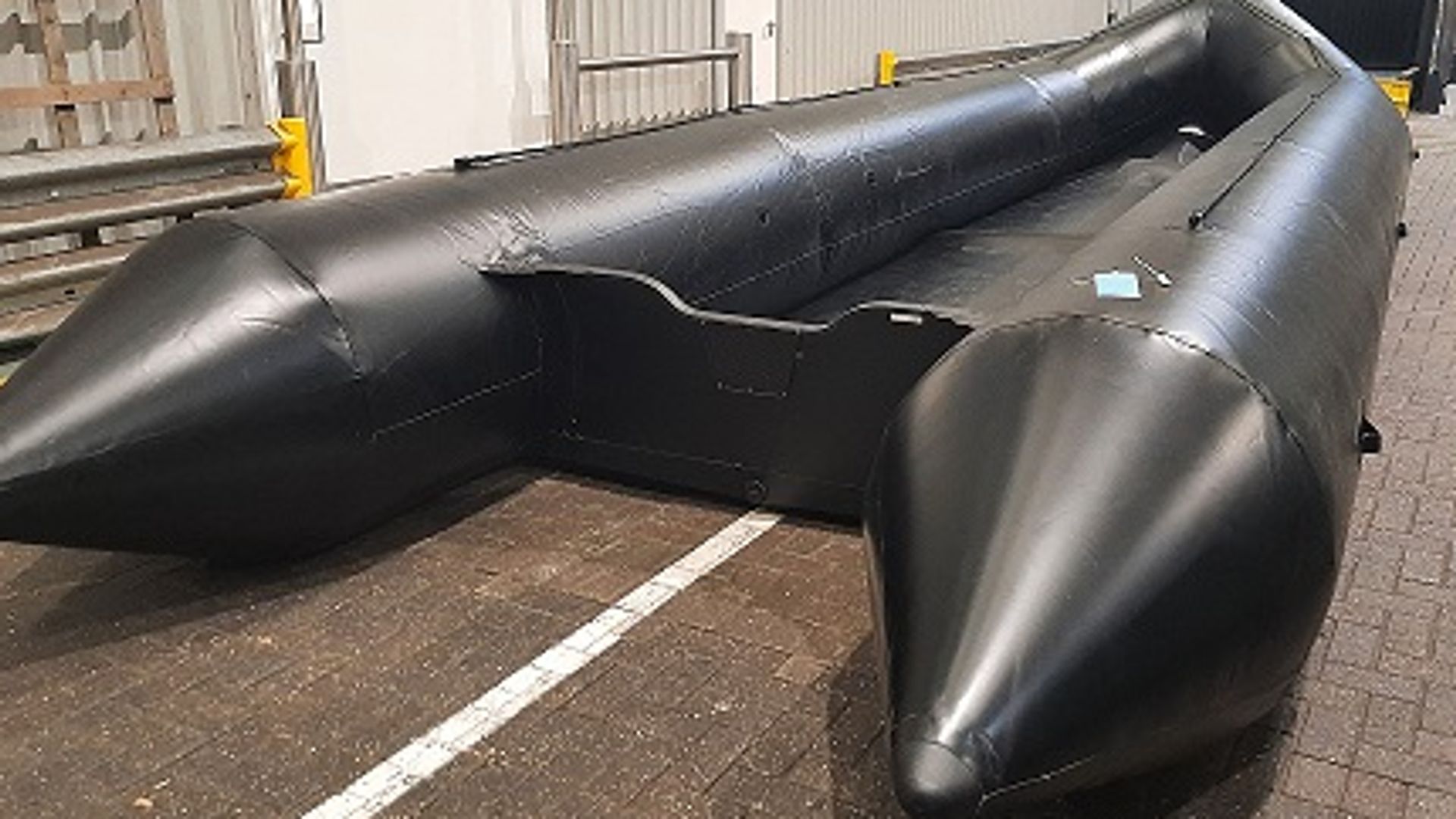
If you run your hand along the underside of a seized rigid inflatable boat—the kind stacked three-high in a secure UK port enclosure—you do not feel engineering. You feel desperation engineered for profit. The hull is paper-thin. The transom, meant to support a heavy outboard engine, is reinforced with little more than plywood and prayer.
Law enforcement officers recently intercepted a shipment of these vessels before they could ever touch seawater. In a single coordinated seizure at a major British port, authorities confiscated a stockpile of illicit small boats and high-powered engines. The capacity of that confiscated fleet was staggering. Had those craft reached the canal routes of Northern France, they possessed the combined volume to carry over two thousand human beings across one of the busiest, treacherous shipping lanes on Earth.
Two thousand.
That is not a statistic. That is a small town. It is every seat in a regional theater filled to capacity. It is two thousand distinct heartbeats, four thousand hands, and an unimaginable reservoir of quiet terror.
The Architecture of Exploitation
To understand how a stack of uninflated PVC and makeshift engines represents a multi-million-pound criminal enterprise, one must trace the supply chain backward from the English Channel.
These are not standard recreational craft purchased at a marina by weekend sailors. They are custom-built death traps manufactured in clandestine workshops across Eastern Europe and the Mediterranean, specifically designed to bypass maritime safety standards. They lack basic flotation compartments. They carry no navigation lights, no distress flares, and no radar reflectors.
Consider a hypothetical traveler named Miriam—an amalgam of the thousands who find themselves standing on the muddy banks of Calais at three in the morning. Miriam does not see the structural flaws in the craft floating before her in the pitch black. She sees an exit. She sees a future for her seven-year-old son, whose hand she grips until her knuckles turn white.
When the smugglers shove sixty people onto a craft designed safely for twelve, the physics are brutally unforgiving. The center of gravity shifts with every wave. Fuel spills into the bilge, mixing with seawater to create a chemical mixture that burns skin on contact. The people on board are not passengers; to the organized crime syndicates running the network, they are floating freight whose passage money has already been collected in cash or untraceable transfers.
The profit margins are staggering. A boat that costs less than fifteen hundred pounds to manufacture from low-grade materials can generate tens of thousands of pounds in illicit revenue for a single crossing attempt. When border authorities seize a warehouse shipment before it reaches the coast, they are not merely confiscating plastic and metal. They are severing the financial oxygen pipeline of international criminal networks.
Intercepting the Silent Highway
The seizure at the port represents a vital shift in strategy. For years, the public focus remained fixed almost entirely on the coastline—on the dramatic, heartbreaking moments when overcrowded dinghies appear out of the Channel fog near Dover or Dungeness.
Intercepting craft at sea is fraught with peril. Once a boat is in the water, overloaded and taking on spray, any sudden movement or intervention risks immediate capsize. The water of the English Channel is cold enough to induce fatal cold-water shock in minutes, even in late summer.
By striking further up the supply chain—at the freight ports, transit hubs, and storage facilities—investigators hit the logistics arm of the smuggling trade.
How do these boats enter the country or move across European borders unnoticed? They travel tucked inside the cargo bays of commercial lorries, hidden behind crates of legitimate retail goods, or declared under fraudulent shipping manifests as agricultural equipment. Detectives and intelligence officers track these shipments using acoustic sensors, thermal imaging, and international intelligence sharing.
When a raid succeeds, the tangible result is a warehouse floor covered in deflated gray tubes and boxed engines. The intangible result is two thousand people who will not risk drowning in the dark tonight.
The Cost of the Risk
The debate surrounding maritime borders often collapses into loud political slogans and policy debates. Yet, away from the headlines, the physical reality remains grounded in maritime law and human endurance.
The English Channel is not a calm lake. It is a dense, high-speed motorway for commercial shipping. Giant container vessels carrying thousands of heavy steel boxes move through these lanes round the clock. A low-profile inflatable boat sitting inches above the waterline is practically invisible to the radar systems of a ninety-thousand-ton cargo ship. The wake from a passing tanker can easily flip a crowded, unstable craft in seconds.
Smugglers know this. They do not care. The engines provided with these seized boats are often underpowered, refurbished units designed to run just long enough to reach international waters, leaving the occupants stranded if the weather turns or the fuel runs out.
When law enforcement teams inspect seized gear, they often find crude, improvised modifications. Steering columns held together with electrical tape. Fuel lines jury-rigged from garden hoses. Fuel tanks balanced precariously next to exposed battery terminals.
The structural failure of these boats is not an accident; it is an integrated risk built into the business model.
Beyond the Seizure
Stopping two thousand potential crossings at a port dock is a significant law enforcement victory, but no single operation eliminates the trade. As long as the financial incentives remain enormous, smuggling networks will adapt, altering their supply routes and sourcing materials through new proxy companies.
Yet, every confiscated engine and every seized hull represents time bought. It represents a temporary breakdown in the criminal machinery that profits from human vulnerability.
Walking past the secured storage yard where these captured vessels are stored, the silence is heavy. There are no voices here, no sound of rushing water or straining engines. Just cold plastic sitting under halogen floodlights.
The boats sit stacked in the shadows, quiet and harmless at last, holding only the ghost of the journeys they were built to make.


