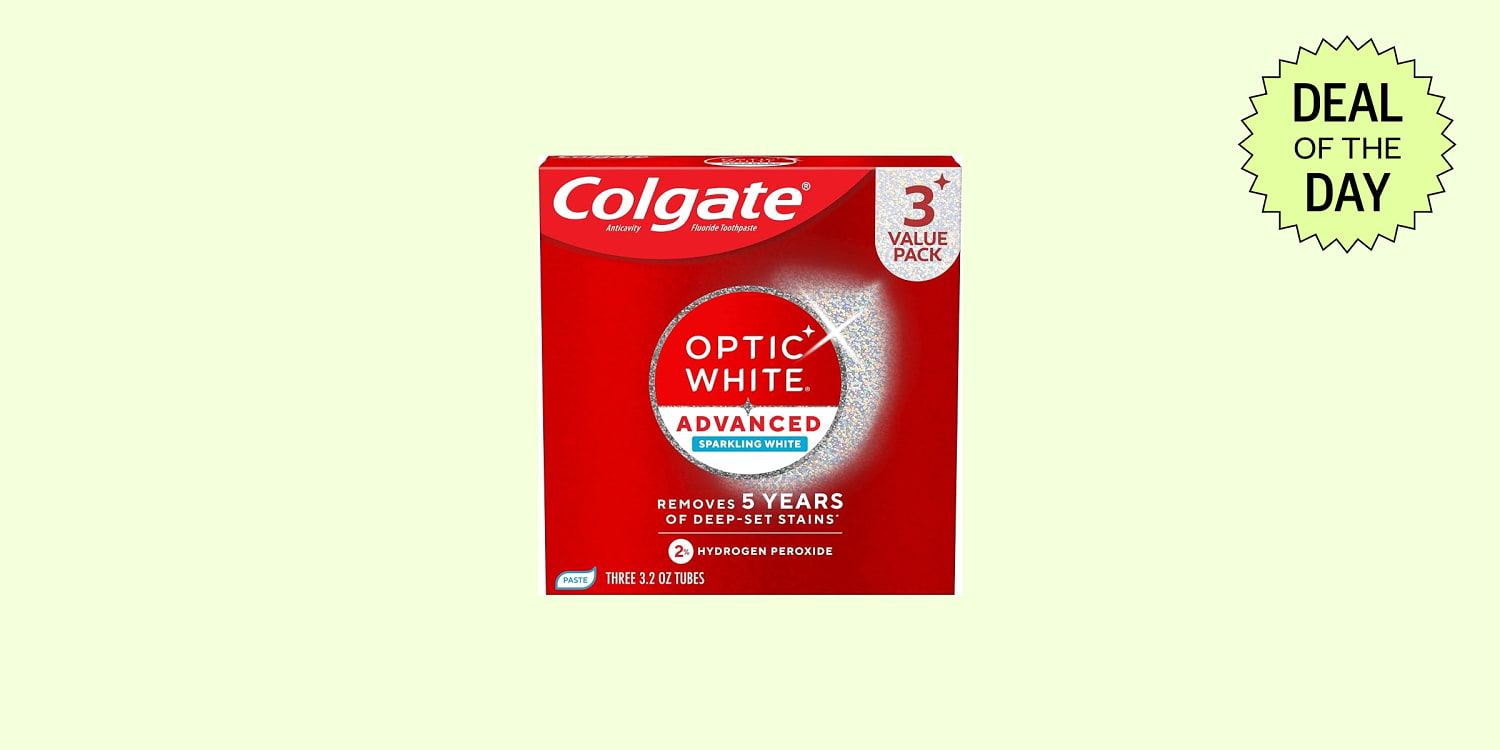
Deep promotional markdowns on consumer packaged goods and the absence of a federal recall are separate signals governed by different institutional rules. A headline pairing a nearly fifty percent price cut on whitening toothpaste with a clean regulatory recall status conflates retail discounting mechanics with product safety clearance. Evaluating whether a steep discount represents routine inventory clearance, promotional price elasticity testing, or a sign of declining unit velocity requires separating shelf pricing from quality assurance and safety reporting.
This breakdown sets out an analytical model for interpreting steep retail discounts on oral care products alongside regulatory recall records. It examines the three structural drivers of promotional discounting, the operational boundary between manufacturing controls and federal recall listings, the cost and margin trade-offs behind large price cuts, and the practical verification steps buyers and category managers use before acting on a markdown.
The Three Drivers of Deep Oral Care Discounting
A steep discount on a staple personal care item such as whitening toothpaste does not automatically indicate product failure or imminent expiration. In fast-moving consumer goods, unit prices shift across channels for predictable commercial reasons.
The first driver is promotional price testing and trial acquisition. Whitening variants typically carry higher unit margins than standard fluoride pastes because consumers associate stain removal with cosmetic upgrades. Temporarily cutting the price sharply lowers the switching cost for shoppers who normally buy competitor brands or store-brand equivalents. Even if repeat purchase rates at full price are modest, high-volume trial can expand household penetration and generate data on cross-shopping behavior.
The second driver is pack-size, SKU, or channel transition. Manufacturers and retailers routinely refresh packaging graphics, adjust tube sizes, introduce formula tweaks, or shift distribution between warehouse clubs, drug chains, and e-commerce storefronts. When a legacy stock-keeping unit is being phased out on a specific digital or physical shelf, aggressive markdowns clear working capital and free up storage space without forcing a write-off.
The third driver is competitive share defense and basket building. Oral care shelves are crowded and habitual. When rival brands run promotions or when an online marketplace pushes loss-leading deals to increase cart size, matching or beating a competitor's effective price protects shelf visibility. In e-commerce environments, dynamic pricing algorithms and limited-time deal placements can also compress prices for short windows to spike conversion rates and organic search rank.
Consider two identical tubes of whitening toothpaste sold on different storefronts on the same day. One sits at a deep discount because a regional distributor is rotating out an older outer carton design ahead of a national rollout; the other sits at a steep discount because a marketplace merchant is running a flash promotion to clear excess safety stock before quarter-end. In both cases, the price drop reflects commercial logistics rather than a defect in the formulation.
Why Absence from a Recall List Is Not a Safety Guarantee
Pairing a discount with the fact that a product is not on a recall list creates an implicit reassurance that can easily be misread. A recall list records specific corrective actions taken after safety concerns, labeling errors, or contamination issues meet regulatory thresholds and trigger public notifications. It is a lagging, event-driven record, not a real-time seal of universal perfection.
In the United States, toothpaste marketed for cleaning and preventing cavities is regulated as an over-the-counter drug, while cosmetic whitening claims sit alongside general consumer product and labeling expectations. Regardless of category classification, a product can be absent from a public recall list for several distinct operational reasons:
- No reportable defect has been identified or confirmed: The batch may comply with all internal quality specifications, microbiological limits, and active-ingredient tolerances.
- An issue is still under internal or agency investigation: Quality complaints, adverse event reports, or testing anomalies can take time to verify, trace by lot number, and scope before a formal recall is initiated.
- The problem is localized or non-systemic: A single damaged carton in transit or an isolated storage issue in one warehouse may be handled as a localized credit or disposal rather than a broad recall.
- Subtle performance or sensitivity limitations are not recallable defects: Temporary tooth sensitivity or mild gum irritation is a known side effect for many peroxide- or abrasive-based whitening products and does not make a compliant product subject to recall.
This creates a classic asymmetric information gap. A shopper sees the absence of a recall notice and treats it as proof of zero risk, while a quality assurance engineer sees a record that only reflects confirmed, actionable recall events to date. Confusing the two turns a baseline compliance check into false certainty.
The Cost Function of Steep Markdowns
From a financial standpoint, cutting the price of a low-cost, high-frequency item by nearly half changes the unit economics immediately. Whitening toothpaste has a low baseline retail price compared to durable goods, which means raw materials, tube packaging, filling, freight, and retail or platform fees absorb a large share of revenue even at standard pricing.
A steep discount compresses gross margin per unit unless offset by volume expansion, lower fulfillment costs, or vendor funding. When a retailer discounts an item heavily on its own initiative, the retailer absorbs part or all of the margin hit to drive traffic or clear inventory. When a brand funds a promotional allowance or co-op discount, the manufacturer trades immediate unit margin for volume velocity, shelf placement, or promotional placement.
There is also a hidden behavioral cost: reference price erosion. Shoppers anchor on the lowest price they repeatedly see. If a whitening toothpaste is discounted sharply too often, customers delay purchases until the next sale, raising promotional dependence and making full-price realization harder to defend over time.
Suppose a whitening SKU normally retails for a modest sum and carries a healthy gross margin on paper. Once a near-fifty-percent markdown is applied, the remaining revenue must still cover inbound logistics, picking and packing, payment processing, and customer acquisition or platform fees. If unit volume does not rise enough to compensate—or if the markdown is simply clearing slow-moving inventory—the transaction functions as a cash-recovery or traffic mechanism rather than a profit engine.
Practical Verification Before Buying or Benchmarking
Whether you are a consumer evaluating a deal or an analyst benchmarking retail pricing strategy, separating deal mechanics from product suitability requires a disciplined sequence of checks.
- Verify the exact variant and active ingredients: Confirm that the discounted item matches the specific whitening formula, fluoride content, and abrasiveness or sensitivity profile you intend to use, rather than assuming all tubes under a brand umbrella behave identically.
- Check seller and fulfillment provenance: On online marketplaces, confirm who holds and ships the inventory. Authorized retail or direct fulfillment reduces counterfeit and improper-storage risk compared with unverified third-party resellers.
- Inspect packaging integrity and batch codes upon arrival: Look for intact seals, legible lot codes, and normal consistency and scent when opened. Any tamper evidence, separation, or unusual odor is a reason to discard or return the item immediately.
- Separate price signal from clinical fit: A low price does not change how an abrasive paste or bleaching agent interacts with existing enamel wear, dental work, or gum sensitivity. If sensitivity occurs, discontinue use and consult a dentist.
- Contextualize the discount across channels: Compare the discounted price against typical everyday shelf prices across multiple retailers to judge whether the markdown is a genuine outlier or a recurring promotional baseline.
Limitations of Price and Recall Analysis
Even a rigorous check of pricing and recall records has clear boundaries. Public recall databases do not capture everyday buyer friction such as shipping delays, third-party listing errors, or regional stockouts. Conversely, a steep discount cannot reveal whether a specific tube was stored in a hot truck or humid depot before reaching the buyer.
Educated hypotheses about why a price dropped—such as SKU transition or promotional testing—remain hypotheses without internal margin, inventory turnover, or trade-spend data from the brand and retailer. Treating price movement as proof of product quality or defect is an analytical error in either direction.
Strategic Play for Pricing Analysts and Category Teams
Audit promotional calendars and marketplace price history against SKU lifecycle stages before interpreting a sharp discount as a demand or quality signal. Category managers and pricing analysts should tag every steep markdown in their tracking models by its probable mechanism—inventory clearance, packaging transition, competitive match, or promotional trial—and pair that tag with fulfillment source verification rather than relying on recall absence as a proxy for commercial health.