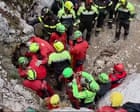
Another headline breaks. Another adrenaline-soaked narrative floods the digital ecosystem. A caver named Luca Olmetto gets stuck ten meters underground in Sardinia's Gorroppeddu cave after a routine rockslide, spends twenty-six hours breathing damp limestone dust, and emerges to a chorus of tearful European news anchors calling it a miracle.
Let us pause the applause and look at the engineering reality behind the romanticism.
We love the narrative of the brave explorer plucked from the jaws of the earth. It plays well on social media. It gives local civil protection units a chance to pose for high-visibility jacket photo-ops. But beneath the sentimental gloss lies a glaring systemic flaw in how society treats extreme recreation: we subsidize structural recklessness with public panic, and then we romanticize the invoice.
Twenty-six hours. Let that number sink in. In the grand timeline of subterranean accidents, twenty-six hours is a long afternoon nap with a heavy blanket. Yet the media treated Olmetto's extraction from a shallow ten-meter drop like the Apollo 13 re-entry. Nearly one hundred specialists—alpine rescue squads, firefighters, civil protection officers, and military air support—mobilized instantly.
Why? Because society has developed an unearned collective guilt complex whenever someone goes looking for trouble in an unmapped crevice and actually finds it.
I have spent years analyzing high-risk deployment logistics and emergency response infrastructure. I have seen municipal budgets bleed dry because thrill-seekers treat unstable geology as their personal playground. When a commercial trucker gets stuck in a snowdrift while hauling supply chains, they get a fine for ignoring winter chains. When an amateur speleologist bypasses warning signs to crawl into an unexplored natural cavity in the Urzulei mountains, they get a televised hero's welcome and an air-conditioned helicopter ride to the nearest trauma ward.
The lazy consensus is that caving is an noble pursuit of human curiosity that deserves absolute, unquestioning public insurance. The mainstream media frames these incidents as sudden tragedies inflicted upon innocent victims by a cruel earth.
The earth was not cruel. The earth was just being earth. Limestone erodes. Tectonic plates shift. Gravity obeys universal constants. Rocks fall. This is not a hazard; it is a baseline physical guarantee. When you crawl into a subterranean cavity that is explicitly documented as unstable or unexplored, you are not a victim of a natural disaster. You are a voluntary participant in a high-stakes lottery where the house edge is managed by sliding tectonic plates.
Consider the resource allocation. Close to a hundred highly trained professionals dropped critical regional duties to dig through rubble by hand because one man wanted a weekend adrenaline spike. If a manufacturing plant ignored structural safety protocols for twenty-six hours and required a federal intervention, the executives would face criminal negligence charges. But wrap the negligence in a nylon jumpsuit, slap a headlamp on it, and suddenly we are supposed to hold hands and rejoice that he remembered how to breathe.
I am not suggesting we leave people to die in holes. Ethics demand that we preserve life whenever rescue is physically viable. But we must fundamentally alter the financial and cultural accountability model surrounding extreme wilderness tourism.
If you require a paramilitary-scale mobilization because you chose to wedge your body into a ten-meter limestone trap, the invoice should not be absorbed by taxpayers who prefer their weekend hobbies inside climate-controlled living rooms.
Stop calling basic risk-mismanagement a miracle. Stop treating structural incompetence like an inspiring human triumph. Nature did not fail Luca Olmetto; it simply reminded him that humans are fragile bags of water operating in a domain designed for rocks. Next time, let us save the applause for the engineers keeping the bridges standing, rather than the hobbyists who need a hundred soldiers to dig them out of a ditch they chose to crawl into.


