Everyone in the Beltway media is celebrating the wrong outcome. When news broke that the James Comey "seashells" case was pushed back until early 2027, the pundit class immediately dusted off their favorite talking points. They called it a stalling tactic. They called it a win for the defense. They treated a simple scheduling order like a dramatic exoneration.
They are completely missing the point.
In federal litigation, time is not a neutral bystander. It is a weapon. And when a high-profile political controversy gets kicked into early 2027, nobody walks away unscathed. The competitor coverage treats this delay as a binary victory for Comey and a defeat for his critics, ignoring the brutal mechanics of how reputational warfare, discovery battles, and judicial calendars actually operate in Washington.
If you think pushing this docket into 2027 ends the bleeding, you have never sat inside a war room during a multi-year legal drag.
The Lazy Consensus Around Docket Delays
Let’s look at what the mainstream outlets are peddling right now. Their narrative is tidy, predictable, and dead wrong. They argue that because the court moved the proceedings to early 2027, the momentum behind the controversy evaporates. They assume the public will forget, the pressure will dissipate, and the whole affair will quietly die on the vine.
That is amateur-hour analysis.
I have watched high-stakes legal teams burn through eight-figure war chests precisely because they fell for the "delay equals victory" myth. In corporate and political defense, stretching a timeline out by twelve to eighteen months does not freeze the damage. It compounds it. Every month a case sits on an active federal docket is another month of:
- Ongoing preservation holds that lock down communications and create fresh administrative nightmares.
- Unresolved reputational drag where every media appearance, book deal, or consulting gig comes with a mandatory asterisk.
- Asymmetric financial attrition where the target pays white-shoe hourly rates while the opposing side spends practically nothing to keep the file open.
The media loves a sprint. They want a verdict by Friday so they can move on to the next shiny object. Because they measure success in 24-hour news cycles, they assume a 2027 court date means the story is over. Inside the courtroom, a delay is just an extended trench war.
What the "Seashells" Controversy Actually Represents
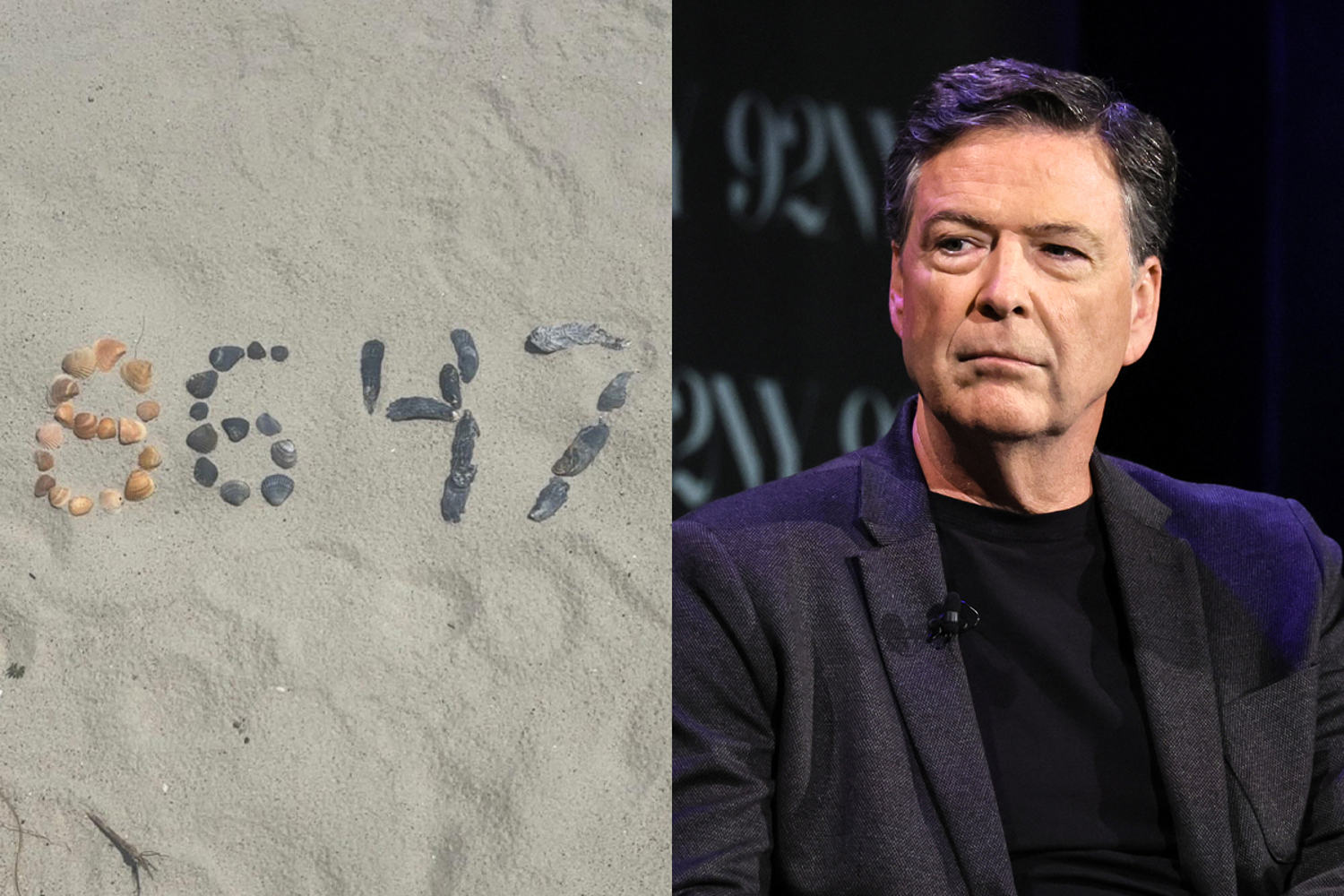
To understand why early 2027 matters, you have to strip away the partisan noise surrounding the underlying incident. For the uninitiated—or those blinded by cable news spin—the controversy stems from Comey’s cryptic social media post featuring seashells arranged to form the numbers "8647," a visual widely interpreted by critics as a coded reference to removing or "eighty-sixing" the 47th president.
The defender class immediately dismissed it as harmless beachcombing. The outrage machine treated it like a treasonous manifesto. Both sides missed the actual legal and institutional friction at play.
When a former Director of the Federal Bureau of Investigation posts ambiguous imagery that triggers an inquiry, the issue is never just about the literal shells on the sand. It is about mens rea—criminal or wrongful intent—versus reckless optics. In law, mens rea refers to the mental state of an individual at the time of an alleged offense, the crucial dividing line between an innocent coincidence and an actionable threat or breach of conduct.
You do not need a law degree from Yale to see why a former top law enforcement official claiming ignorance of basic street slang ("86") strains credibility. At the same time, proving beyond a reasonable doubt that a photograph of seashells constitutes a genuine, actionable threat under federal statutes like 18 U.S.C. § 875(c) is an uphill climb for any prosecutor or plaintiff.
The Constitutional Tightrope
Supreme Court precedent—specifically Counterman v. Colorado and Elonis v. United States—sets an extraordinarily high bar for speech-related cases. Under Counterman, the state must prove at least recklessness, meaning the speaker consciously disregarded a substantial risk that their communications would be viewed as threatening violence.
- The Defense Burden: Comey’s team has to argue that a career prosecutor and intelligence chief had zero awareness of how "8647" would be read by millions of people.
- The Prosecution/Plaintiff Burden: The opposing side has to prove that an arrangement of seashells crosses the line from protected political hyperbole into a "true threat."
Neither side has an easy path. That legal deadlock is the real reason this case is drifting into early 2027. Judges do not rush novel First Amendment edge cases onto a fast track when the political temperature is boiling over. They push them out, forcing both sides to file endless motions in limine and briefs on statutory interpretation.
Why Early 2027 Is a Trap for Both Sides
If you ask a standard political commentator who benefits from a 2027 date, they will immediately point to the calendar. By early 2027, the 2026 midterm elections are in the rearview mirror. The immediate political utility of dragging a former FBI director through the mud appears diminished.
Look closer. The calendar cuts both ways.
The Trap for Comey
For a public figure whose entire post-government brand relies on institutional rectitude and moral superiority, an unresolved legal cloud is toxic. You cannot credibly lecture the public on the rule of law while your own lawyers are filing procedural motions to keep your communications out of discovery.
Worse, a 2027 timeline means the discovery phase—or the lingering threat of it—stretches through all of 2026. If the court permits even limited discovery into the creation, editing, and intent behind the post, every text message, email, and draft caption from that period becomes fair game. Even if the case is eventually tossed on First Amendment grounds in 2027, the intermediate filings will drip into the public record for months.
The Trap for the Pursuers
On the flip side, pushing this into early 2027 exposes the fundamental weakness of trying to criminalize or litigate ambiguous political symbolism. By 2027, the novelty of the "seashells" outrage will be dead. If the case actually reaches a courtroom at that point, the presiding judge will have zero patience for theatrical grievances.
Courts hate being used as stages for political performance art. As Former Judge John Gleeson and countless federal jurists have emphasized over the decades, the federal docket is not a clearinghouse for partisan score-settling. The longer a case sits, the colder the emotional temperature becomes, and the more ruthlessly a judge applies strict black-letter law. Cold law favors the First Amendment every single time.
Dismantling the Questions Everyone Is Asking
When a story like this hits the headlines, search engines light up with the same predictable, flawed questions. Let’s tear down the premises behind what people are actually asking.
"Does the delay to 2027 mean the case will be dismissed?"
The Flawed Premise: People assume delays are precursors to quiet dismissals.
The Brutal Truth: No. In federal practice, if a judge intends to grant a Rule 12(b)(6) motion to dismiss for failure to state a claim, they do not need to kick the entire schedule out to early 2027 to do it. A scheduling order extending into 2027 indicates the court anticipates a protracted briefing schedule, potential jurisdictional disputes, or phased discovery. It means the machinery is grinding forward, not shutting down.
"Why does a photo of seashells take until 2027 to resolve?"
The Flawed Premise: People think the court is spending two years analyzing a single JPEG.
The Brutal Truth: The court is not looking at the photo; it is untangling constitutional immunity, First Amendment protections, and selective enforcement arguments. When a high-profile former official is involved, every single procedural step gets appealed interlocutorily—meaning lawyers appeal specific rulings before the main trial even happens. Those appellate detours at the circuit level routinely eat up 12 to 18 months on their own.
"Who really benefits from pushing this past 2026?"
The Flawed Premise: There has to be a clear winner and a clear loser.
The Brutal Truth: The only guaranteed winners in a multi-year federal slog are the billable-hour partners at D.C. litigation firms. Both political camps get to fundraise off the outrage—one side claiming persecution, the other claiming accountability—while the actual legal resolution stays frozen in amber.
The Strategic Reality Nobody Wants to Admit
Here is the downside to my own skepticism that most contrarians won't tell you: sometimes, a delay does functionally kill a case, not through legal merit, but through institutional exhaustion.
Prosecutors rotate out. Administrations shift priorities. Witnesses move on. By the time early 2027 arrives, the institutional appetite to litigate a cryptic beach photo may be completely gone, replaced by whatever fresh crisis dominates Washington that winter. In that narrow sense, running out the clock is a time-tested defense strategy for a reason.
Yet relying on institutional fatigue is a gamble, not a strategy. When you allow a case to linger into 2027 without securing a clean dismissal upfront, you surrender control of the narrative. You leave the door open for a hostile judge, an unexpected appellate panel, or a leaked deposition transcript to detonate your reputation two years after you thought the fire was out.
How to Actually Read High-Profile Legal Delays
Stop reading political news through the lens of sports commentary. Nobody scored a touchdown when the judge signed the scheduling order pushing this to early 2027. If you want to understand what is actually happening in these cases, ignore the press releases from both sides and watch three specific indicators on the docket:
- Scope of Discovery Orders: Watch whether the judge stays discovery pending motions to dismiss. If discovery is stayed, the defense has genuine breathing room. If discovery proceeds while motions are pending, the target is in serious trouble regardless of the 2027 trial date.
- Interlocutory Appeals: Track how quickly either side runs to the Court of Appeals. Aggressive interlocutory appeals signal that a party knows they are losing on the ground and is desperately trying to buy time.
- Amicus Briefs: Pay attention to whether heavyweight First Amendment organizations step in. When genuine civil liberties groups file briefs, it proves the case has real constitutional teeth; when only partisan operatives weigh in, you are watching theater.
The pundits will keep telling you that early 2027 means the James Comey seashells saga is effectively over. They will tell you to move along, nothing to see here, case closed by calendar.
Let them believe it. While they are busy declaring winners and losers based on a scheduling order, the real battle—the slow, expensive, merciless grind of federal discovery and constitutional attrition—is just getting started.