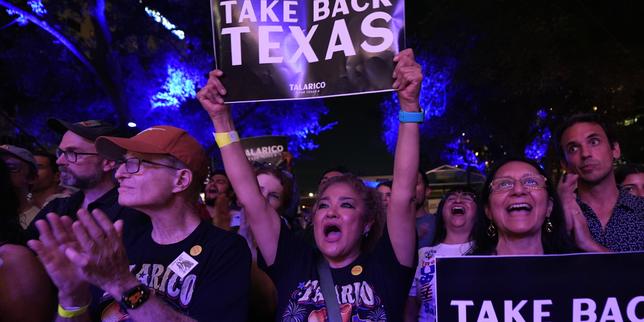
Every two years, the corporate press rolls out the exact same victory lap. Millions of Americans go to the polls in US midterm elections, cable news anchors beam with civic pride, and editorial boards declare democracy saved because turnout broke another historical ceiling.
It is a comfortable fairy tale. It is also completely backwards.
Having spent fifteen years inside political war rooms, managing voter file data, and watching campaigns burn hundreds of millions of dollars on turnout models, I can tell you the dirty secret nobody in Washington wants to admit: high midterm turnout is not a sign of a healthy republic. It is a symptom of chronic, terminal polarization.
When a country treats a routine off-year congressional election like an existential war for survival, something has broken in the political machinery. You are not witnessing a civic renaissance. You are watching two terrified factions mobilize out of pure hatred for the other side, while the actual governance of the United States grinds to a permanent halt.
The Turnout Fallacy That Consultants Sell You
Legacy media outlets treat voter participation like a simple math equation. More ballots cast equals better representation. Fewer ballots cast equals democratic decay.
That logic collapses the second you look at who is showing up and why they are casting those ballots.
Historically, midterm elections functioned as a low-temperature referendum on the sitting president’s competence. In 1994, 2006, and 2010, turnout hovered around 37 to 41 percent of the voting-eligible population. The electorate was smaller, older, and heavily weighted toward voters who paid granular attention to policy mechanics. When the party in power overreached, those voters delivered a sharp correction, forcing the White House to pivot toward the center and cut legislative deals.
Starting in 2018, that pressure valve broke. Midterm turnout surged past 49 percent—the highest mark since 1914—and stayed elevated in subsequent cycles. Consultants popped champagne. Nonprofits claimed credit for registering millions of new voters.
Nobody bothered to ask why those millions suddenly cared about an off-year House race in a gerrymandered district.
Political scientists like Alan Abramowitz and Lilliana Mason have spent years documenting the rise of negative partisanship—a political reality where voters are driven not by loyalty to their own party's platform, but by visceral loathing and fear of the opposing party. Today, millions of Americans do not go to the polls because they love their local congressional candidate's tax plan. They show up because cable news and algorithmic social feeds convinced them that the opposing party will destroy the nation if given a two-seat majority in the Senate.
High turnout fueled by existential dread does not produce thoughtful mandates. It produces trench warfare.
Why The "Swing Voter" Is Mostly A Media Myth
If you read standard election coverage, you would think American midterms are decided by a noble, open-minded bloc of undecided moderates sitting in suburban diners, carefully weighing infrastructure bills against inflation metrics.
Let’s kill that fantasy right now.
I have sat in focus groups from Pennsylvania to Arizona watching self-described "independents" talk about politics. Almost none of them are actually neutral. According to data from the Pew Research Center, roughly 90 percent of self-identified independents consistently lean toward one of the two major parties and vote almost identically to registered partisans.
True ticket-splitting—voting for a Democrat for Senate and a Republican for Governor on the same ballot—has virtually vanished. In 2020 and 2022, the correlation between how a state or district voted for president and how it voted down-ballot reached near-total alignment.
When campaigns tell you they are "persuading the middle," what they are actually doing is spending millions of dollars on micro-targeted digital ads to terrify low-propensity partisans into dropping off a mail ballot. The modern midterm is not a debate. It is a mobilization arms race.
- The old model: Persuade 5 percent of the center to cross party lines by offering pragmatic, moderate policy compromises.
- The modern model: Terrify 5 percent of your own ideological fringe into showing up by promising you will never compromise with the enemy.
Once you understand that shift, the dysfunction of Congress makes total sense. Why would a member of the House of Representatives negotiate a bipartisan border or budget deal when their reelection depends entirely on keeping their base angry enough to vote in an off-year election? Compromise actively depresses turnout among hyper-partisan voters. Outrage boosts it.
The Structural Rigging Nobody Wants To Fix
Mainstream journalists love framing midterm elections as dramatic horse races. They obsess over toss-up districts, fundraising hauls, and October surprises.
They rarely mention that roughly 85 to 90 percent of the 435 seats in the U.S. House of Representatives are mathematically uncompetitive before a single general election ballot is printed.
Through aggressive partisan redistricting—commonly known as gerrymandering—combined with geographic self-sorting, where liberals cluster in dense urban cores and conservatives dominate rural and exurban counties, the vast majority of congressional districts are locked in for one party.
Think about what this means for the millions of Americans heading to the polls in November.
For the overwhelming majority of voters, the general election is pure theater. The real election happened months earlier in the party primary—a low-turnout contest dominated by the most ideologically rigid, hyper-engaged 10 to 15 percent of the electorate.
Imagine a scenario where a Fortune 500 company allowed only its most extreme, uncompromising shareholders to pick the CEO, and then forced the rest of the company to vote yes or no on that single candidate. You would never call that an efficient system. Yet we celebrate it every two years as the pinnacle of self-government.
Because incumbents fear a primary challenge from their ideological flank far more than they fear a general election opponent, they govern entirely to appease that tiny primary electorate. When millions of general election voters dutifully march to the polls in November to rubber-stamp a predetermined outcome, they are validating a system that has already stripped them of meaningful leverage.
Answering The Questions Voters Actually Ask
When people search for information during midterm cycles, they usually ask surface-level questions fed to them by pundits. Let's dismantle the real mechanics behind the most common assumptions.
Does the president's party always lose seats in the midterms?
Almost always, yes—since the Civil War, the president’s party has lost House seats in nearly every midterm election, with rare exceptions like 1934, 1998, and 2002. Pundits call this the "midterm curse" as if it were an inexplicable law of physics. It is actually basic political psychology.
First, winning the White House creates a thermostatic backlash, a concept pioneered by political scientist Christopher Wlezien. Voters tend to view any administration as pushing policy too far in one direction, so they instinctively pull the lever the other way two years later to restore balance. Second, the party out of power possesses an overwhelming enthusiasm advantage. Fear of what the president is doing is a far stronger motivator to stand in line on a Tuesday in November than satisfaction with what the president has already done.
Do midterm elections matter more than presidential elections?
In terms of daily legislative impact, yes—and it isn't even close. A president cannot pass a single dime of spending, confirm a federal judge, or ratify a treaty without Congress. Yet millions of voters treat presidential years as the main event and midterms as an optional undercard.
More importantly, midterms decide control of state legislatures and governorships. Those state-level officials draw the congressional maps, write the voting laws, manage public education funding, and regulate local economies. Obsessing over the White House while ignoring statehouse races in a midterm is like arguing over the hood ornament while someone else steals the engine.
Why do billions of dollars get spent on campaigns that barely move the needle?
Political advertising has become an industrial-scale wealth transfer from anxious donors to media consultants, television stations, and tech platforms. Campaigns routinely spend $10 million to $20 million in a single House race to move the needle by half a percentage point.
Consultants take a percentage cut of media buys. They have zero financial incentive to tell a candidate that knocking on doors or fixing local constituent services works better than buying another million dollars of programmatic streaming ads. The money isn't flowing because the ads work miracles; the money flows because hyper-polarization has turned political donations into an emotional release valve for wealthy partisans.
The Uncomfortable Downside Of Low Turnout
To be entirely fair, attacking the obsession with high turnout carries an obvious trap. If you argue that hyper-mobilized midterm elections worsen polarization, critics will immediately accuse you of advocating for voter suppression or elitist gatekeeping.
That criticism has teeth. Historically, low-turnout elections in the United States disproportionately excluded working-class citizens, younger voters, and minority communities. When only a wealthy, older slice of the country shows up to vote, policymakers naturally skew tax codes, entitlement protections, and local zoning laws to favor that specific demographic while ignoring everyone else. A government accountable only to a tiny fraction of its citizens quickly stops caring about the broader public good.
The problem is not that too many Americans want a voice in their government. The problem is that we have built a political ecosystem that only knows how to activate those voices through fear, tribalism, and zero-sum warfare.
How To Actually Disrupt The Cycle
If marching to the polls every two years just to pull a straight-party lever is feeding the exact dysfunction voters claim to hate, what does a smart voter actually do? You stop playing the game the way party bosses designed it.
- Shift your energy from November to the primaries. If you live in a safe red or blue district—and statistically, you do—your November vote is largely symbolic. Register in whichever party dominates your local area and vote in the primary. That is the only ballot box where you can punish performative extremists and reward candidates who actually understand how to pass legislation.
- Starve the outrage industrial complex. Stop donating $25 to out-of-state Senate candidates because an email told you "all hope is lost by midnight." Those funds go straight into national ad buys that nationalize local races and make compromise impossible. If you want to spend money, give it to local municipal candidates, school board races, or local journalism outlets that actually hold power accountable.
- Judge representatives on legislative output, not cable news clips. Look at a candidate’s actual record on committees, constituent casework, and bipartisan bill sponsorship. Politicians who spend their days firing off viral tweets and picking fights in committee hearings are entertainers, not lawmakers. Fire them.
- Support structural open-primary and ranked-choice reforms. Systems like Alaska’s top-four nonpartisan primary combined with ranked-choice voting force candidates to appeal to a broad coalition of voters rather than pandering exclusively to a tiny ideological base. When a politician needs second-choice votes from moderates to survive, the incentive to act like a partisan arsonist disappears overnight.
Stop Confusing Noise With Progress
The next time a news anchor breathlessly announces that millions of Americans are heading to the polls in historic numbers, look past the graphics and the patriotic music.
Ask yourself whether those millions are voting for a coherent vision of how to govern a complex superpower, or simply voting against their neighbors out of manufactured panic.
A democracy does not survive merely because people show up to cast ballots. It survives when the system rewards leaders for solving problems rather than profiting from permanent division. Until voters stop rewarding tribal outrage at the ballot box, record turnout will remain nothing more than a massive crowd cheering on its own gridlock.