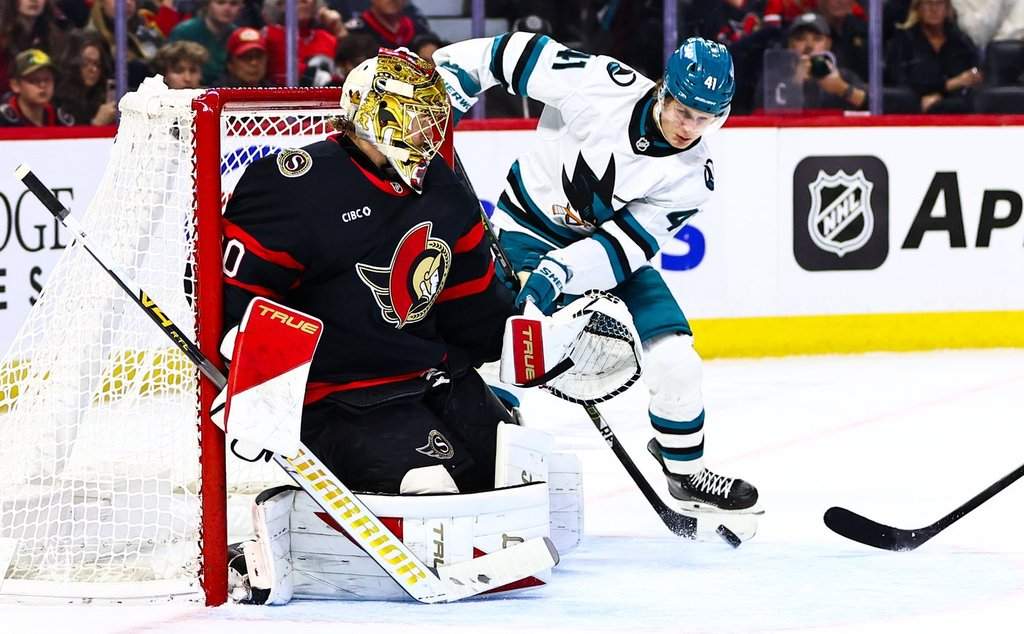
Everyone spent the morning scrolling through box scores and celebrating a routine six to two thrashing. The headlines wrote themselves. The San Jose Sharks cruised past the Ottawa Senators. Fans popped digital champagne. Pundits talked about offensive breakouts and newfound confidence.
It is completely backwards.
If you think a lopsided mid-season victory against a dysfunctional Eastern Conference bottom-feeder signals a corner turned, you have fallen for the oldest trap in professional sports. You are staring at the candy wrapper while the foundation rots from underneath. Blowouts mask systemic issues. They provide cheap serotonin for fanbases desperate for validation while management quietly repeats the exact structural mistakes that kept them in the basement for years.
Let us look past the scoreboard and examine why this specific win is actually a flashing red warning light for anyone who cares about long-term franchise health.
The Flawed Logic of Box Score Optimism
When a team puts up six goals, the immediate reaction from casual observers is an assumption of tactical brilliance. Coaches adjusted. Players executed. Systems clicked.
Except modern hockey analytics tell a far more uncomfortable story. A massive share of high-scoring performances in games like this stem from unsustainable shooting percentages and defensive breakdowns from an opponent that checked out before the first intermission. Ottawa played structural hockey that resembled a traffic cone collection in a hurricane.
When you evaluate a team based purely on goal differential in an isolated matchup, you ignore underlying possession metrics, expected goals against, and high-danger chance generation. San Jose did not suffocate Ottawa with elite defensive positioning or suffocating forechecking pressure. They capitalized on catastrophic turnovers and an opposing goaltender who looked like he was fighting a swarm of bees all night.
Relying on opponent gifts is not a strategy. It is a lottery ticket. When you build a franchise identity around capitalizing on other teams playing their worst hockey of the calendar, you end up trapped in perpetual mediocrity. You win the games you should lose ugly, and you lose the games where execution actually matters.
The Rebuild Illusion
We need to talk about how modern sports media frames franchise turnarounds. The narrative always follows a predictable script. A team drafts high, struggles for a couple of seasons, wins a few games by wide margins, and suddenly the machine is fixed.
It rarely works that way.
I have watched front offices burn hundreds of millions of dollars on roster construction philosophies that prioritize flash over depth. They chase high-scoring wingers while ignoring the brutal trench work required to win low-scoring playoff games in April and May. A six-goal outburst against a demoralized squad does nothing to fix a shallow prospect pool, defensive zone coverage breakdowns, or structural cap sheet rigidity.
Let us define terms accurately. A true competitive reset requires structural discipline. It demands that every single shift be evaluated through the lens of repeatable habits rather than raw goal tallies. When a coach walks into a locker room after a six to two win and praises the offensive explosion without addressing the ten odd-man rushes they gave up in the first forty minutes, they are poisoning the well.
Players are smart. They know when they played well and when they just got lucky. If you reward undisciplined hockey simply because the puck happened to cross the line six times, you breed a culture of complacency.
Why Ottawa is the Wrong Measuring Stick
Measuring progress against the Senators right now is like testing your physical fitness by racing someone who is recovering from knee surgery. Ottawa is dealing with organizational chaos, defensive system confusion, and a lack of identity that makes them an ideal opponent for any team looking to pad their stats.
If San Jose had ground out a tough, low-event two to one victory where they suppressed high-danger chances and dominated neutral zone entries, there would be a real conversation to have about developmental progress. That style requires discipline, patience, and tactical buy-in from top-line talent down to the fourth-line grinders.
Instead, we got an open-ice pond hockey exhibition. Fans love pond hockey because it has flashing lights and loud goal horns. General managers hate pond hockey because it exposes every single flaw in your roster construction the second you face a structurally sound playoff contender.
The Cost of False Hope
False dawns are more dangerous than honest struggles. When an organization thinks it is closer to contention than it actually is, it makes catastrophic mistakes.
They trade future draft capital for veteran rentals. They hand out premature contract extensions based on hot streaks rather than body-of-work consistency. They halt the necessary pain of a true foundational rebuild because a couple of lopsided wins tricked the front office into believing the roster is fully formed.
Look at the underlying numbers over a ten-game rolling average instead of cherry-picking the blowout of the week. The defensive zone entries are still soft. The penalty kill still gives up cross-seam passes with alarming regularity. The transition game breaks down the moment an opponent applies sustained forechecking pressure.
A six-goal night does not erase those truths. It only gives the marketing department an excuse to run another ticket sales campaign based on smoke and mirrors.
Stop treating every high-scoring box score like a turning point. Start demanding accountability for the process, not just the product. Until this organization stops celebrating lucky nights against broken teams and starts building a roster capable of suffocating elite opponents in a tight playoff series, every blowout win is just another step in the wrong direction.