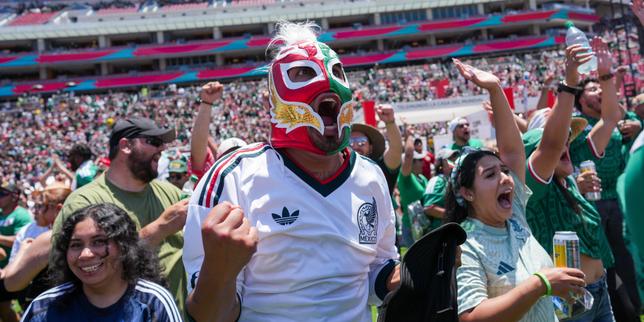
The global sports commentariat is having a collective nervous breakdown. Read any European broadsheet, listen to any highbrow football podcast, or scan the hand-wringing headlines from Sky News asking if this is the "worst World Cup ever," and you will find the same lazy, regurgitated narrative. They say Donald Trump has ruined the tournament. They claim Gianni Infantino's sycophancy has broken the soul of the beautiful game. They weep for a lost era of pure sporting meritocracy, supposedly strangled by the American president inserting himself into every trophy lift, security brief, and stadium VIP suite.
It is a comforting fairy tale for people who prefer nostalgia to reality. But it is completely wrong.
The 48-team, ultra-commercialized, unapologetically loud spectacle unfolding across North America is not a betrayal of the World Cup. It is the absolute realization of it. For decades, football elites have hidden behind a sanctimonious veneer of international unity, pretending the World Cup is a secular religion run by altruistic monks. Trump and Infantino did not ruin the tournament; they just ripped the mask off. They have exposed the World Cup for what it has always been: a ruthless, hyper-capitalist, geopolitical flex wrapped in a television broadcast.
And frankly, the sport is better off for the honesty.
The Myth of the "Pure" World Cup
To understand why the current backlash is so deeply flawed, we have to dismantle the revisionist history clogging up the media. Critics talk about the 2026 expansion and Trump’s overt politicization as if we previously lived through an unbroken string of pristine, uncompromised tournaments.
Let’s look at the actual data.
- 1934: Benito Mussolini explicitly used the World Cup in Italy as a fascist propaganda vehicle, hand-picking referees and intimidating opponents.
- 1978: Argentina’s military junta hosted the tournament while political dissidents were actively being "disappeared" just blocks away from the Estadio Monumental.
- 2018 & 2022: Vladimir Putin’s Russia and the state of Qatar used the tournament to execute massive, multi-billion-dollar sportswashing operations.
Yet, the media now acts as though a democratically elected American president showing up at MetLife Stadium to hand out medals—or a referee from Somalia facing visa drama—is a unique, unprecedented stain on the game.
I’ve watched media conglomerates and football federations blow hundreds of millions of dollars chasing the illusion of "clean sport." It does not exist. The World Cup has always been an instrument of state power and unbridled commerce. The only difference is that past autocrats kept their interventions quiet, hidden in executive suites. The current administration does the exact opposite. It brings the spectacle directly into the broadcast, turning the tournament into a live, unscripted reality television show.
The Hypocrisy of the 48-Team Outrage
The second pillar of the "worst tournament ever" argument rests on format snobbery. Purists are devastated by the expanded 48-team field. They argue that the quality of football has diluted, that the group stages are bloated, and that the addition of lesser-known footballing nations has degraded the exclusive prestige of the event.
This is eurocentric gatekeeping disguised as sporting integrity.
For half a century, the World Cup was a closed shop designed to benefit Europe and South America. When Infantino expanded the tournament, he didn't do it out of charity—he did it for votes and money. But the side effect is an undeniable democratization of the sport. Millions of fans in nations that were structurally locked out of the old 32-team format now have skin in the game.
Yes, a 48-team tournament is chaotic. It is an logistical nightmare that strains host cities and stretches squad depth to the breaking point. But pretending that a tighter, more exclusive tournament was "better" ignores the global reality of the sport. Football belongs to the world, not just to the traditional powerhouses in UEFA and CONMEBOL who are angry they have to share the spotlight.
The Operational Reality of Hyper-Commercialism
Let's address the heavy hitters of corporate finance. Hosting a modern, multi-city tournament across three massive nations (the US, Canada, and Mexico) requires an unprecedented level of capital extraction. The security infrastructure alone—combining the Secret Service, FBI, and local law enforcement under a high-level federal designation—costs billions.
Imagine a scenario where FIFA tried to run this tournament under the old, quaint rules of the 1990s. The entire apparatus would collapse under its own weight. The aggressive commercialization, the relentless branding, and the political showmanship are the literal fuel that keeps the engine running.
The downside to this contrarian view is obvious, and we must admit it: the average match-going fan is priced out. The tickets are absurdly expensive, the travel distances are punitive, and the soul of local fan culture is completely subordinated to corporate sponsors. That is a legitimate tragedy for the working-class roots of the game. But it is also the price of admission for global scale. You cannot demand a globally dominant, multi-billion-dollar spectacle and then act shocked when it behaves like an multinational corporation.
Stop Asking the Wrong Question
The media keeps asking: Is this tournament destroying the legacy of football?
It is the wrong question. The real question is: Why did we ever believe the hype in the first place?
If you are watching these matches expecting a sterile, apolitical exhibition of athletic purity, you are setting yourself up for disappointment. If you accept that the World Cup is a massive, chaotic, highly politicized entertainment product, the current iteration is spectacular. It has drama. It has geopolitical tension. It has the highest stakes on earth, played out under the blinding lights of American capitalism.
Stop mourning a clean, dignified World Cup that never existed. Turn off the hand-wringing commentary, ignore the pearl-clutching from pundits who miss the old days, and look at what is actually on the pitch and in the stadiums. It is loud, it is messy, it is deeply compromised, and it is entirely captivating.
The mask is off. Enjoy the show.
FIFA President defends Donald Trump
This video provides essential context on the relationship between FIFA leadership and the political landscape hosting the tournament, directly addressing the controversies discussed above.