The media theater currently unfolding in the Hart Senate Office Building is built on a fundamental lie.
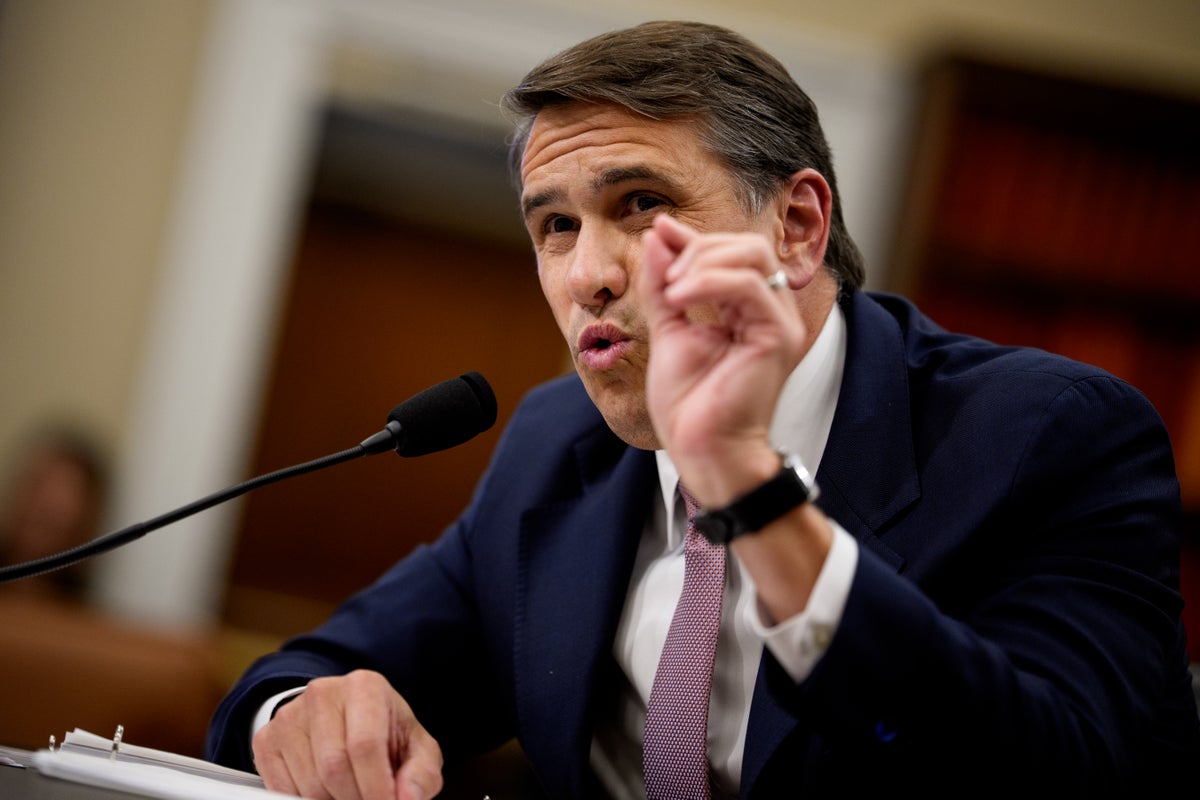
As Acting Attorney General Todd Blanche sits before the Senate Judiciary Committee to defend his nomination for the permanent spot, commentators are wringing their hands over the "death of institutional independence". They point to his past as Donald Trump’s personal defense lawyer. They point to the now-defunct $1.8 billion "anti-weaponization" fund born out of an IRS tax leak settlement. They point to the handling of the Jeffrey Epstein files and accuse him of being a direct pipeline for executive overreach.
The consensus across mainstream publications is lazy, predictable, and entirely misses the structural reality of American governance. They treat "Department of Justice independence" as if it were a sacred constitutional mandate.
It is not. It is a historical anomaly, a post-Watergate public relations campaign that we have mistaken for law.
I have spent decades watching Washington cycle through the same manufactured outrages. The reality inside the beltway is brutally simple: the Department of Justice is, always has been, and by constitutional design should be, an arm of the executive branch. The hyperventilating over Blanche’s loyalty is not a defense of the rule of law. It is a desperate defense of a bloated, unelected bureaucracy that believes it answers to no one.
The Constitutional Mirage of the Independent DOJ
Let us correct the legal mythology immediately. Article II of the United States Constitution vests the executive power entirely in the President. It does not vest it in career civil servants, nor does it create a fourth branch of government called the Justice Department.
The Attorney General is a cabinet secretary. They serve at the pleasure of the President. The idea that an Attorney General should operate in a vacuum, completely insulated from the policy agendas and priorities of the administration that appointed them, is structurally incoherent.
When critics complain that Blanche has been "deeply involved in charging decisions in line with the President's political priorities," they are describing the literal mechanics of the executive branch. Every administration sets enforcement priorities.
- The Obama administration directed the DOJ to deprioritize certain federal marijuana offenses and aggressive immigration enforcement.
- The Biden administration pivoted resources toward domestic extremism and corporate antitrust enforcement.
- The second Trump administration is focused on scaling back DEI initiatives and pursuing criminal border enforcement.
These are not systemic failures; they are the direct result of elections. To pretend that Blanche executing the policy directives of a twice-elected president is a unique threat to democracy is pure theater.
The Slush Fund Fallacy
The sharpest attacks on Blanche from both sides of the aisle—most notably from skeptical Republicans like Senators John Cornyn and Thom Tillis—focus on the aborted $1.8 billion "anti-weaponization" fund. The media has gleefully labeled this a "slush fund" meant to shield the Trump family from future tax liabilities while paying off political allies. A federal judge in Miami recently fueled the fire by sanctioning a Trump attorney and rebuking the DOJ for pursuing the underlying lawsuit for an "improper purpose".
Here is the nuance the breathless live-blogs chose to ignore: the fund is dead. Blanche himself testified before a House committee weeks ago that the department scrapped the payout plan entirely.
[The Weaponization Fund Reality Check]
Initial Settlement Proposal: $1.8 Billion Anti-Weaponization Fund
Current Status: Defunct / Scrapped by Blanche
Actual Payouts to Plaintiffs: $0.00
The administration openly walked away from the mechanism when it faced legitimate legislative pushback. That is exactly how the system is supposed to work. The executive branch floats a controversial legal settlement, the legislature exerts oversight, and the department recalibrates. Turning a dead policy proposal into proof of a permanent autocracy is standard partisan hyperbole.
The reality of the IRS settlement is that it resolved a very real, very illegal leak of private tax data by a government contractor. The government violated the law first. The settlement was an aggressive, arguably messy attempt to penalize that institutional overreach. Was the mechanism flawed? Clearly. But treating the settlement as a unprecedented act of corruption ignores the long history of federal agencies weaponizing administrative law to protect their own interests.
The False Promise of the Bureaucracy
We are told by organizations like the Justice Connection—a group of 1,200 former DOJ employees opposing Blanche—that his mass firings of career lawyers have "corroded public trust". They claim these civil servants were terminated for working on cases the President disliked.
Let us look at this through a cold corporate lens. Imagine a scenario where a CEO takes over a massive, underperforming enterprise. This CEO was explicitly elected by the shareholders to radically shift the company’s direction. Upon arrival, the CEO discovers a mid-level management tier that actively leaks internal memos to competitors, subverts strategic decisions, and publicly declares allegiance to the previous CEO's vision.
What does a competent leader do? You clear the room.
The institutionalist panic over Blanche firing career prosecutors assumes that tenure equals objectivity. It does not. The career bureaucracy at the DOJ has its own distinct culture, its own political biases, and its own self-preservation instincts. When career lawyers refuse to execute the lawful policy directives of an elected administration, they are not protecting the rule of law. They are staging a soft bureaucratic mutiny.
Blanche’s willingness to clean house is not a bug; it is the entire point of his appointment. If a president cannot trust the leadership or the staff of the executive branch's legal arm to execute the law as interpreted by the administration, then the democratic mandate of the election is completely hollowed out.
The Epstein Diversion
The inclusion of the Jeffrey Epstein files in the confirmation grilling is perhaps the most cynical aspect of the current proceedings. Democrats are using the presence of Epstein victims in the gallery to paint the current DOJ leadership as complicit in a cover-up.
But the mismanagement, sweetheart deals, and institutional failures surrounding the Epstein investigation span across multiple administrations, both Democrat and Republican, going back two decades. To lay the institutional rot of the federal prison system and past prosecutorial failures at the feet of an Acting Attorney General who took the helm in April 2026 is intellectually dishonest.
Blanche’s crime, according to his detractors, is that he met with Ghislaine Maxwell’s team last summer because they sought a meeting, and stated he is willing to meet with victims. Gathering information and listening to stakeholders from all sides of a toxic, historically botched file is standard operational due diligence. Elevating it to a grand conspiracy is a cheap political stunt designed to elicit emotional headlines rather than address systemic administrative flaws.
Stop Asking the Wrong Question
The Senate Judiciary Committee is spending hours asking Blanche if he will promise to be "independent" of the White House. It is the wrong question entirely.
The downside to an overtly aligned Attorney General is obvious: it risks crossing the line from aggressive policy execution into vindictive prosecution. If Blanche uses the grand jury process to settle purely personal scores against political foes, he should be impeached. The rule of law requires equal application, not selective retribution.
But demanding an "independent" DOJ as a baseline standard is a fantasy. True independence inside the executive branch simply means an unaccountable fiefdom run by unelected attorneys who answer to no one at the ballot box.
We do not need an independent Justice Department. We need a transparent, accountable, and highly effective Justice Department. Blanche brings the exact legal pedigree required for the reality of the job: he is a former federal prosecutor from the Southern District of New York who understands the machinery of the state, paired with the battle-tested grit of a top-tier defense attorney who knows exactly how that machinery can be abused.
The hyperventilating over his proximity to the President is just noise. In Washington, loyalty is handled as a currency, but accountability is the only asset that actually matters. If the Senate wants to do its job, it should stop chasing the ghost of institutional independence and start focusing on whether the nominee can actually manage the nation’s largest law firm without breaking the machine.
Stop mourning a myth. The independent DOJ is dead, and it was never really alive to begin with.