The corporate obsession with the "first 100 days" of a news subscription is a self-inflicted wound.
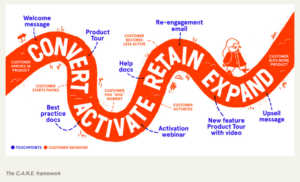
Consultants love to draw linear charts showing a clean pipeline: a reader lands on your site, you aggressively extract their first-party data, nudge them through a series of newsletters, and magically convert them into a loyal subscriber. It is an orderly fantasy.
In reality, your onboarding sequence is annoying your most valuable readers.
I have watched publishers spend millions of dollars building massive data infrastructure to track every click, scroll, and newsletter open during a user's initial window. They build elaborate registration walls and demand data before delivering value. The result? A massive drop-off in user engagement and a database full of burner email addresses.
We need to stop treating the first 100 days as a data-harvesting interrogation. If your product requires a 12-step digital orientation program just to prove its worth, the problem is not your data strategy. The problem is your product.
The Flaw of the Data First Mentality
The standard industry playbook argues that first-party data is the ultimate defense against the death of third-party cookies. Publishers are told to block content early, force registrations, and gather as much behavioral data as possible within the first three months.
This is backward. Data is a byproduct of value, not the creator of it.
When you prioritize data collection over user experience in the first 100 days, you build what data scientists call a "dirty funnel." You force users to register before they understand your editorial voice. To bypass your wall, they give you fake names, disposable emails, and random preferences.
Garbage In, Garbage Out
Imagine a scenario where a regional news outlet implements a strict registration wall after two articles. They celebrate a 40% spike in user sign-ups. The data team goes to work, segmenting these new users based on the one article they clicked.
Within 30 days, the churn rate on these accounts hits 80%. Why? Because the data collected was artificial. The user did not want a relationship; they wanted to read a single article about local zoning laws. By treating that click as a deep consumer insight, the publisher automated a series of irrelevant emails that pushed the reader away permanently.
True first-party data is earned through repeated, friction-free utility.
Why Personalization on Day One is a Trap
Publishers are obsessed with algorithmic personalization. They want to tailor the homepage to a user's specific tastes within minutes of arrival.
This ruins the primary value proposition of a news publication: curation.
Readers do not subscribe to a news site to sit in an echo chamber of their own making. They subscribe because they trust an editorial team to tell them what matters. When you use early, thin data to curate a hyper-personalized feed, you shrink your publication's footprint. You hide the breadth of your coverage, making your subscription feel smaller and less valuable.
Furthermore, early-stage behavioral data is notoriously noisy. If a user accidentally clicks a sports link on day three, your algorithm spends the next month feeding them sports content, ignoring the business reporting they would actually pay for.
The Heavy Hitters are Doing it Differently
Look at how the most successful subscription engines actually operate. The Financial Times does not rely on flashy onboarding gimmicks or immediate data extraction. They focus on establishing a habit loop centered on core editorial products like the Lex column or deep investigative pieces.
They understand that a subscriber's long-term value correlates with one metric: frequency of return.
[Frictionless Access] -> [High-Value Content Habit] -> [Organic Identity Resolution] -> [Premium Retention]
Instead of badgering users with pop-ups demanding their job title, industry, and company size in the first week, successful publishers let users read. They use the first 100 days to build a consumption habit. Once the habit exists, identity resolution happens naturally. A reader who visits four times a week will eventually log in voluntarily to save articles, customize newsletters, or comment.
The Dark Side of the Friction-Free Approach
Let's be direct about the risks here. If you drop your aggressive data collection and registration walls in the short term, your top-line lead generation numbers will drop. Your marketing team will lose their vanity metrics. You will not be able to brag to advertisers about a massive pool of unverified registered users.
It takes stomach to trade artificial scale for genuine engagement.
If your business model relies on selling programmatic ads against low-quality pageviews, this approach will hurt your revenue. But if your goal is sustainable, high-average-revenue-per-user (ARPU) digital subscriptions, you have to tolerate lower initial numbers to secure higher lifetime value (LTV).
Rewriting the 100-Day Playbook
To build a subscription engine that actually converts, you must dismantle the traditional onboarding sequence. Stop tracking for the sake of tracking. Move from a passive extraction model to an active value delivery model.
1. Kill the Orientation Checklist
Stop sending a barrage of "Welcome" emails explaining how to use your website. Users know how to use a website. If your navigation is so convoluted that it requires an instructional manual, fix the user interface instead of automating a five-part email series.
2. Measure Velocity, Not Just Volume
Most data dashboards track total articles read. This is a vanity metric. A user who reads 10 articles in one hour on day one and never returns is worthless. A user who reads one article every Tuesday and Thursday for a month is a prime subscription candidate. Shift your tracking to measure consistency over time.
3. Move the Paywall Later
Counter-intuitively, allowing users to experience more of your best work before hitting a hard wall increases conversion quality. It allows the reader to qualify themselves. When they finally hit the wall, they buy because they already know they cannot live without the content, not because they were trapped mid-sentence.
The industry-wide panic over the loss of tracking cookies has turned publishers into data hoarders. They are treating readers like line items in a database before establishing an editorial connection. Flip the script. Build the habit first. Earn the identity second. The data will take care of itself.