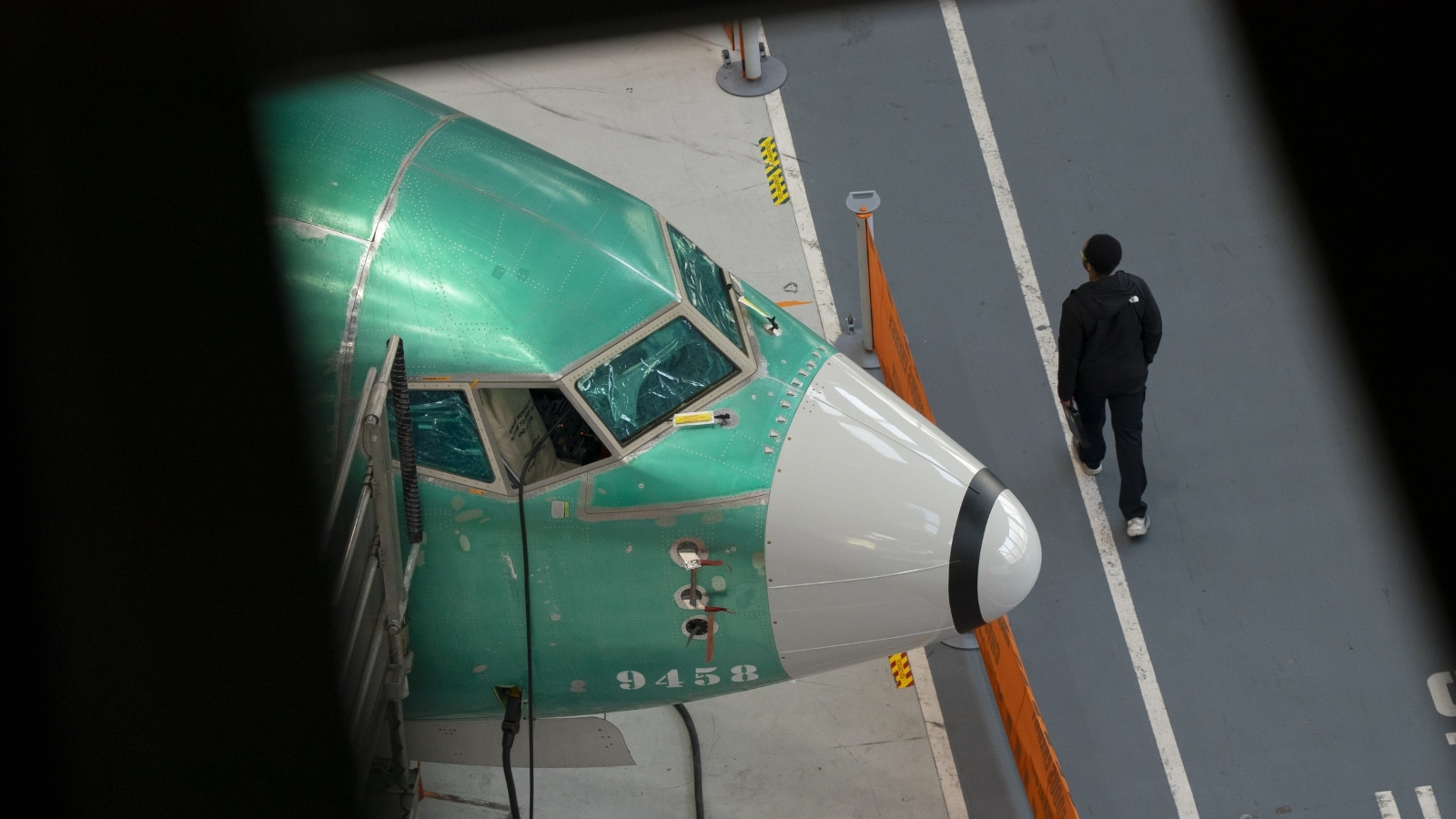
Every time a fuselage crack makes the news cycle, the aviation press treats it like a ghost story. Regulators drop an emergency directive, cable news anchors furrow their brows over structural integrity, and the public is left wondering if metal fatigue is an act of God. It is not. It is an accounting error masquerading as physics.
The lazy consensus in every major aviation headline right now assumes that the Boeing 737 Max problem is fundamentally mechanical. Fix the bracket, inspect the stringer, tighten the bolt, and return to scheduled service. That framing is dangerous. It lets the system off the hook.
I have spent decades watching aerospace manufacturing shift from an engineering culture to a spreadsheet culture. I have seen procurement teams squeeze suppliers until the metallurgy turns brittle. When a regulator orders structural checks on jets over cracks, they are treating a symptom while ignoring the institutional cancer that allowed sub-par tolerances to clear quality control in the first place.
The Myth of the Accidental Crack
Metal does not crack because it is surprised. Metal cracks because the cyclic loading envelope—the constant push and pull of pressurization and depressurization during flight—exceeds the safety margins built into the assembly.
When you hear that structural anomalies have been found near attachment fittings on a narrowbody jet, the knee-jerk media reaction is to blame the machine shop. That is naive. The machine shop built to the print they were handed. The print reflects the price point the buyer demanded.
Imagine a scenario where an airline executive needs delivery dates accelerated by three weeks to meet quarterly yield targets. The factory does not magically discover extra hours in the day. They compress verification steps. They rely on statistical sampling instead of 100% non-destructive testing. Then, three years later, microscopic stress concentrations propagate into macro-fractures, and the FAA scrambles emergency inspectors to look at thousands of active airframes.
The inspection orders are a theater of competence. They reassure passengers that someone is watching the store. But looking for cracks after the bird has left the nest is like checking your parachute for holes after you have already pulled the ripcord.
Why More Inspections Will Not Save Us
The Federal Aviation Administration’s latest directive tells airlines to perform ultrasonic or eddy current checks on specific structural ribs and fittings. It sounds rigorous. It sounds proactive.
It is actually a admission of defeat.
Mandating repetitive inspections shifts the burden of manufacturing quality onto the end user. Airlines are passenger carriers, not metallurgy laboratories. When you force maintenance crews to tear down interior panels every few thousand flight cycles to hunt for micro-fissures, you introduce human error into the reassembly process. Mechanics working third-shift maintenance checks under tight turnaround windows make mistakes.
We are creating a feedback loop of regulatory bandages. The manufacturer designs for speed of production. The regulator reacts with inspection mandates. The airline bleeds cash on grounded capacity. And the root cause—incentive structures that reward financial engineering over structural integrity—remains entirely untouched.
The Engineering Reality Check
Let us define terms clearly, because the public discourse is drowning in fuzzy language.
Structural integrity is not a binary state where a plane is either safe or broken. It is a gradient of cumulative damage tolerance. Every commercial aircraft is designed with a specific economic service life. When you push airframes beyond their original design expectations through aggressive utilization schedules, or when you lean on supply chains that substitute proprietary alloys with cheaper commercial equivalents to save pennies per pound, you accelerate the degradation curve.
Boeing’s current troubles with the 737 Max family are not an anomaly. They are the predictable output of a system that consolidated too much monopolistic power and forgot how to listen to the floor-level shop engineers who actually understood the physics.
When chief executive officers come from finance and strategic consulting rather than engineering, the operational priorities shift. Cost reduction replaces risk mitigation as the primary north star.
The Uncomfortable Solution
If we actually wanted to fix aviation safety, we would stop issuing reactionary inspection directives and start doing something radical: holding executive sign-offs personally and criminally liable for structural quality failures.
As long as corporate entities pay fines that are treated as mere costs of doing business, nothing changes. The spreadsheets will continue to favor velocity over verification.
Stop asking if your specific flight on a 737 Max is going to crack open mid-air. The odds against it are still statistically low, thanks to the massive redundancy built into modern airframes by old-school engineers who refused to compromise.
Instead, ask why we allow the people who designed the financial pressure cooker to write the inspection manual when the boiler finally pops.