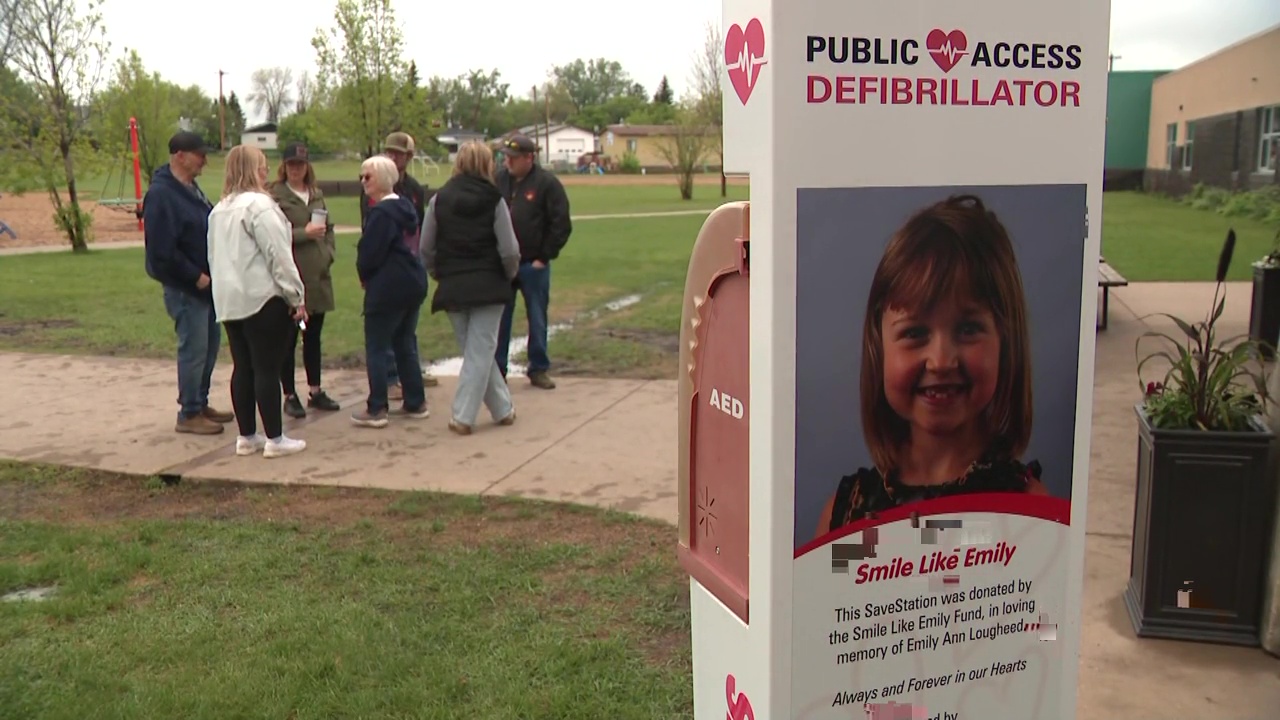
The media loves a comforting narrative about tragedy transforming into community salvation. When a family in rural Alberta experiences the unimaginable loss of a child to a rare, undiagnosed heart condition, the immediate, emotional reflex is to secure the perimeter. We see it every time: fundraisers launch, ribbon-cutting ceremonies are held, and thousands of dollars are poured into mounting automated external defibrillators (AEDs) on gym walls and park fences.
It feels proactive. It looks like a solution. In related news, read about: The Economics of Neglected Zoonoses: Market Failure and the Strategic Path to Hantavirus Therapeutics.
It is a public policy illusion.
I have spent years looking at medical resource allocation, emergency response logistics, and clinical data. Here is the brutal, data-driven truth that nobody wants to say out loud: scattering high-priced medical hardware across rural landscapes is a feel-good strategy that fails to solve the systemic gaps in emergency survival rates. Worse, it misdirects the precious capital, focus, and energy required to actually save lives when the clock is ticking. Medical News Today has analyzed this fascinating topic in extensive detail.
The Hardware Fetish and the Math of Mortality
The current consensus treats the AED as a magical talisman. The line of thinking goes like this: if we put a box with a lightning bolt on every building, we defeat sudden cardiac arrest.
Let's look at the actual physics and biology.
An AED does not jump-start a dead heart. It does not cure a flatline. The machine reads the heart’s electrical activity and, if it detects specific, chaotic rhythms—namely ventricular fibrillation or pulseless ventricular tachycardia—it delivers a shock to momentarily stop the chaos, allowing the heart's natural pacemaker to take back control.
If there is no shockable rhythm, the machine stays silent. In fact, in the tragic Alberta case that sparked the recent wave of rural installations, the family openly noted that they retrieved an AED immediately, but it could not deliver a shock because there was no pulse to restart. The child’s heart was structurally built differently.
Yet the policy response was to install eight more of the exact same machines across the county.
Imagine a scenario where a community experiences a catastrophic fire because the local well runs dry. The emotional response is to buy ten more empty buckets and hang them on trees around town. The buckets look ready, but they do not solve the fundamental lack of water infrastructure.
The Rural Reality Shock
Each outdoor public AED cabinet costs thousands of dollars to purchase, heat, monitor, and maintain. When you multiply that by dozens of communities across rural regions, you are looking at hundreds of thousands of dollars trapped in metal boxes waiting for an event that may never occur within a three-minute running radius of that exact coordinate.
Time is the ultimate currency in resuscitation. Brain death begins within four to six minutes of a cardiac arrest. If an asset is placed at a ball diamond or a campground, its utility is restricted by:
- Seasonal usage: Campgrounds and sports fields sit empty for six to seven months of the Canadian year.
- Physical distance: In rural counties, the distance between homes and the local school or town office is measured in kilometres, not city blocks. If a farmer collapses in a barn three kilometres away from the school, that school-mounted AED is completely useless.
- The bystander panic factor: Studies consistently show that even when an AED is within a reasonable distance, bystanders often fail to retrieve it due to panic, lack of awareness, or fear of doing harm.
By over-indexing on public hardware installation, we create a false sense of security while leaving the structural vulnerabilities of rural emergency medical services (EMS) completely unaddressed.
Human Infrastructure Trumps Metal Boxes
The obsession with buying hardware ignores the most critical link in the survival chain: the human brain.
If you want to move the needle on rural cardiac survival rates, the capital needs to pivot immediately away from manufacturing static hardware and toward two aggressive, systemic interventions.
1. Radical Dispatch Overhauls
The presence of an AED does not guarantee its utilization. The emergency medical dispatcher does.
Consider the work of Kim Ruether, an Alberta advocate who turned her own tragedy—the loss of her son Brock—into actual structural change. Brock collapsed in a school gym with an AED hanging mere feet away on the wall. His peers called 911. The dispatcher told them to get the machine "in case they needed it later." It sat on the floor, unused, because no one was explicitly instructed to open it and apply the pads immediately.
The lesson here is stark: a human being with clear, authoritative instructions from a 911 operator is infinitely more valuable than an unguided bystander standing next to a five-thousand-dollar piece of equipment. We need massive, mandatory funding for dispatch training protocols that force call-takers to aggressively identify cardiac arrest within the first thirty seconds and provide unyielding, step-by-step instructions.
2. Hyper-Localized First Responder Networks
Instead of mounting a machine to a wall in hopes that a crisis happens nearby, we should be turning the rural population itself into a mobile, agile rescue force.
Programs that integrate smartphone technology to alert CPR-trained citizens when a cardiac arrest occurs nearby—such as the PulsePoint app utilized in various forward-thinking jurisdictions—completely bypass the limitations of static hardware. If five people in a tiny town are trained, confident, and carrying a portable unit in their pickup trucks, your coverage area expands exponentially compared to a single box bolted to a brick wall at the local arena.
The Trade-Off We Refuse to Admit
The contrarian position is always uncomfortable because it forces an acknowledgment of scarcity. Resources—both community donations and tax dollars—are finite.
When a small municipality or a local charity spends $7,000 on a single outdoor SaveStation cabinet, that is $7,000 that cannot be spent on:
- High-fidelity CPR training for every high school graduate in the county.
- Subsidizing personal, ultra-portable AEDs for high-risk families or remote agricultural workers to keep in their vehicles.
- Fixing the chronic understaffing and geographic distribution of rural paramedic units.
The downside to this approach? It lacks the immediate, telegenic satisfaction of a ribbon-cutting event. It requires sustained, unglamorous work in training rooms, dispatch centers, and policy meetings. It asks communities to look at data rather than emotion.
Stop buying more boxes to hang on walls where nobody lives or breathes for half the week. Stop treating a complex medical and logistical challenge as a hardware acquisition problem. If we want to protect rural lives, we have to stop investing in the illusion of safety and start investing in the people who actually have to deliver it.