The internet saw a ten-second clip, panicked over a blinking pattern, and handed a New York politician three weeks of free earned media.
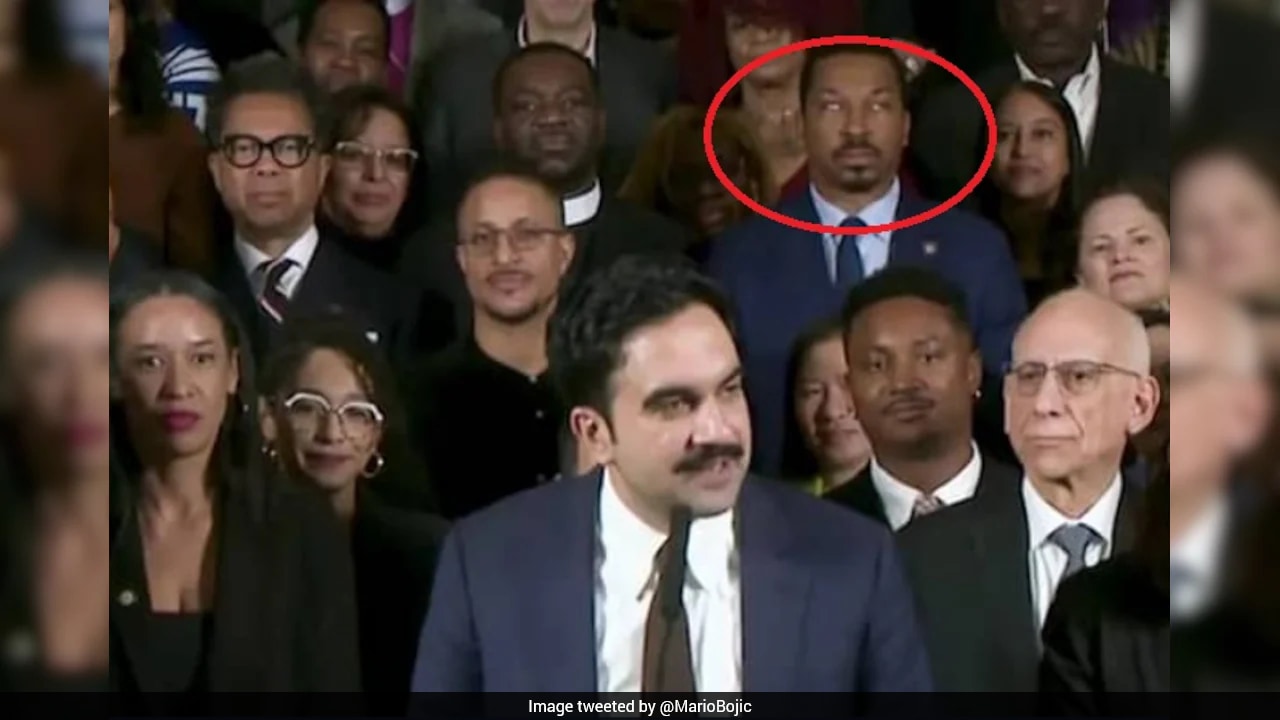
You watched it. You probably shared it. You might have even laughed at the absurdity of a grown adult having to publicly deny being a shape-shifting extraterrestrial reptile after standing behind Zohran Mamdani at a press conference.
The mainstream press covered the incident as a quirky little sideshow. They framed it as a battle between rational civic leaders and unhinged internet trolls. They treated the politician’s deadpan denial as a witty, relatable clapback against the dark corners of social media.
That framing is completely backward.
If you believe that viral clip was a spontaneous accident or a harmless moment of levity, you do not understand how modern political attention works. I have spent fifteen years inside war rooms, crisis communications shops, and digital media desks watching campaigns burn millions on television spots that nobody watches. Meanwhile, a single weird micro-expression on a hot mic or a background camera feed generates ten million impressions before lunch.
The lazy consensus says conspiracy theories are a dangerous distraction from real policy. The reality is far more cynical. In an attention economy where voters ignore white papers and scroll past stump speeches, absurd conspiracy theories are the single most efficient distribution engine a politician can hope for.
The Anatomy Of A Manufactured Distraction
Look closely at the mechanics of what actually happened at that Mamdani event.
A local politician stands in the frame. The lighting is harsh. The camera compression is low-grade. An eye-roll happens—a completely normal human reaction to a long-winded speech, dry contact lenses, or a stray thought. Within four hours, an account with a blue checkmark zooms in to 400 percent, slows the frame rate down to three frames per second, and slaps a caption on it claiming the subject has nictitating membranes.
By the next morning, mainstream outlets are running headlines about "Lizard People Claims." By noon, the politician steps up to a podium or opens an Instagram Live to "address the rumors."
Notice the sequence. The politician did not ignore it. A seasoned communications director knows the first rule of crisis management: you never repeat a smear unless you want to amplify it. When someone accuses you of corruption, you issue a stiff legal statement or stay silent. You do not hold a press conference to say, "I am not a crook," unless you are already losing.
So why did this politician lean directly into a fringe, sci-fi trope?
Because "I am not a lizard person" is the ultimate asymmetric weapon. It requires zero defensive posture. Nobody outside of a psychiatric ward actually believes a New York assemblymember is a reptilian alien. By responding to the accusation with a smirk and a joke, the politician achieves three things simultaneously:
- Instant Humanization: They look funny, self-aware, and grounded compared to the lunatics online.
- Algorithmic Hijacking: Every news outlet that refused to cover their housing bill or transit proposal suddenly runs a segment featuring their face and name.
- Narrative Inoculation: Any legitimate criticism of their actual voting record at that same Mamdani event gets buried beneath a mountain of reptile memes.
I have seen communications teams try to engineer this exact dynamic from scratch and fail miserably because it looked too rehearsed. When an organic piece of internet weirdness drops into their lap, smart operators do not push it away. They pour gasoline on it.
Why The Mainstream Press Gets Played Every Time
Legacy media outlets love these stories because they are cheap, safe, and guaranteed to drive clicks. Covering the granular details of New York City zoning laws or municipal budget deficits requires beat reporters, fact-checkers, and editors. It yields low traffic and high reader drop-off.
Covering a politician joking about being a reptile takes twenty minutes, zero original reporting, and generates massive engagement from both sides of the political aisle.
The competitor’s coverage of this event fell straight into that trap. They treated the story as a human-interest piece about the weirdness of modern politics. They quoted the politician’s joke, mentioned Zohran Mamdani’s event in passing, and patted themselves on the back for debunking a fake conspiracy that nobody took seriously in the first place.
Media theorists have warned about this exact failure mode for decades. Neil Postman wrote in Amusing Ourselves to Death that public discourse would not be destroyed by censorship, but by triviality. When politics becomes pure entertainment, the substance of governance dissolves into background noise.
By treating the eye-roll as a quirky viral moment rather than a calculated PR pivot, the press acts as an unpaid distribution network for political branding. They give the politician free name recognition without asking a single hard question about why they were standing on that stage in the first place.
What People Actually Want To Know About Viral Political Moments
When these clips blow up, search engines flood with the same predictable questions. Most of them miss the point entirely, so let us dismantle them directly.
Did the politician actually roll their eyes at Zohran Mamdani?
Almost certainly not. Watch the full, uncropped C-SPAN or local news feed rather than the zoomed-in Twitter clip. At live political press conferences, speakers stand behind the podium for forty-five minutes while six different officials read from wrinkled notes. People shift their weight. They blink hard. They glance at aides off-camera to check the time. Cropping a frame tightly around someone’s face strips away every spatial cue, turning a mundane physical tic into a dramatic narrative.
Why do lizard people conspiracy theories keep resurfacing in politics?
Because they are a safe proxy for a very real, very widespread public feeling: alienation. David Icke popularized the reptilian trope in the late 1990s, building on older pulp fiction and fringe folklore. Today, almost nobody uses the phrase literally. When people joke about politicians being lizards, they are expressing a visceral distrust of an insular political class that speaks in scripted talking points and seems completely detached from normal human emotion. It is satire disguised as paranoia.
Does responding to trolls hurt a politician's credibility?
Only if the troll has a point. If a critic points out a hypocritical vote or a campaign finance violation, arguing with them online makes you look guilty and small. If a critic accuses you of being an interdimensional shapeshifter, responding with humor makes you look untouchable. It shifts the frame so that all of your critics start to look equally unhinged by association.
The Dark Side Of The Viral Clapback
Before every junior press secretary in New York starts praying for a bizarre rumor to debunk, we need to talk about the massive downside of this strategy.
Playing the internet’s game works until the exact second it does not.
When you build your public persona on viral clapbacks and ironic detachment, you train your audience to treat you like a content creator rather than a legislator. Attention is a depreciating asset. The dopamine hit from a viral video lasts forty-eight hours. Once the memes stop circulating, you are left with an audience that knows your face and your jokes, but has zero attachment to your actual political platform.
I watched a promising state senate campaign in the Northeast collapse three years ago because the candidate became addicted to this exact cycle. Every week, the team chased a new viral outrage, dunking on fringe accounts and racking up millions of views on TikTok. Their fundraising numbers looked incredible on paper. Their name recognition was through the roof.
On election day, they lost by eleven points.
Why? Because local voters in their district did not care about the national Twitter circus. They cared about property taxes, school board budgets, and trash collection. The candidate had spent so much time performing for an audience of millions who could not vote in their district that they completely alienated the thirty thousand people who actually could.
Furthermore, leaning into absurdity erodes institutional gravity. There will come a day when that same politician faces a real crisis—a budget shortfall, a transit strike, a public safety failure. When they step up to the microphone to ask for public trust during an actual emergency, the audience will still see the person making jokes about lizard people. You cannot toggle seriousness on and off like a light switch.
How To Actually Read A Political News Cycle
If you want to stop being manipulated by ten-second clips and manufactured controversies, change how you consume political media.
Stop looking at the person talking and start looking at what gets pushed off the front page.
Imagine a scenario where a city council is about to pass a controversial land-use variance or a municipal contract that benefits a major donor. The press conference is scheduled for Tuesday morning. If a minor spectacle breaks out on Monday afternoon—a weird outfit, a stumbled line, a bizarre viral rumor—that spectacle will eat ninety percent of the local news oxygen for the next thirty-six hours. The contract passes on Tuesday afternoon with three paragraphs buried on page twelve.
You do not need a conspiracy theory to explain this. You just need to understand incentives. Politicians want low-friction fame. Media outlets want high-margin clicks. Social media algorithms want emotional engagement. All three forces align perfectly to reward triviality and punish depth.
The next time a politician goes viral for denying something completely absurd, do not share the clip. Do not applaud their wit. Do not mock the trolls.
Pull up the full video of the event. Look at who else was standing on that stage. Read the press release that was supposed to be the actual news of the day. Look at the voting record of the person making the joke.
The real story is never the eye-roll. The real story is what they were hoping you would stop looking at the moment they started blinking.