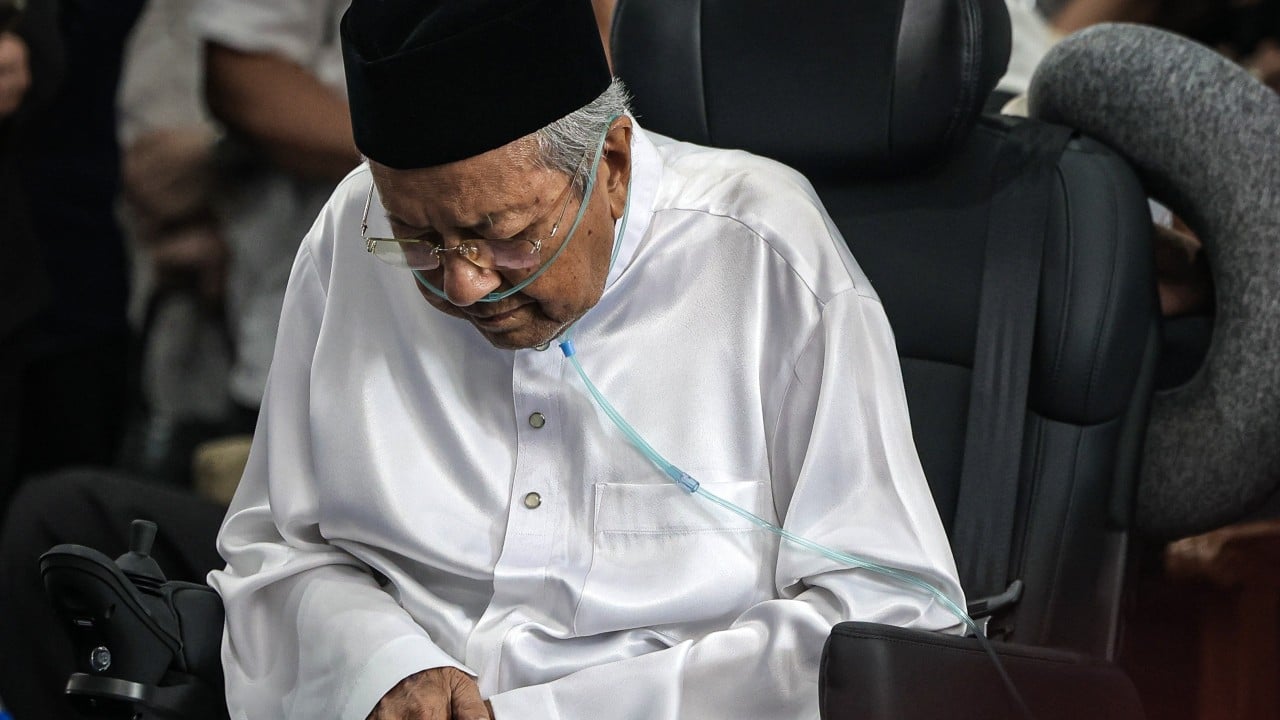
The media machine is doing what it always does when a historical titan stumbles. They line up outside the hospital gates, microphone in hand, waiting to wring every last drop of sentimentality out of a tragedy. Mahathir Mohamad is in for observation. His wife of over seven decades, Tun Dr Siti Hasmah, passed away just a day prior. The headlines practically write themselves. Grief, old age, the end of an era, a nation holding its collective breath.
It is lazy journalism, and it misses the entire point.
Focusing on the bedside vigil ignores the brutal political machinery that Mahathir himself spent seventy years building and weaponizing. We are staring at a man who survived bypass surgeries, political excommunications, and the dismantling of his own hand-picked coalitions, only to be reduced by pundits to a tragic figure in a hospital gown.
Let us strip away the sentimentality. The story is not about sorrow. The story is about succession voids, institutional decay, and what happens when an entire political ecosystem refuses to mature because it is perpetually tethered to a ghost.
The Myth of the Indispensable Strongman
Every time Mahathir sneezes, international desks dust off the same tired narrative. The patriarch. The statesman who pulled Malaysia into the modern industrial age. The enduring anchor of Malay politics.
This framing contains a fatal flaw. It treats political longevity as structural strength when it is actually structural rot.
When a political ecosystem orbits a single gravitational center for half a century, it stops evolving. Political parties do not build institutional meritocracies; they spend decades learning how to bow, how to calculate patronage, and how to wait for the throne to empty. I have watched emerging markets and political factions stunt their own growth for decades simply because they kept waiting for a messiah instead of building a committee.
Mahathir did not build a resilient democracy. He built a personalized autocracy disguised as a parliamentary democracy, where every single check and balance bent to his formidable willpower. When that willpower finally falters, the vacuum left behind does not invite stability. It invites chaos.
The hospital bulletins are a symptom of a deeper malaise. The public is conditioned to view national stability as dependent on the physical heartbeat of one nonagenarian. That is not a functioning state. That is a monarchy without a crown, kept alive by inertia and nostalgia.
The Cost of Personal Grief Versus Public Machinery
Let us address the human element, because the lazy consensus tries to use grief as a shield against analysis. Losing a spouse after seventy-two years of marriage is immense. Siti Hasmah was the rare political spouse who served as an effective humanizing buffer for a notoriously uncompromising politician. Her presence softened the edges of a man who routinely broke political allies and crushed opposition factions with administrative coldness.
Yet, in the cold calculus of statecraft, personal tragedy does not pause the political calendar.
The moment a leader of Mahathir's stature faces mortality alongside family loss, the vultures in the capital do not pause to send flowers; they start counting votes and rewriting alliances. To pretend otherwise is to misunderstand the ruthless nature of Putrajaya. The race to inherit the remaining shards of his political capital began years ago, but his hospitalization accelerates the friction.
What happens to the factions that claimed his mantle? They splinter. Mahathir’s career was defined by constant schisms—UMNO, Bersatu, Pejuang, and endless shifting coalitions. He survived by outmaneuvering every rival through sheer tactical agility. None of his acolytes possess that agility. They possess his ambition without his discipline.
Dismantling the Succession Illusion
People ask why Malaysian politics remains so volatile, why reform movements stall, and why ethnic patronage politics refuses to die.
The answer sits in that hospital room.
As long as the political discourse remains fixated on the health and history of men who entered politics during the colonial era, the nation cannot move forward. Every column inch dedicated to Mahathir's medical chart is an inch stolen from discussing institutional reform, economic restructuring, or the structural debt burden weighing down the next generation.
We treat these updates as breaking news when they are actually historical reruns. We have seen this script play out across developing democracies from Asia to Latin America. A charismatic founder refuses to fade away, creating an institutional vacuum so absolute that the system panics at the mere thought of his absence.
The real news is not that a ninety-something-year-old man is grieving and frail. The real news is that, after seventy years of dominance, his greatest legacy might be a political landscape utterly incapable of surviving without him.
Stop reading the hourly updates from the ward. Start watching the frantic backroom maneuvers of the pretenders who spent their entire careers waiting for permission to rule a kingdom built on sand.