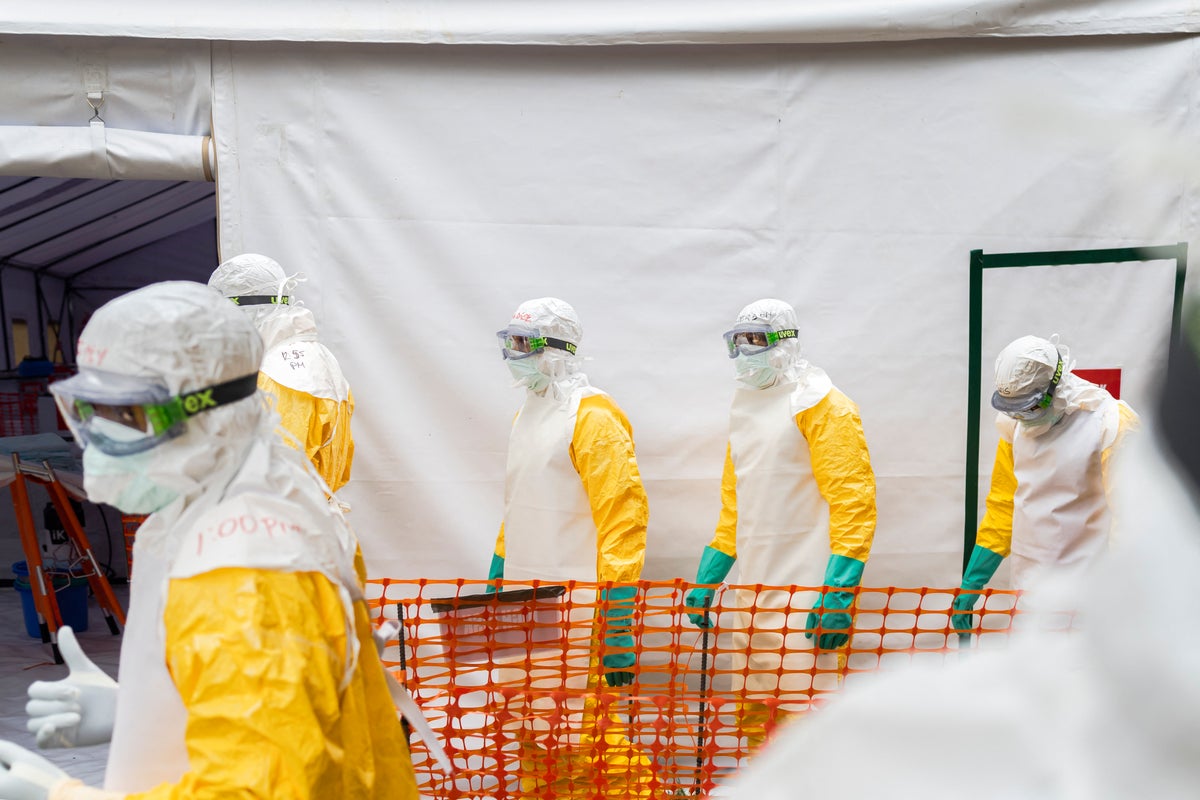
The World Health Organization just pulled its favorite lever. By declaring the Bundibugyo Ebola outbreak in the Democratic Republic of the Congo and Uganda a Public Health Emergency of International Concern (PHEIC), the global health apparatus has kicked off its predictable, cyclical theater of panic. The sirens are blaring, the donor conferences are being scheduled, and Western media is churning out the standard "why the world should care" narratives, laced with the usual undertones of global contagion dread.
It is a broken record, and the music is completely out of tune. Recently making waves lately: Early Onset Type 2 Diabetes in Young Women A Metabolic Systems Failure.
I have watched global health agencies burn through hundreds of millions of dollars during crises like the 2014 West African epidemic and subsequent DRC flare-ups. The playbook never changes. A pathogen emerges, the international community treats it like an isolated asteroid tracking toward Earth, throws a mountain of emergency cash at international NGOs, and completely ignores the structural rot that allowed the spark to become a flame in the first place.
The current panic centers on a real variable: this outbreak is Bundibugyo, not the Zaire strain. This means the existing Ervebo vaccine does not work, and we lack licensed therapeutics. But treating this lack of a medical silver bullet as the core crisis is a fundamental misdiagnosis. The real failure is not a missing vial of vaccine; it is the utter collapse of local clinical infrastructure. Additional details into this topic are covered by Everyday Health.
The Detection Gap Farce
Look at the timeline of the current outbreak. The presumed index case—a health worker in Ituri Province—developed symptoms on April 24. The official laboratory confirmation did not happen until May 14.
That is an astonishing three-week detection gap.
[April 24: Index Case Symptoms] ---> (3-Week Detection Gap) ---> [May 14: Lab Confirmation]
In an era where global health elites boast about advanced genomic sequencing and real-time bio-surveillance, a deadly hemorrhagic fever circulated undetected in health zones for nearly a month, killing medical staff before anyone bothered to run a definitive diagnostic panel.
The lazy consensus screams that we need international intervention forces and rapid-response teams from Geneva or Washington. This is wrong. The three-week delay proves that local clinic networks are so starved of baseline resources, reliable PPE, and functional diagnostic tools that they cannot even protect their own staff, let alone sound an early alarm.
When international donors dump money exclusively into emergency disease-specific funds—what insiders call vertical programming—they starve horizontal health systems. They build a hyper-advanced containment unit that vanishes the moment the outbreak is declared over, leaving the local clinic without basic running water, reliable gloves, or consistent electricity.
The Flawed Premise of Global Self-Interest
The classic argument used to extract money from Western treasuries is pure self-interest: "We must stop it there before it comes here."
This argument is intellectually dishonest. Ebola is a brutal killer, but it is a poor traveler. It is not Covid-19; it is not influenza. It is not airborne. It requires direct contact with infectious bodily fluids. While cases have predictably crossed the border into Kampala via high-mobility trade routes, the likelihood of a massive, sustained outbreak in a country with functional infection control and sanitation is incredibly low.
By framing the justification for funding around Western fear rather than local utility, global health actors guarantee that resources are misallocated. Money pours into border screenings at European airports—which data shows are largely performative—instead of stabilizing the decentralized, informal healthcare networks in Ituri and North Kivu where the transmission chains are actually multiplying.
The Security Scapegoat
The consensus narrative loves to blame ongoing militia violence in eastern DRC for the failure to contain the virus. Insecurity is a massive operational hurdle, but using it as a blanket excuse covers up a deep-seated crisis of community trust.
During the 2018–2020 Kivu outbreak, international response teams arrived in armored vehicles, flashing millions of dollars while locals were dying of malaria, treatable diarrhea, and clean water shortages. To the local population, the sudden influx of white SUVs solely dedicated to one specific disease looked less like humanitarian aid and more like a foreign intervention. The result? Distrust, hidden cases, and attacks on treatment centers.
Imagine a scenario where a foreign entity ignores your starving children for a decade, but spends millions overnight to isolate you the moment you catch a disease that might threaten their borders. You would evade them too.
Containment fails not because the jungle is thick or the militias are active, but because the global health machine treats the population as biological threats to be managed rather than human beings to be treated.
The Cost of the Emergency Loop
The downside to shifting from an emergency footing to a permanent infrastructure model is that it lacks the cinematic drama that drives fundraising. It is boring. It involves funding supply chains for basic syringes, training local nurses on standard barrier nursing protocols, and paying community health workers a consistent, dignified wage year-round.
But until we stop chasing the high of emergency declarations and start building boring, resilient local systems, we are just waiting for the 18th outbreak to repeat the exact same script.
The WHO can issue all the declarations it wants. But if the response is just another round of parachute science and temporary isolation tents, the money will vanish, the virus will eventually burn out, and the structural vulnerability will remain completely untouched. Drop the panic, stop funding the circus, and build the clinics.