Every time a hull gets punctured in the Persian Gulf, mainstream desks hit copy-paste on the exact same panic template.
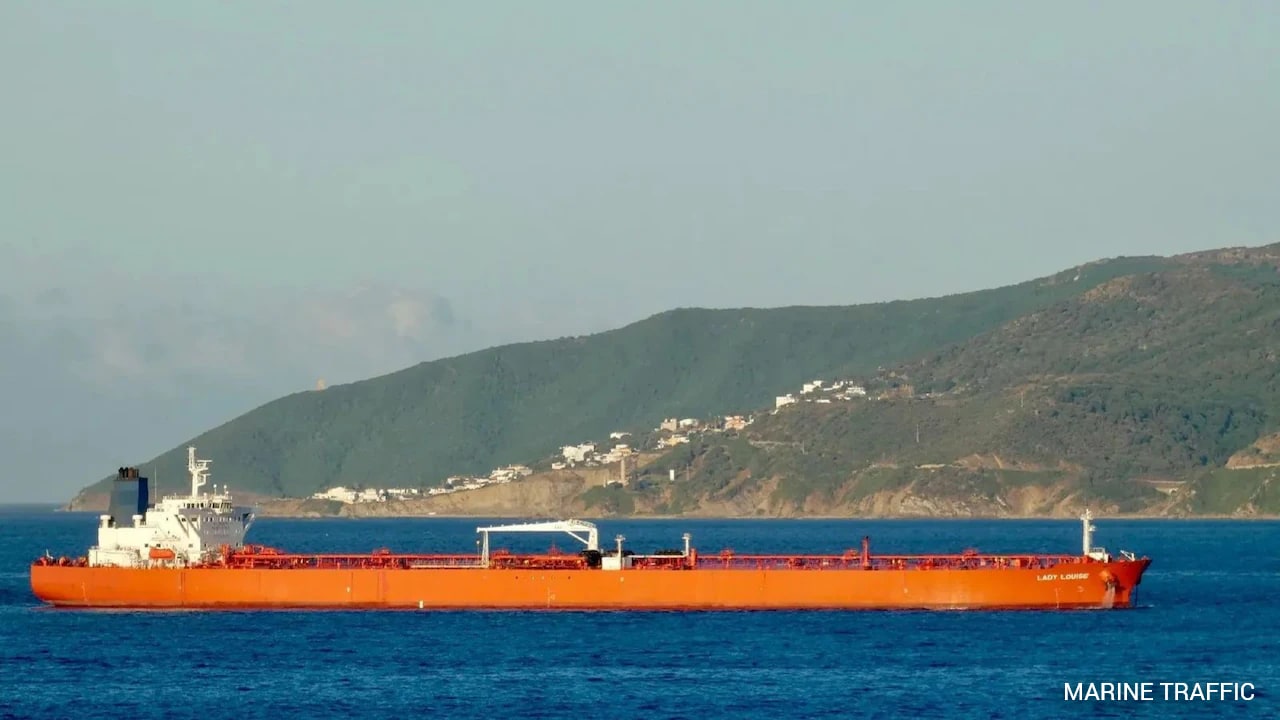
A commercial tanker with twenty-seven Indian seafarers aboard takes a limpet mine hit in the Strait of Hormuz. Immediately, cable news chyrons turn blood red. Pundits scream about an imminent global oil shock, supply chain collapse, and full-scale regional war.
They are wrong. Every single one of them.
The lazy consensus treats a limpet mine attack as an act of reckless escalation designed to choke off twenty percent of the world’s petroleum supply. That narrative sells clicks, but it fails basic maritime intelligence. If an aggressor actually wanted to close the Strait of Hormuz or sink a modern Very Large Crude Carrier (VLCC), they would not use a magnetically attached explosive charge that punches a hole just above the waterline.
They would use anti-ship ballistic missiles, swarm-drone saturation, or bottom-moored acoustic influence mines designed to break a ship’s keel.
A limpet mine is not a weapon of blockade. It is a surgical tool of calibrated ambiguity. It is designed to burn, scare, spike insurance premiums, and leave just enough plausible deniability on the table to paralyze diplomatic retaliation.
The Physics of Hulls and the Myth of the Sunken Supertanker
To understand why the mainstream coverage of the Strait of Hormuz attack is hysterical nonsense, you have to understand naval architecture and explosive physics.
Modern oil tankers and chemical carriers are built with double hulls—an outer steel skin separated from the inner cargo tanks by a ballast space often two to three meters wide. This standard, enforced globally by the International Maritime Organization (IMO) under MARPOL Annex I after the Exxon Valdez disaster, exists specifically to prevent catastrophic oil spills from low-energy impacts.
A standard limpet mine carries between ten and fifty kilograms of high explosive, typically Composition B or C-4. Divers or fast-attack skiffs attach it directly to the outer hull plating, almost always near the waterline. Why the waterline? Because placing a charge deep beneath the draft requires specialized combat divers, decompression stops, and massive risk of detection. Slapping a magnetic charge at the waterline takes thirty seconds from a rigid-hulled inflatable boat (RHIB) under cover of darkness.
When that charge detonates, the blast vents largely into the open air and water. It tears a jagged hole in the outer ballast tank, sparks a localized fire on deck, and forces the crew to abandon ship—just as those twenty-seven Indian mariners were forced to do.
It does not sink the vessel.
I have sat in London underwriting rooms reviewing hull-and-machinery damage reports from the 2019 Gulf of Oman incidents—specifically the attacks on the Front Altair and the Kokuka Courageous. In both cases, operators panicked, pundits predicted $150 oil by Monday, and within forty-eight hours, salvage tugs had the vessels under tow with their primary cargo holds completely intact.
The attackers know the physics better than the journalists do. If you sink a supertanker in a narrow shipping lane, you trigger an automatic, overwhelming military response from the United States Fifth Fleet and a coalition of global naval powers whose economies depend on those waterways. If you scorch the paint, blow a hole in a ballast tank, and rescue—or force the rescue of—a civilian crew, you achieve total strategic disruption without crossing the red line that brings carrier strike groups down on your head.
Why Twenty-Seven Indian Mariners Are Always in the Crosshairs
Mainstream reporting always leads with the nationality of the crew as if the attackers targeted them specifically, or as if this represents a shocking new humanitarian variable.
It is neither. It is standard maritime demographics.
According to the BIMCO and International Chamber of Shipping (ICS) Seafarer Workforce Report, India is one of the largest suppliers of certified maritime officers and ratings on the planet, accounting for roughly ten to twelve percent of the global seafaring workforce. On vessels transiting the Middle East, Indian nationals routinely make up sixty to eighty percent of the crew due to proximity, established crewing agencies in Mumbai and Chennai, and competitive wage structures.
When a tanker gets hit in the Gulf of Oman or the Strait of Hormuz, statistically, the crew will almost always be predominantly Indian, Filipino, or Eastern European.
Yet the Western press treats the crew's nationality as an incidental footnote while obsessing over barrel prices. Meanwhile, regional coverage treats it as a targeted diplomatic incident. Both miss the actual operational failure: flag-of-convenience vulnerability.
The vast majority of tankers running the Hormuz gauntlet fly flags from Panama, Liberia, or the Marshall Islands—nations with massive ship registries and zero naval projection capability. When a Liberian-flagged vessel with a Greek beneficial owner, a Singaporean charterer, a Norwegian insurer, and an Indian crew takes a limpet mine hit, nobody owns the escalation ladder.
- New Delhi demands the safe return of its citizens, which the attackers or nearby coastal forces happily facilitate to look magnanimous.
- Washington issues a stern condemnation because no American hull or citizen was struck.
- The flag state does nothing because it has no navy.
The attackers exploit this fractured accountability. By striking multinational commercial targets rather than flagged warships, they guarantee a fragmented, bureaucratic response instead of a kinetic one.
Follow the War Risk Premiums, Not the Cable News Chyrons
If you want to know what is actually happening in the Strait of Hormuz, stop watching defense analysts on television and start reading circulars from the Joint War Committee (JWC) at Lloyd’s of London.
The real battleground in maritime gray-zone warfare is not the water. It is the actuarial spreadsheet.
Every time a limpet mine detonates against a commercial hull in the Persian Gulf, the JWC meets to reassess the "Listed Areas"—regions deemed high-risk for war, piracy, and terrorism. The moment the Strait of Hormuz and the Gulf of Oman get flagged or upgraded on that list, standard hull and machinery insurance policies become void for war perils.
Shipowners must purchase Additional War Risk Premiums (AWRP) for every single seven-day transit through the chokepoint.
Let us look at the actual numbers from past spikes in Gulf hostilities:
| Metric | Peacetime Baseline | Post-Limpet Mine Spike | Financial Impact per Transit |
|---|---|---|---|
| AWRP Rate (% of Hull Value) | 0.025% | 0.25% – 0.50% | 10x to 20x cost increase |
| VLCC Hull Valuation | $100,000,000 | $100,000,000 | Unchanged |
| Insurance Cost per Voyage | $25,000 | $250,000 – $500,000 | Up to $475,000 pure friction |
| Crew War Zone Bonus | $0 | 100% basic wage doubling | ~$30,000 – $50,000 per transit |
Do the math. A single limpet mine costs a state or proxy actor maybe $2,000 in materials and a handful of operatives in a speedboat. That $2,000 investment instantly imposes a $500,000 tax on every single supertanker entering or exiting the Persian Gulf. Multiply that across twenty to thirty tankers transiting daily, and an attacker just extracted $10 million to $15 million per day in economic friction from global trade without firing a single missile or sinking a single ship.
That is the entire strategy. You do not need to close the Strait of Hormuz when you can simply make it financially toxic to insure a cargo passing through it.
Stop Asking Who Did It (You Are Asking the Wrong Question)
Whenever news breaks of a limpet mine attack on a tanker, search engines light up with variations of the exact same queries: "Who attacked the tanker in the Strait of Hormuz?" and "Will gas prices go up because of the Hormuz attack?"
Both questions are traps built on flawed premises.
First, asking "Who did it?" assumes that forensic attribution leads to deterrence. In gray-zone maritime warfare, attribution is theater. Intelligence agencies will inevitably release high-resolution overhead imagery showing unexploded mines on the hull, recovered fragments of magnetic clamps, and radar tracks of fast-attack craft returning to coastal bases.
And what happens next? Nothing.
Because in international law, proving that a state manufactured a mine is not the same as proving the state ordered the specific detonation—especially when non-state proxies, deniable maritime militias, and shadow fleets operate freely in those waters. By the time forensic teams finish scraping explosive residue off the steel plating, the diplomatic window for proportional retaliation has closed.
Second, asking "Will gas prices go up?" confuses short-term algorithmic trading spikes with physical supply deficits.
Crude oil futures algorithms are programmed to scrape news wires for keywords like "Hormuz," "tanker," "mine," and "attack." Within milliseconds of an AP alert, automated trading desks buy Brent crude futures, driving the price up by three to five percent. Retail commentators see that green candle on the chart and declare an energy crisis.
Forty-eight hours later, traders realize that not a single barrel of crude was lost, no export terminal was damaged, and the physical market remains amply supplied. The algorithms dump the contracts, and prices settle right back where they started. I have watched energy hedge funds make millions shorting the panic spike precisely because retail investors mistake headlines for physical bottlenecks.
The Contrarian Playbook for Maritime Risk and Energy Exposure
If you operate in shipping, commodities, logistics, or macro investing, reacting to Strait of Hormuz headlines puts you dead last in the information food chain. You have to invert how you process maritime security events.
1. Watch the AIS Transponders, Not the Press Releases
When a tanker gets attacked, skip the official statements from ministries of foreign affairs. Pull up raw Automatic Identification System (AIS) tracking data. Watch what the major state-owned fleets—like Saudi Aramco’s Bahri or the Abu Dhabi National Oil Company’s logistics arm—do immediately after the strike. If they keep steaming through the strait at normal knots without altering course, the threat is localized theater. If they drop anchor outside Fujairah and wait for naval escorts, the intelligence community knows a second wave is coming.
2. Audit Your Charter Party War Clauses Before the Blast
Shipowners and cargo charterers routinely lose millions in arbitration because they rely on outdated BIMCO CONWARTIME or VOYWAR clauses. If a vessel refuses to enter the Strait of Hormuz after a limpet mine incident, who eats the demurrage costs—which can easily hit $60,000 a day for a VLCC? If your contracts do not explicitly define what constitutes a "reasonable judgment" of war risk by the Master, you will spend the next two years paying maritime lawyers in London instead of moving cargo.
3. Understand the Shadow Fleet Distortion
Here is the uncomfortable truth nobody in the Western regulatory establishment wants to admit: aggressive sanctions enforcement has created a massive, dark-fleet ecosystem of aging, under-insured tankers operating with their AIS transponders turned off. These vessels carry sanctioned crude through the exact same waters using cut-rate crews and murky ownership structures. When the waters get crowded with ghost ships that ignore standard collision-avoidance protocols, every legitimate tanker carrying twenty-seven Indian seafarers becomes an easier target to isolate in the dark.
4. Recognize the Asymmetry Limit
There is one major downside to treating limpet mine attacks as pure economic theater: accidents happen. Explosives placed near a waterline in choppy seas can easily detonate lower than intended if a wave lifts the hull at the wrong second, or hit an improperly purged ballast tank filled with volatile hydrocarbon vapors. If a "warning" mine accidentally triggers a catastrophic vapor explosion and kills twenty-seven mariners, the carefully calibrated gray-zone math evaporates overnight. Political leaders who wanted to avoid a war will be forced into one by domestic outrage.
Until that calculation goes wrong, stop treating every magnetic mine in the Persian Gulf like the opening shot of World War III. It is a calculated tollbooth operated with high explosives—and as long as the global economy keeps paying the insurance premiums, the tollbooth stays open.