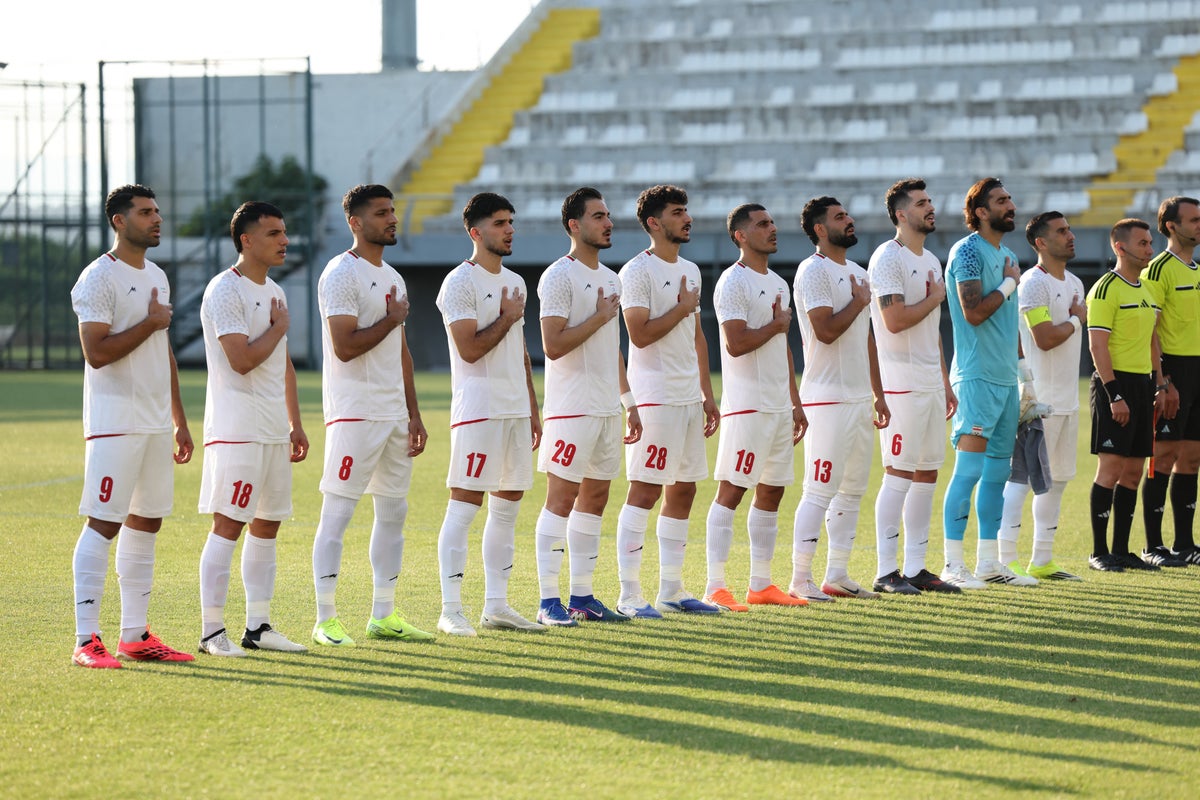
The media has already written the obituary for the Iranian national football team at the 2026 World Cup, and the tournament hasn’t even started.
Open any major sports publication and you will find the exact same lazy consensus. They spin a tragic, cinematic narrative: a fractured squad fleeing an Arizona training base for Tijuana due to visa snarls, bunkering down in Antalya under a media blackout, and shivering under the mental weight of an ongoing war with the primary host nation, the United States. Midfielders Saeid Ezatolahi and Mohammad Ghorbani give the international press their mandatory, somber quotes about "following the news from home" and "playing for the joy of our people," and the Western press corps swoons.
It is soft. It is condescending. Worst of all, it is tactically and historically blind.
Let's clear up the nonsense immediately. This narrative treats geopolitical chaos as a sudden, crippling defect inflicted upon Team Melli’s preparation. That is a fundamental misunderstanding of Iranian football culture. Chaos isn't a disruption for this team; it is their baseline operational reality. To suggest that a change in training venues or diplomatic hostility will break this squad ignores decades of elite performance under crushing international sanctions and state surveillance.
The mainstream press is setting up a pre-packaged excuse for a group stage exit. If you actually look at the mechanics of international football tournament preparation, the very hardships the media is weeping over are the exact mechanisms that make Iran a terrifying, hyper-resilient opponent.
The Myth of the Broken Mindset
Journalists love to psychologize professional athletes, pretending that a tense geopolitical environment renders players incapable of executing a low-block defense. They write about "affected mindsets" as if these players are fragile academics rather than hardened professionals who have spent their entire careers playing under the shadow of the Islamic Revolutionary Guard Corps’ domestic meddling.
I have spent years watching football federations throw tens of millions of dollars at creating sterile, hyper-luxurious, stress-free training camps for European giants. Do you know what happens? Players grow soft, entitled, and easily rattled by the first sign of adversity on the pitch.
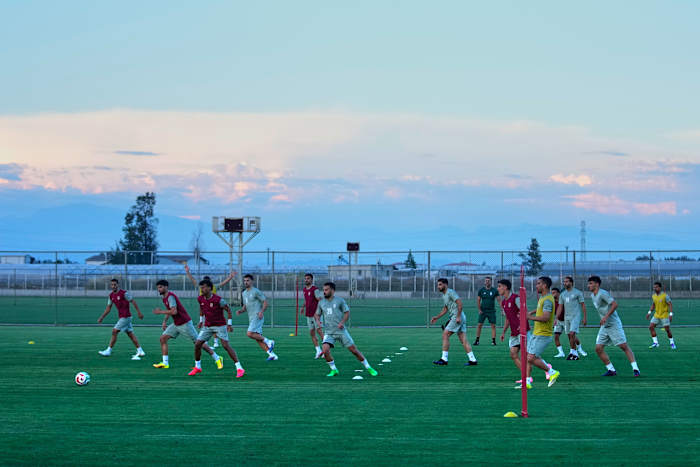
In contrast, look at what Iran's chaotic itinerary actually creates. They were forced to secure Mexican visas in Ankara, pack up their gear, and pivot from Tucson to a gritty border town training camp in Tijuana.
That isn't a logistical failure. It is an intense, forced team-bonding exercise that no high-priced corporate consultant could ever replicate.
When a squad is forced to adapt on the fly, dodge bureaucratic landmines, and train in a siege mentality, it strips away ego. The 24-year-old debutants like Ghorbani are instantly battle-tested before they even walk out of the tunnel at SoFi Stadium in Inglewood. They aren't thinking about luxury amenities; they are locked into survival mode.
The Diaspora Advantage in California
The media treats the upcoming matches near Los Angeles and Seattle as a hostile psychological minefield for the players. They note that Southern California is home to the largest Iranian diaspora in the world—a community deeply, violently opposed to the current Tehran regime. The prevailing assumption is that the stadium atmosphere will be a toxic cauldron of political protests that will paralyze the team.
This is a complete misreading of stadium dynamics.
Imagine a scenario where 70,000 screaming fans fill an arena in Inglewood. Yes, there will be competing flags. Yes, there will be political slogans targeting the regime. But what the Western press fails to comprehend is that the thunderous noise of a stadium packed with Iranians—regardless of their political factions—creates a hyper-charged home turf advantage for the players on the grass.
When Iran plays New Zealand on June 15 or Belgium on June 21, the stadium won't feel like a sterile neutral ground. It will feel like a pressure cooker. For a team that thrives on high-stakes, backs-to-the-wall defending, that raw, emotional energy is pure oxygen. The crowd isn't booing the players' technical ability; they are screaming for the shirt. Top-tier professionals do not shrink under that kind of volume; they ride the wave.
The Hypocrisy of the Geopolitical Pass
Why are we coddling Iran with the soft bigotry of low expectations?
When Russia launched its full-scale invasion of Ukraine, FIFA and UEFA didn't write deeply moving profiles about the psychological plight of Russian players; they banned them from competition entirely. When other nations experience civil unrest or diplomatic standoffs, their football teams are expected to perform or face the music.
Yet, when it comes to Iran, the footballing world looks at a roster stacked with players boasting deep European and Middle Eastern club experience—Ezatolahi has played across Spain, England, Belgium, Denmark, and Russia—and treats them like a ragtag group of amateurs who need a collective hug from the international media.
Let’s look at the hard data of Group G:
| Match Date | Opponent | Venue | Historical Context |
|---|---|---|---|
| June 15, 2026 | New Zealand | Inglewood, CA | Must-win opening fixture against a weaker tactical side. |
| June 21, 2026 | Belgium | Inglewood, CA | The ultimate tactical test against an aging European elite. |
| June 26, 2026 | Egypt | Seattle, WA | A fierce regional rivalry played on neutral territory. |
This is a highly competitive, functional group. Iran is ranked 21st globally by FIFA for a reason. They possess an elite defensive structure, a lethal counter-attacking system, and forward lines that can punish any defensive transition. To reduce their World Cup campaign to a sob story about visa delays is an insult to their sporting merit.
Stop Asking if They Can Cope
The standard line of questioning from reporters in Antalya is fundamentally flawed. They ask: "How can you focus on football when your country is at war with the host nation?"
The real question we should be asking is: "How will New Zealand, Belgium, and Egypt handle an opponent that literally has nothing left to lose?"
When a team trains under a total media blackout, isolated from the corporate PR carousell that drains the energy of Western squads, they become a dangerous monolith. They don't have to do sponsor activations. They don't have to answer brainless questions from domestic influencers. They just train, eat, and stew in their own intensity.
The downside to this contrarian reality is obvious: the political pressure from the regime back home is immense, and the players are walking a tightrope between state propaganda and diaspora fury. If they fail on the pitch, the blowback will be vicious. But that immense risk is precisely why they won't roll over.
Do not buy into the narrative of the tragic, distracted underdog. If Iran crashes out in the group stage, it won't be because Trump said it wasn't "appropriate" for them to attend, and it won't be because they had to practice in Tijuana. It will be because they failed to execute their tactical game plan on the pitch.
Stop weeping for Team Melli. Save your pity for the teams that have to break down their defense while 70,000 fanatical fans turn Los Angeles into downtown Tehran.