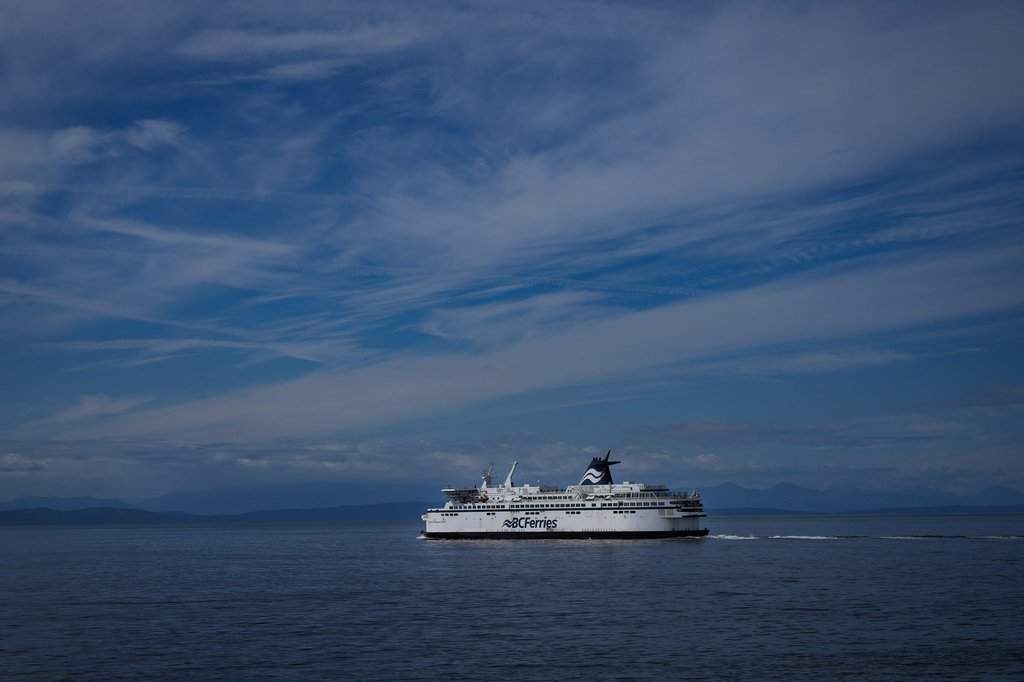
Every time a provincial election cycle heats up in British Columbia, the exact same political theater plays out at the docks. Politicians stand near the water, point at the aging hulls of BC Ferries, and promise voters they will "examine shipbuilding procurement" to keep jobs in the province.
It sounds patriotic. It plays well on the evening news. And it is the single fastest way to bankrupt a public utility while leaving island residents stranded on the tarmac.
The mainstream narrative—championed by opposition critics like Bill Doerkson and echoed uncritically across regional press—suggests that BC Ferries has a procurement problem that can be solved by forcing domestic construction. The lazy consensus assumes that awarding multi-million-dollar vessel contracts to overseas yards is a betrayal of local labor, and that a new government review will magically uncover a way to build world-class vessels in British Columbia on time and on budget.
That consensus is built on a foundation of economic illiteracy.
If you want to understand why BC Ferries buys ships from Europe and Asia instead of North Vancouver or Victoria, you have to stop listening to campaign trail talking points and look at the cold, hard mechanics of global maritime manufacturing.
The "Buy Local" Trap in Heavy Marine Construction
Let’s dismantle the core premise right out of the gate. The question voters are being asked is: Why isn't BC Ferries building its new vessels in British Columbia?
That is the wrong question. The right question is: How much are British Columbians willing to pay in fare hikes and tax subsidies to subsidize a domestic shipyard capacity that does not currently exist?
I have watched regional transit authorities and maritime operators across North America blow hundreds of millions of dollars trying to appease local industrial policy. The pattern never changes. A government mandates domestic construction. The local yards—already choked with federal defense contracts—bid high because they have zero incentive to compete on price. Schedules slip by years. Steel costs balloon. Taxpayers eat the overruns, and commuters get stuck riding fifty-year-old rust buckets while waiting for a keel to be laid.
In British Columbia, the bottleneck is not political will. It is physical capacity and labor economics.
Local giants like Seaspan Shipyards in North Vancouver are tied up for the foreseeable future with the federal National Shipbuilding Strategy. They are building Joint Support Ships for the Royal Canadian Navy and Offshore Oceanographic Science Vessels for the Canadian Coast Guard. Their dry docks are full. Their skilled welders, pipefitters, and naval architects are spoken for.
When a politician promises to "examine" BC Ferries shipbuilding to bring it home, they are essentially asking a fully booked restaurant to cater a five-hundred-person wedding on ten minutes' notice. Even if a local yard wanted the work, they would have to build new infrastructure from scratch, poach specialized labor from other sectors, and pass every dime of those startup costs directly onto the BC Ferries balance sheet.
The Anatomy of a Marine Procurement Disaster
We do not need to guess what happens when domestic political mandates collide with maritime reality. We have the receipts.
Look at the Fast Ferry fiasco of the 1990s. The provincial government decided to revitalize the local shipbuilding industry by building three aluminum catamarans in BC. The project was supposed to cost $210 million. It ended up costing over $460 million. The vessels generated massive wakes that damaged shorelines, suffered constant mechanical failures, and were eventually sold off for a fraction of their build cost—roughly $19.4 million total.
You might argue that technology has changed since the nineties. Fair enough. Look south to Washington State Ferries instead.
Washington operates under strict "Build in Washington" mandates. The result? A fleet crisis that makes BC Ferries look like a Swiss watch. Washington has been forced to cancel sailings, gut routes, and watch construction timelines stretch out by years because local shipyards cannot match the economies of scale, specialized supply chains, or fixed-price discipline of international builders.
Meanwhile, look at what happens when BC Ferries goes to the global market.
When the company contracted Damen Shipyards in Romania to build the Island-class hybrid-electric vessels, or Remontowa Shipbuilding in Poland for the Salish-class ships, they got fixed-price contracts. They got predictable delivery schedules. Most importantly, they got vessels built by yards that specialize in serial production of mid-sized passenger ferries.
Understanding Economies of Scale in Shipbuilding
To understand why a Polish or Romanian yard can build a ferry, sail it across the Atlantic Ocean, pay Canadian import duties, and still beat a domestic bid by tens of millions of dollars, you need to understand serial production versus bespoke fabrication.
- Supply Chain Density: European shipbuilding hubs operate within dense industrial clusters. Engine manufacturers, propulsion specialists, marine electronics suppliers, and specialty steel mills sit within a few hundred miles of the dry dock. In British Columbia, almost every major mechanical component—from Wärtsilä engines to Schottel azimuth thrusters—has to be imported anyway. Building locally simply means shipping the parts to BC instead of shipping the finished hull.
- Design Amortization: Global yards build dozens of similar hulls every decade. The engineering mistakes have already been debugged on previous vessels. When a domestic yard takes on a one-off ferry project, the buyer pays for the entire learning curve.
- Fixed-Price Risk Transfer: International yards with deep balance sheets absorb the risk of raw material inflation and labor delays. Domestic yards, knowing they hold a political monopoly, routinely push cost-plus models or aggressive change-order clauses onto public buyers.
| Procurement Factor | Global Competitive Bidding | Domestic Political Mandate |
|---|---|---|
| Contract Structure | Fixed-price, firm delivery date | Cost-plus or heavy contingency markups |
| Yard Specialization | High-volume commercial ferry builders | Defense-focused or repair-heavy yards |
| Supply Chain | Local proximity to marine OEMs | Reliant on overseas component shipping |
| Financial Risk | Borne primarily by the shipyard | Borne by taxpayers and ferry users |
| Timeline Predictability | High (backed by penalty clauses) | Low (subject to defense contract priority) |
What Critics Get Wrong About Local Economic Impact
The most common pushback from politicians and union leaders is the multiplier effect. They argue that even if a BC-built ferry costs 30% or 40% more upfront, those tax dollars stay in the provincial economy, paying local wages and generating income tax revenue.
This sounds plausible until you run the actual math.
Imagine a scenario where a new major vessel costs $150 million overseas, or $225 million if forced through a domestic yard. That $75 million premium does not materialize out of thin air. BC Ferries has to borrow it, raise fares to pay the debt service, or demand a direct subsidy from Victoria.
Every dollar extracted from ferry riders in higher fares is a dollar removed from the coastal economy. Tourism drops. Commercial trucking costs rise, driving up the price of groceries on Vancouver Island and the Sunshine Coast. Small businesses lose margins.
Furthermore, BC shipyards are already capturing the most profitable, consistent slice of the marine lifecycle: maintenance, refits, and mid-life upgrades.
Shipbuilding is a low-margin, high-risk, cyclical business. Ship repair and lifecycle maintenance, on the other hand, provide steady, year-round employment for local tradespeople. Point Hope Maritime in Victoria, Esquimalt Graving Dock, and Seaspan’s Victoria Shipyards stay busy year-round tearing down engines, upgrading electronics, and repainting hulls for the existing BC Ferries fleet. By buying affordable hulls abroad, BC Ferries actually preserves the capital needed to keep local repair yards humming for the thirty-to-forty-year lifespan of each ship.
The Real Problem Nobody Wants to Audit
If a new government actually wants to examine BC Ferries shipbuilding, they should stop looking at where the ships are built and start looking at what BC Ferries is asking the shipyards to build.
This is the dirty secret of the coastal fleet: bespoke over-engineering.
BC Ferries has a long-standing habit of treating every vessel replacement like a custom boutique design rather than buying off-the-shelf proven platforms. Naval architects and internal committees load up specifications with unique terminal-interface requirements, hyper-specific hull geometries, and custom bridge layouts.
Every custom modification breaks the financial magic of international procurement. When you walk into a major shipyard and ask for their standard hull design with minor paint and seating adjustments, you get bulk pricing and rapid delivery. When you hand them a thick binder of bespoke requirements, even a foreign yard will charge you a fortune.
If politicians truly want to save taxpayers money and modernize the fleet before the existing Spirit-class and Coastal-class vessels age out, the mandate shouldn't be "Buy BC." The mandate should be: Buy standardized, off-the-shelf commercial designs from whichever global yard offers the best fixed-price guarantee, and restrict local shipyards to high-margin maintenance and refit contracts.
The Uncomfortable Trade-Offs
Let’s be brutally honest about the downside of sticking with global procurement.
It requires political courage. When a shiny new ferry arrives in Victoria Harbour flying a foreign delivery flag, opposition politicians will inevitably hold press conferences accusing the government of abandoning Canadian workers. It makes for terrible optics on the six o'clock news.
There is also geopolitical supply chain risk. Relying on European or Asian shipyards means exposing fleet renewal timelines to global shipping disruptions, foreign currency fluctuations, and overseas labor markets. You lose direct regulatory oversight over the shop floor, forcing BC Ferries to station teams of project managers and inspectors abroad for years at a time to ensure weld quality and regulatory compliance with Transport Canada standards.
Those are real operational headaches. Any veteran marine superintendent will tell you that managing a build in Gdansk or Constanța is exhausting.
Yet those headaches are minor compared to the alternative: watching BC’s coastal highway grind to a halt because politicians decided to use ferry procurement as a jobs program.
Addressing the Questions Voters Are Actually Asking
Can BC shipyards legally bid on BC Ferries contracts right now?
Yes. Nothing stops a Canadian shipyard from bidding on BC Ferries tenders. In fact, BC Ferries regularly invites domestic yards to submit proposals. They rarely bid on new major builds because their dry docks are booked with federal work, and when they do bid, their prices are non-competitive due to labor rates and facility overhead.
Why doesn't the provincial government just subsidize the price difference?
Because public money is finite. Every $100 million spent subsidizing a local shipyard is $100 million taken away from coastal highway infrastructure, healthcare, or terminal electrification. Subsidizing uncompetitive heavy manufacturing does not create sustainable industry; it creates permanent corporate welfare dependent on taxpayer handouts.
What about the New Major Vessels (NMV) program?
BC Ferries is currently preparing to replace its aging fleet of large vessels that service the busiest routes between the Lower Mainland and Vancouver Island. If a new government freezes this procurement to conduct a political "examination" of domestic building options, it will trigger a multi-year delay. Delaying the NMV program guarantees higher steel costs, older vessels breaking down during peak summer travel, and widespread sailing cancellations by the end of the decade.
Stop Playing Politics With the Coastal Highway
A ferry system is critical transportation infrastructure, not an economic development slush fund.
When you get on a commercial flight from Vancouver to Calgary, you do not demand that the airline build the jet in Richmond. You expect the airline to buy the safest, most reliable, most cost-effective aircraft on the global market so your ticket stays affordable and the plane shows up on time.
BC Ferries deserves the exact same standard. Politicians promising to "examine" shipbuilding are selling nostalgia wrapped in red tape. Let the international yards build the hulls at fixed prices, let BC yards dominate the lucrative forty-year maintenance cycle, and get the politicians out of the dry dock.


