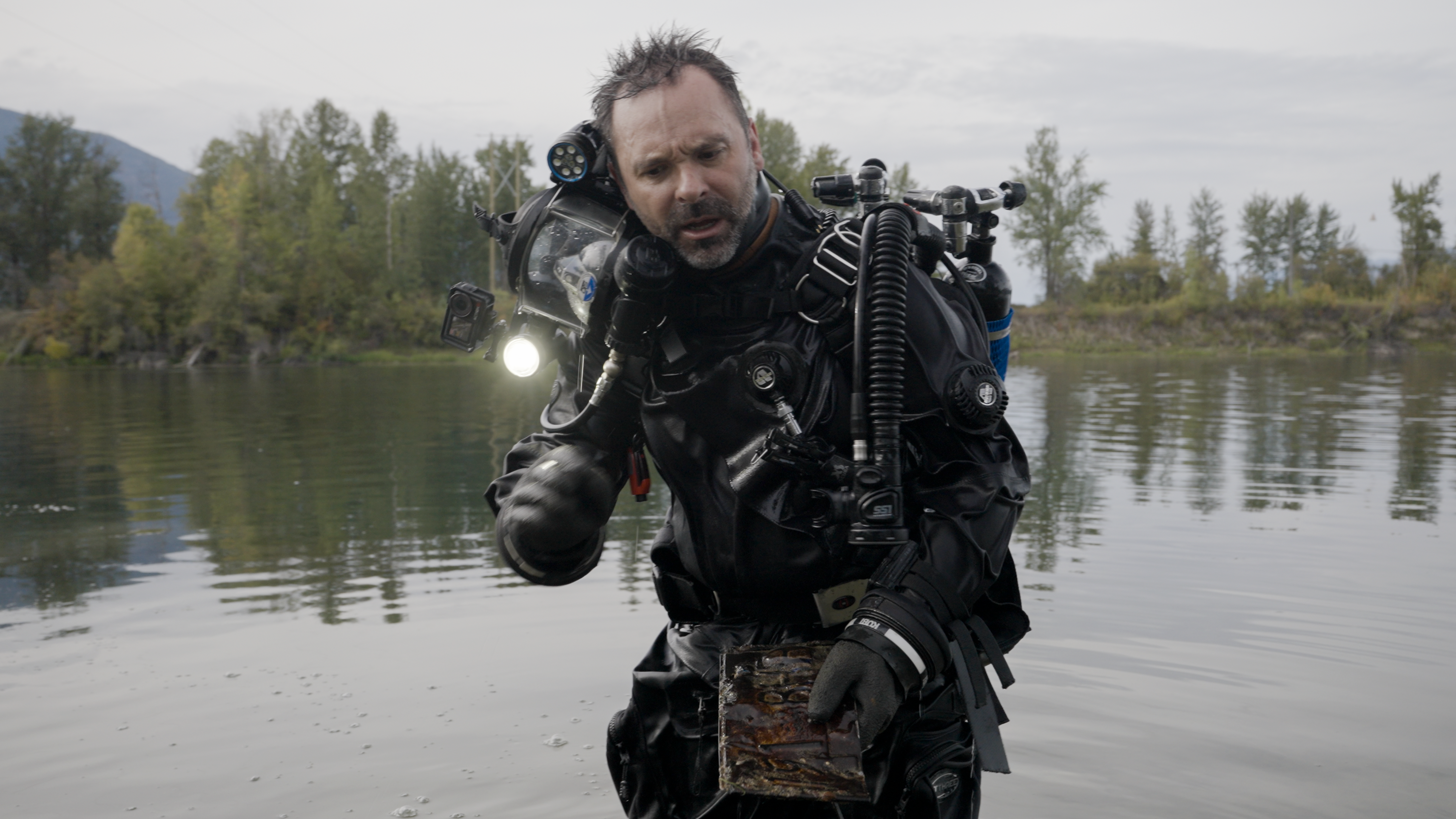
The media wants you to swallow a comforting fable. When Frank Davis was finally pulled from the Kootenay River after twenty-two years, the mainstream narrative rushed to applaud the heartwarming closure. A volunteer dive squad scanned the murky water near an old ferry landing, spotted a submerged chassis, and solved a puzzle that had baffled authorities since July 2004.
Cue the applause. Cue the profiles on citizen heroism. Cue the collective sigh of relief for a grieving family. In related news, take a look at: New Delhi Tries to Walk the Tightrope as the Ukraine War Drag Line Shortens.
It is a great story. It is also an indictment of institutional failure disguised as a heartwarming human interest piece.
Let us strip away the sentimentality and look at the brutal mechanics of how missing persons cases are handled in North America. When a car drives off a rural highway and plunges into a deep waterway, it does not vanish into an alternate dimension. It sinks. It sits. And unless someone stumbles upon it with side-scan sonar two decades later, it stays there while local detachments close the file and chalk it up to a cold case. The Washington Post has analyzed this important issue in great detail.
We need to stop treating these civilian discoveries as miraculous anomalies and start asking why local law enforcement left vehicles sitting in plain sight for a generation.
The Myth of Exhaustive Search
When someone goes missing with their vehicle, the lazy consensus assumes the police ran out of options. We are conditioned to believe that if a river is deep or murky, authorities have done everything humanly possible to probe its depths.
That is nonsense.
I have spoken with rescue coordinators and investigators who know the dirty secret of rural policing: resource allocation dictates recovery. Standard police procedure rarely involves continuous, high-tech sonar sweeps of every river bend or drop-off over a decades-long timeline. Once the initial flurry of surface searches and witness interviews yields zero momentum, the file goes into a filing cabinet. The budget shrinks. The priority shifts to active calls.
Meanwhile, a car with human remains inside sits fifty feet from a boat launch.
When groups equipped with portable sonar units and high-resolution underwater cameras roll into town and find a missing person in a matter of hours—or days—it exposes a massive gap in public safety infrastructure. If a couple of civilian volunteers in a tow vehicle can map a river bottom and locate a lost sedan that the state wrote off in 2004, what does that say about the baseline capabilities of publicly funded underwater recovery units?
It says they are underfunded, underequipped, or simply unwilling to deploy resources unless forced by immediate evidence.
The Cost of Closure
Families deserve answers. The relatives of Frank Davis spent twenty-two years staring into a vacuum of uncertainty. Knowing that a loved one missed a turn, slid off an embankment, and rested underwater all that time is a devastating pill to swallow, but it beats the psychological torture of an open-ended disappearance.
Yet, we must separate the emotional relief of the family from the systemic failure that allowed that relief to take over two decades.
We have outsourced cold-case resolutions to private citizens with GoFundMe accounts and GoPro cameras. While these volunteer squads perform vital work, relying on amateur benevolence to do the heavy lifting of forensic recovery is a systemic embarrassment. Taxpayers fund massive police budgets, tactical gear, and administrative bloat, while basic vehicle recovery in deep water relies on internet-funded hobbyists with side-scan sonar.
If a vehicle can remain undiscovered in a heavily trafficked river corridor for twenty-two years, the search protocols of the early 2000s were broken. More importantly, the failure to re-examine those high-risk water bodies with modern tech over subsequent decades proves that cold cases are treated as dead files, not ongoing investigations.
The Uncomfortable Reality of Cold Water Recovery
Let us address the physical reality that the feel-good reports gloss over. Submerging a vehicle for over two decades transforms the recovery operation into a nightmare of biological and structural decay. By the time a car is hauled up the muddy bank of a river like the Kootenay, the evidence is degraded, the vehicle is unrecognizable, and identification requires specialized forensic pathology.
Every year a car stays underwater is another year evidence degrades beyond utility. Had basic sonar sweeps been prioritized across high-risk provincial waterways years prior, families would not have had to wait half a lifetime for a phone call from a civilian dive team.
We can celebrate the closure for the Davis family without kissing the boots of an inept system that let a man sit at the bottom of a river for a generation. Stop praising the loophole. Fix the sieve.
The next time a car goes off a bridge into a dark channel, don't wait for a YouTube channel to buy a sonar rig. Demand that the badgeholders do their jobs the first time.
After 22 years missing, Frank Davis has been found in the Kootenay River near Creston, B.C
The short video above highlights the exact location and the recovery context in the Kootenay River where the vehicle was finally located after more than two decades.



