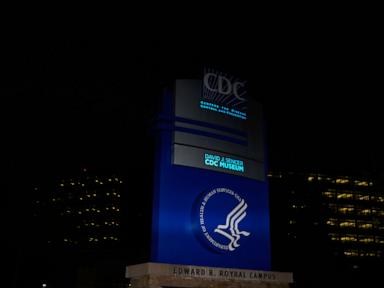
Washington loves a good phantom. Mention zombie programs at the Centers for Disease Control and Prevention, and lawmakers instantly reach for the defibrillator. Senators clutch their pearls over unstaffed offices for smoking research, epilepsy tracking, and Alzheimer's funding, demanding that newly minted agency director Dr. Erica Schwartz bring the bureaucratic undead back to life.
The lazy consensus says this is a crisis. The narrative is simple: Congress appropriated the cash, therefore bodies must occupy desks to spend it, or democracy crumbles. Meanwhile, you can find similar developments here: The Broken Egg Chain Behind the Latest Salmonella Crisis.
It is a comforting delusion for people who measure government competence by headcount rather than outcome.
I have watched public health agencies burn through billions of dollars on administrative bloat, redundant grant-processing loops, and paper-shuffling committees that produce zero measurable drops in disease incidence. The panic over these dormant desks misses the entire point of institutional efficiency. We do not have a staffing shortage. We have a addiction to institutional permanence. To see the full picture, check out the excellent report by Medical News Today.
The Fallacy of Statutory Immortality
Let us look at the mechanics of federal appropriations. Once an office is baked into statute and funded, it gains a near-infinite half-life. It does not matter if its primary interventions have become obsolete, if state-level health departments handle the work more efficiently, or if the data collection methods belong in a museum.
Take the Office on Smoking and Health, which recently sat with hundreds of millions in allocated funds but sparse internal staffing. Lawmakers hyperventilate because the central bureaucracy lacks full-time analysts to push paper. Yet, the core engine of public health funding—the money funneled directly to state and local programs—has continued to flow.
Imagine a scenario where a corporate enterprise keeps a legacy software division fully staffed long after the product line has been discontinued, purely because a board resolution from 1994 mandated its existence. You would call that corporate malfeasance. In Washington, it is called public service.
When the administration trimmed thousands of federal health positions, critics screamed about a hollowed-out agency. They ignored a basic truth of large organizations: bloat breeds inertia. When you remove layers of middle-tier federal overseers who spend their days reviewing each other's memos, the actual delivery of block grants to local municipalities doesn't grind to a halt. It often gets faster.
The Metrics That Actually Matter
Critics like to point out that seasoned experts are no longer sitting in Atlanta offices assessing grant effectiveness or publishing internal frameworks. Let us be brutally honest about what those frameworks usually achieve. They create compliance checklists that burden local health departments with bureaucratic theater rather than patient care.
If an Alzheimer's program receives forty-one million dollars, the knee-jerk legislative reaction is to demand a team of federal desk jockeys to administer it directly. Why? State health agencies and academic medical centers possess far superior infrastructure to run clinical trials and localized interventions without a federal intermediary taking a administrative cut and slowing down deployment.
The obsession with reviving every statutory zombie program assumes that federal centralization is synonymous with public safety. History suggests the exact opposite. Flexibility, localized adaptation, and lean execution beat centralized stagnation every single time.
What Dr. Schwartz Should Actually Do
Dr. Schwartz answered congressional prodding with the standard safe bureaucratic response: she will follow the law. That is fine for a confirmation hearing. But if she wants to leave a lasting mark on public health, she should weaponize these vacancies to audit what actually works.
Instead of panic-hiring to fill seats just to satisfy oversight committees, use the downtime to ask a radical question: does this office need to exist at all? If a program can remain dark for months while basic funding flows to the field without collapsing public health infrastructure, the program was likely redundant to begin with.
Congress treats statutory line items like sacred relics. They are not. They are policy choices made years ago under different economic and epidemiological conditions.
Stop trying to wake the dead. Let the zombies stay in the ground, and let public health evolve past the 20th-century obsession with central office headcount.