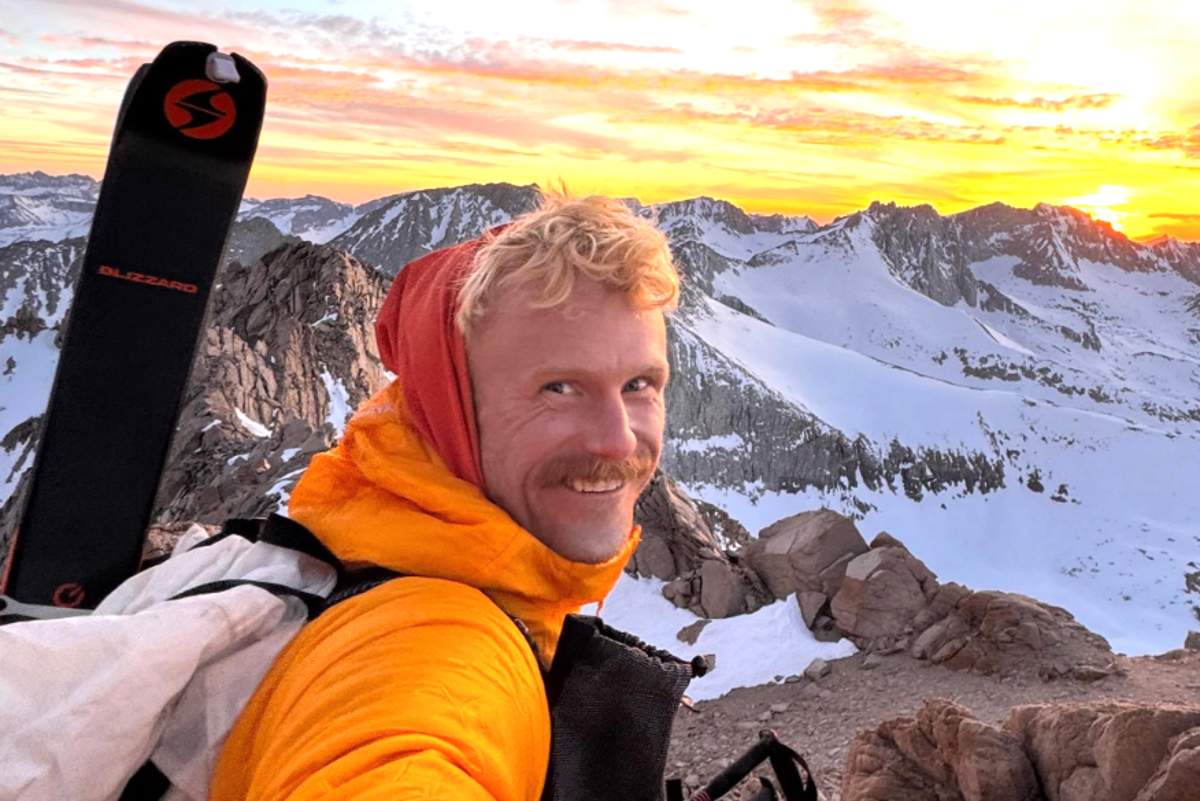
The ticker tape rolls. The eulogies pour in. Another elite mountaineer falls from a precipice, and the media wheels spin up the exact same comforting, intellectually bankrupt script: He died doing what he loves.
It is a lie. A sanitized, palliative euphemism designed to soothe the fragile sensibilities of a public terrified of mortality.
Jake Whisenant did not climb massive alpine walls simply to experience pure, unadulterated joy. If you ask anyone who has spent a decade sleeping on frozen granite ledges, hanging by titanium millimeters over empty space, they will tell you the truth. Climbing at the extreme limit is rarely fun. It is suffering. It is calculated risk, relentless discomfort, acute terror, and the desperate management of physiological collapse.
When we whitewash these tragedies with romantic clichés, we miss the entire point of why these athletes push the envelope. And worse, we absolve ourselves of the difficult conversation about why society fetishizes fatal recklessness while dressing it up as passion.
The Myth of Pure Passion
Let us dismantle the core falsehood first. Passion does not require a death toll.
When a corporate worker burns out, nobody says they died doing what they loved spreadsheets. When a marathon runner collapses from cardiac arrest, we treat it as a medical anomaly or a training failure, not a poetic destiny. Yet when it comes to high-risk mountaineering, extreme alpinism, and BASE jumping, a fatal accident is instantly wrapped in the shroud of divine purpose.
This is lazy comfort. It lets us categorize the dead as martyrs to joy rather than victims of a brutal, unforgiving calculus.
I have watched sponsors pour millions into high-altitude projects knowing the casualty rates. I have sat in base camps where the risk profile was terrifyingly lopsided, where the line between calculated ambition and sheer Russian roulette was blurred by ego, media pressure, and the seductive trap of escalation.
Whisenant was thirty. He was talented, sharp, and deeply entrenched in a subculture that demands constant escalation. In the modern outdoor industry, standing still is a form of professional death. You must go higher, go faster, tackle the unclimbed line, or film the solo ascent. The audience demands a spectacle. The algorithm rewards the edge.
To reduce all of that complex, grinding, heavy-metal ambition to a Hallmark card line about "doing what he loved" is an insult to his intelligence and his agency. He didn't just love it. He was chasing something much heavier.
The Currency of Risk
Let us look at the mechanics of extreme sports through an economic lens, because sentimentality is blinding us.
Risk is currency. In the attention economy of modern athletics, safety yields diminishing returns. A standard, safe ascent of a well-traveled peak doesn't move the needle. It doesn't secure funding, it doesn't drive brand partnerships, and it doesn't feed the psychological engine that drives elite performers to trade comfort for hazard.
Imagine a scenario where professional high-risk athletes were required by sponsors and governing bodies to carry mandatory hazard disclosure forms detailing the exact statistical probability of their own demise, read aloud before every major push. It sounds dystopian. But it strips away the poetry and forces everyone involved to confront the raw math.
The math is simple: the harder the route, the thinner the margin for error. When the margin hits zero, physics does not care about your passion.
By pretending that climbers are simply frolicking in a wonderland of personal bliss, we sanitize the danger. We tell the next generation of twenty-year-olds that dying on a mountain is just an occupational hazard of loving nature too much. That is a dangerous fairy tale.
The Brutal Reality of the Alpine Tax
Every elite mountaineer pays a tax. Some pay it in chronic joint destruction, lost fingers to frostbite, or psychological trauma. Others pay the ultimate principal.
Whisenant knew the tax rate. Every elite climber does. To pretend otherwise is to infantilize them. They are not wide-eyed innocents swept away by a wave of pure affection for the outdoors; they are hyper-focused, calculating tacticians who make a deliberate trade. They trade statistical longevity for intensity of experience.
That trade is valid. Adults have the right to choose how they spend their finite hours on this earth. If someone prefers ten years of blazing, hyper-intense existence over eighty years of suburban safety, that is their prerogative.
What is not valid is society rewriting the contract after the fact to make the survivors feel better.
When we say he died doing what he loves, we imply that the death was an incidental byproduct of the joy. It wasn't. The danger was the crucible. The proximity to oblivion is precisely what makes the achievement matter. Strip away the risk, and the accomplishment evaporates. You cannot have the triumph without the abyss.
Rewriting the Narrative
If we want to honor athletes like Jake Whisenant, we need to stop romanticizing their deaths and start respecting their agency.
That means acknowledging the dark side of the pursuit without flinching. It means admitting that ambition in extreme environments has a body count, and that the industry at large benefits from keeping that body count wrapped in inspirational poetry.
Stop telling grieving families that their loved one was simply too happy to survive. Start admitting that high-end alpinism is a brutal, demanding master that takes everything you have, and sometimes, demands the rest.
He didn't die because he loved it too much. He died because the game requires everything you own, and eventually, the house collects.