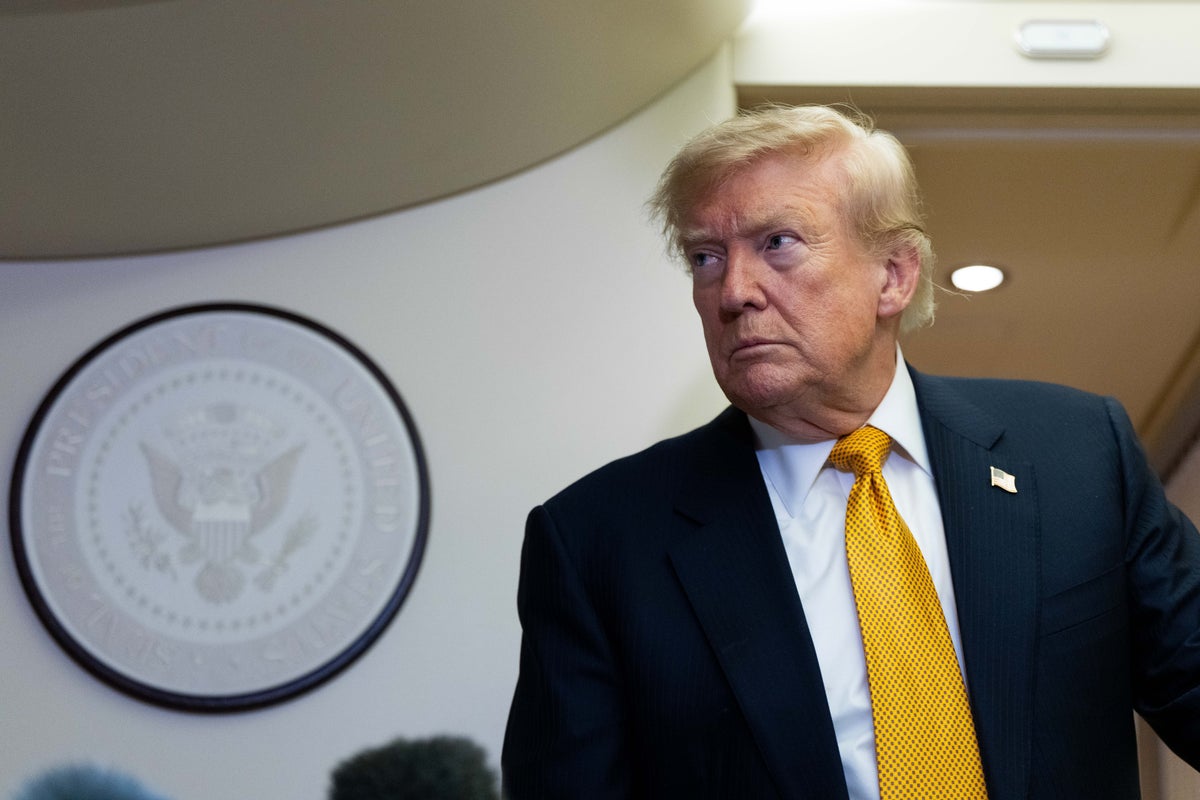
The concept of a stable Middle East under the current administration just went up in smoke. We were told the war with Iran would last four to five weeks at most when the joint US-Israeli campaign, Operation Epic Fury, began back on February 28. Instead, the conflict has mutated into a grueling regional crisis.
If you want to understand why your energy bills are creeping back up and why the global economy feels so unstable right now, you don't need to look any further than the Persian Gulf. The short-lived interim ceasefire signed in June at Versailles is dead. Donald Trump has declared the truce over, initiated consecutive nights of heavy airstrikes, and announced a full naval blockade on Iranian ports.
But it's his latest policy twist that has allies and maritime experts scratching their heads. Trump announced that the US is now "THE GUARDIAN OF THE HORMUZ STRAIT" and will demand a 20% tariff or toll on all commercial cargo passing through the waterway. It's a chaotic, transactional approach to international security that has turned traditional Gulf alliances into a dangerous liability.
The Versailles Agreement Illusion
To understand how we got back to the brink of a massive regional war, we have to look at the spectacular failure of the June 17 Memorandum of Understanding (MOU).
The deal was shaky from the start. Under the MOU, the US offered massive economic carrots to Tehran. We are talking billions of dollars in sanctions relief, unfreezing blockaded assets, and promising reconstruction assistance. In return, Iran was supposed to keep the Strait of Hormuz open to international shipping and sit down to negotiate the future of its nuclear program.
Critics quickly called it appeasement, especially since the initial February offensive had successfully assassinated Supreme Leader Ali Khamenei but failed to force a regime collapse. Trump essentially paid Iran a multi-billion-dollar premium just to temporarily reopen a public waterway.
Tehran pocketed the cash—earning an estimated $5 billion in oil exports during the brief lifting of the blockade—and immediately began testing the limits of the deal. Hardliners in the Islamic Revolutionary Guard Corps (IRGC) never intended to let go of their leverage. They quickly set up a "Persian Gulf Strait Authority" and demanded that all commercial vessels route through Iranian waters and pay transit fees.
When shipping lines refused, Iran started shooting. Following a series of drone and missile strikes on tankers in early July, the fragile peace completely unraveled.
Guardian of the Strait or Protection Racket
Trump's response to Iran's aggression has turned a highly volatile geopolitical crisis into something resembling a protection racket. On July 13, the administration announced a total maritime blockade on Iranian ports, oil terminals, and coastlines to take effect via the Joint Maritime Information Center.
At the same time, Trump took to Fox News and Truth Social to pitch his new vision for the Gulf:
"We're going to keep the strait, and we'll probably run it. We'll become the guardian of the strait."
His demand for a 20% tariff on all cargo transit has shocked international shipping cartels and traditional allies alike. Historically, the US military's presence in the Gulf was justified by a commitment to the global commons—ensuring the free flow of commerce under international law without charging admission.
By demanding a toll, the administration has abandoned that legal high ground. Maritime law experts have pointed out that there is absolutely no legal framework that allows a single nation to unilaterally levy taxes on an international strait. It also mirrors the exact behavior the US condemned when Iran tried to impose its own transit fees.
Gulf Allies Pay the Price
The danger of this highly personalized, transactional foreign policy is that it leaves regional allies highly vulnerable. While the US carries out air raids from the relative safety of standoff distances, Gulf partners are the ones taking direct hits.
The geographic scope of Iran's retaliatory strikes has expanded rapidly. Over the past weekend, we saw the conflict spill over to nations that had previously managed to stay out of the direct line of fire:
- Qatar: Long serving as a crucial mediator in peace talks, Qatar's territory was targeted by Iranian strikes for the first time since April.
- United Arab Emirates: UAE air defenses had to intercept a wave of drones and missiles. Two Emirati tankers were hit by cruise missiles in Omani waters, resulting in the death of a crew member.
- Kuwait: Iranian forces launched attacks hitting three border posts and an offshore oil platform.
This is the core reason why Trump is proving to be a toxic ally for the Gulf states. His administration's strategy alternates wildly between massive, destabilizing military actions—like the initial February strikes—and sudden, poorly structured concessions. Regional allies are forced to bear the security consequences of Washington's escalations without any long-term stability to show for it.
Real Consequences for the Global Economy
If you think this is just a localized military skirmish, look at the commodity charts. The Strait of Hormuz handles roughly 20% of the world's petroleum and liquefied natural gas.
Brent crude prices spiked more than 3% immediately following the blockade announcement. While they haven't yet reached the historic highs seen during the opening weeks of the war in March, the threat of a prolonged, double-sided blockade will keep energy prices volatile. Shipping companies are facing soaring insurance premiums, with many choosing to bypass the region entirely, adding weeks to transit times and driving up global shipping costs.
For the White House, this economic fallout is a massive political headache with congressional elections looming in November. Voters do not care about the tactical nuances of Middle Eastern maritime blockades; they care about the price of gas at the pump.
What Happens Next
The UN Secretary-General has warned that a return to full-scale hostilities will have catastrophic global consequences. Right now, the US has bypassed Congress by using a new 60-day military window, meaning we are locked into at least two more months of heavy military engagement without a clear diplomatic off-ramp.
If you are a business owner or investor trying to navigate this mess, you need to prepare for sustained disruptions. Relying on a swift diplomatic resolution is a losing bet. Diversify your supply lines away from Gulf transit where possible, hedge your energy costs now, and expect shipping delays to become the new normal as the battle for the world's most critical choke point intensifies.
You can learn more about how these developments are impacting energy markets and maritime trade in this detailed breakdown of the Strait of Hormuz conflict, which explains the logistical challenges of enforcing a blockade in the region.