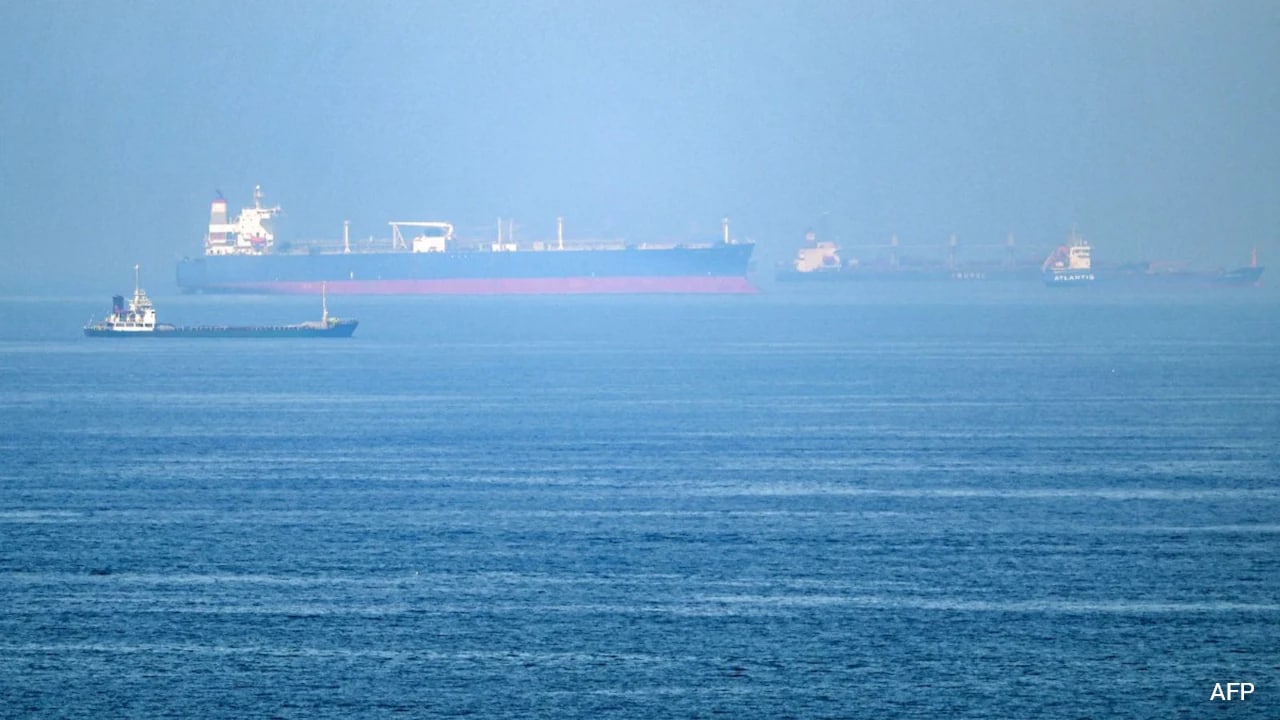
The maritime shipping industry just took another massive hit. Reports of an oil tanker struck by an unknown projectile in the Strait of Hormuz during a direct exchange of fire between Iranian forces and the US military represent a terrifying escalation. It isn't just another headline. For anyone tracking global energy supply chains, it's a flashing red light.
When a commercial vessel becomes collateral damage in a geopolitical chess match, the rules change instantly. Shipowners don't care about diplomatic posturing. They care about hull insurance, crew safety, and whether their multi-million dollar cargo will actually reach its destination. The reality of transiting the world's most volatile choke point has shifted from calculated risk to outright gambling. Also making headlines lately: The 1500 Kilometer Bridge Built on Red Dirt and Memories.
The core issue isn't just the physical damage to one ship. The real crisis lies in the deniability of the attack and what it does to the maritime insurance market. When an asset gets hit by a weapon that nobody claims, the entire region becomes a no-go zone for conservative operators. Let's look at what is actually happening on the water right now and why the typical media coverage misses the real economic threat.
The Anatomy of an Asymmetric Maritime Attack
Commercial tankers are massive, slow-moving targets. They have zero defensive capabilities. When regional tensions spike, these vessels become the ultimate leverage. The phrase "unknown projectile" is a diplomatic euphemism that covers a wide array of cheap, highly effective hardware. Additional details on this are covered by NBC News.
Most casual observers assume an attack means a high-tech anti-ship cruise missile. That happens sometimes, but asymmetric warfare usually relies on simpler tools. We're talking about loitering munitions, explosive-laden fast attack craft, or low-altitude drones that evade standard commercial radar. These weapons don't need to sink a 300,000-ton Very Large Crude Carrier to achieve their objective. They just need to poke a hole in the hull, spark a fire, or terrify the crew.
Iranian naval doctrine relies heavily on these swarm tactics and deniable actions. The Islamic Revolutionary Guard Corps Navy operates hundreds of small, fast boats designed to harass large vessels in the shallow, narrow waters of the strait. The geometry of the region works entirely in their favor. At its narrowest point, the shipping lanes in the Strait of Hormuz are only two miles wide in each direction. You can't maneuver a massive tanker out of the way of an incoming threat when you're confined to a path that tight.
The US Navy and its international partners face a logistical nightmare trying to protect this space. Standard carrier strike groups are built for open-ocean warfare. Operating them inside the Persian Gulf or the narrow corridor of the strait places them well within range of land-based coastal defense missiles. This forces western forces into a reactive posture, playing a perpetual game of whack-a-mole against low-cost drones and unidentified projectiles.
How the Insurance Market Shuts Down Shipping Lanes
You can talk about naval strategy all day, but Wall Street and London dictate whether ships actually sail. The Joint War Committee in London, which represents underwriting minds from Lloyd's Market Association, wields more power over these waters than most navies.
When a tanker gets struck under mysterious circumstances, insurers don't wait for a formal UN investigation. They react instantly by rewriting the risk profiles. The immediate consequence of an attack in the Strait of Hormuz is a massive spike in war risk premiums.
- War Risk Premiums: These are additional fees tacked onto standard marine insurance when a ship enters a designated high-risk zone.
- The Cost Surge: A single transit can see insurance costs jump by hundreds of thousands of dollars overnight, depending on the perceived threat level.
- The Ultimatum: If the risk gets too high, underwriters pull coverage entirely, effectively grounding the fleet.
If an owner can't get insurance, the ship doesn't move. It is that simple. No captain will sail a $100 million vessel carrying $200 million worth of crude oil into a combat zone without a financial safety net. When you see headlines about rising oil prices after a tanker attack, it isn't just because people fear a physical shortage of crude. It is because the cost of moving that crude has just skyrocketed.
The knock-on effect hits the global economy fast. Roughly 20 percent of the world's petroleum passes through this tiny strip of water. If a significant portion of the global tanker fleet decides the financial risk isn't worth the reward, supply chains constrict. Refineries in Asia and Europe start looking for alternative sources, driving up energy costs across the board.
The Mirage of Alternative Routes
Whenever the Strait of Hormuz becomes a shooting gallery, commentators point to pipelines as the easy fix. It sounds great on paper. Just bypass the water entirely. Unfortunately, the math doesn't back up the optimism.
Saudi Arabia and the United Arab Emirates operate major cross-country pipelines designed to move crude to ports outside the Persian Gulf, such as East Port on the Red Sea or Fujairah on the Gulf of Oman. These networks are impressive engineering feats, but they suffer from severe capacity limitations. They can only handle a fraction of the total volume that typically moves through the strait daily.
Relying on these pipelines also creates new security vulnerabilities. Fixed infrastructure on land is incredibly vulnerable to long-range drone and missile strikes. We saw this clearly in past years when regional energy infrastructure faced precise attacks that knocked out significant production capacity in days. Moving the oil to a land-based pipe doesn't eliminate the target. It just moves the target somewhere else.
The reality remains brutal. There is no viable substitute for the Strait of Hormuz. The global economy is structurally dependent on those narrow shipping lanes staying open. Any incident that disrupts the status quo for more than a few days triggers a cascading crisis that no pipeline network can absorb.
Tactical Reality for Crews on the Water
Imagine standing watch on the bridge of a vessel longer than three football fields, knowing you are floating in the middle of a crossfire. It's an agonizing experience for merchant mariners. These crews aren't military personnel. They are civilian workers from all over the world who find themselves on the front lines of an undeclared war.
Navigating the strait during a military escalation requires a complete shift in operational procedures. Ships turn off their Automatic Identification System transponders to hide their real-time positions from hostile actors, traveling in total digital darkness. This creates an immediate safety hazard, increasing the risk of collisions in one of the busiest waterways on earth.
Crews also have to implement passive defense measures. They rig razor wire along the rails to prevent boardings, establish secure "citadel" safe rooms inside the ship's superstructure, and maintain constant visual watches for low-flying objects or incoming fast boats. It is exhausting work that takes a massive psychological toll.
When the US and Iran exchange active fire, the danger of miscalculation reaches a boiling point. A civilian tanker can easily be misidentified by an anxious radar operator on a warship or a coastal missile battery. In the heat of an engagement, an "unknown projectile" can easily be a defensive missile that lost its tracking lock and slammed into the nearest massive metal object it could find.
What Commercial Operators Must Do Next
Sailing through the Middle East requires a complete rewrite of standard risk assessment models. The old playbook of relying on a flag state's naval presence to guarantee safe passage is officially dead. Operators can't just assume a western warship will appear to intercept every incoming threat.
The immediate next step for shipping companies is a radical restructuring of transit routing and timing. Moving through the strait during daylight hours offers better visual identification but makes the vessel an easy target for optical tracking systems. Night transits reduce visibility but complicate navigation in blackout conditions. Every single voyage now requires a bespoke risk analysis that balances tactical threats against operational safety.
Furthermore, companies need to reevaluate their charter party agreements. Shipowners must ensure their contracts contain ironclad "war risk" clauses that allow captains to refuse to enter the strait if the threat level passes a specific threshold without facing catastrophic legal penalties from cargo owners. Without these legal protections, owners face a financial trap, forced to choose between risking their crews or losing their businesses to breach-of-contract lawsuits.
The era of cheap, predictable maritime transit through the region is over. The latest strike confirms that commercial shipping has been fully integrated into modern gray-zone warfare. If you aren't actively adapting your security protocols, your vessel might be the next one listed as a casualty of an unknown projectile.