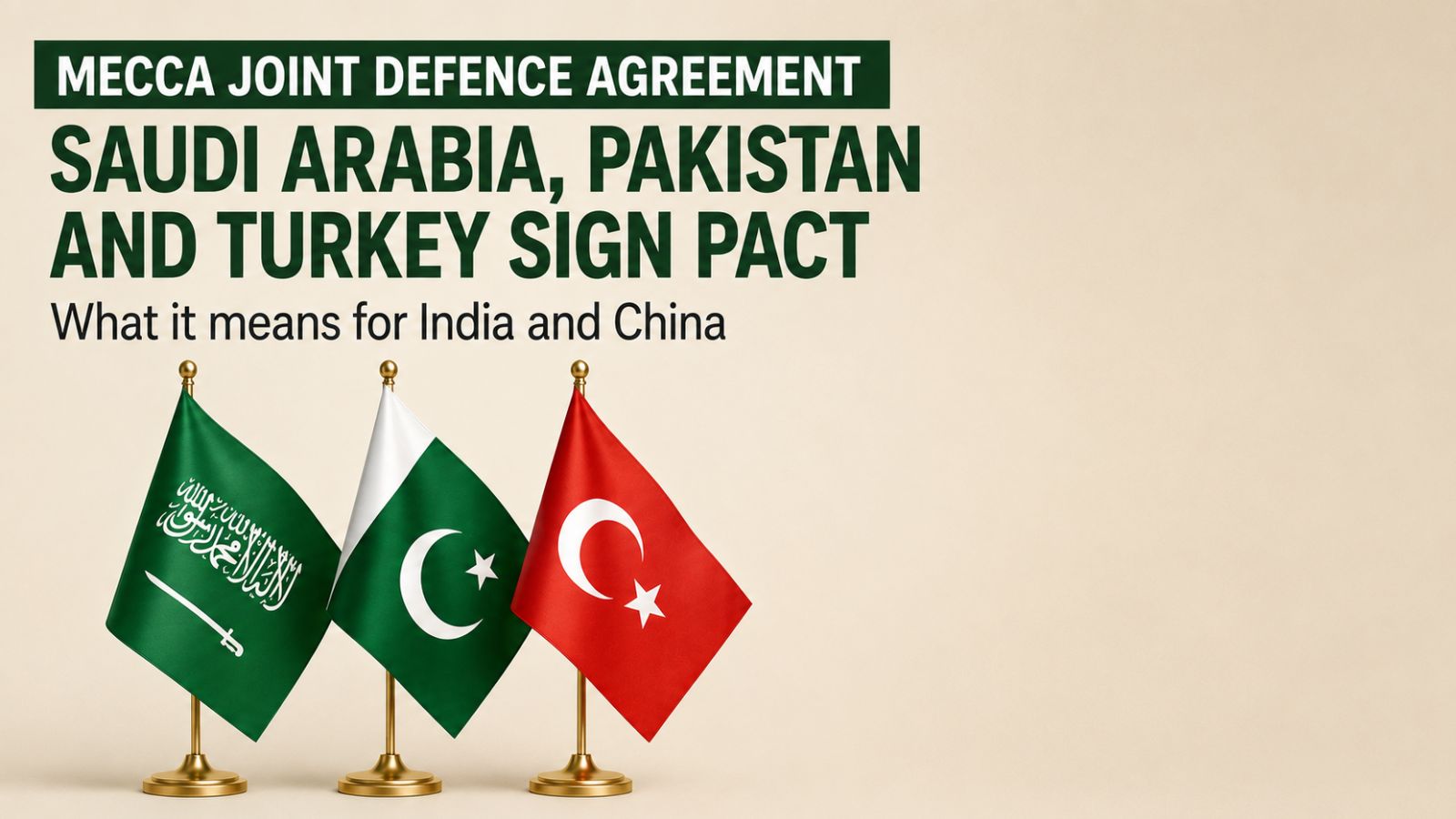
Geopolitical defense pacts frequently fail due to misaligned incentives, command structure ambiguities, and resource allocation bottlenecks. When military leadership from Pakistan, Turkey, and Saudi Arabia discuss cooperative frameworks under the umbrella of security arrangements tied to the defense of the Kingdom, analysts tend to focus on diplomatic optics rather than structural mechanics. A rigorous assessment of this alignment requires stripping away press release rhetoric to evaluate the operational capabilities, logistical friction points, and strategic utility of such a trilateral military consultation.
Defense integration between nations with divergent military doctrines, supply chains, and foreign policy objectives introduces severe friction. To understand the operational viability of any joint military framework involving Islamabad, Ankara, and Riyadh, one must deconstruct the arrangement through three distinct operational pillars: command interoperability, logistical sustainability, and strategic divergence mitigation.
Command Interoperability and Doctrine Alignment
Effective coalition warfare depends on standardized communications, shared intelligence architecture, and compatible tactical doctrines. Pakistan relies on a mixture of indigenous systems and Western-origin platforms, heavily influenced by conventional land-warfare doctrines honed along its eastern border. Turkey operates within a NATO-standardized ecosystem, deploying advanced indigenous unmanned systems, electronic warfare platforms, and a command-and-control hierarchy built around alliance interoperability. Saudi Arabia maintains a capital-intensive military apparatus characterized by high-end Western procurement, particularly from the United States and Europe, but struggles with localized operational sustainment and tactical integration across branches.
Connecting these three military structures creates an acute integration challenge. Standard operating procedures for joint operations do not emerge from diplomatic summits. They require years of joint exercises, shared encrypted data links, and unified intelligence fusion centers. Without a pre-existing bilateral or trilateral operational baseline, establishing a unified command structure for regional crisis response results in communication bottlenecks.
The primary friction point lies in secure data exchange. Turkey’s defense industrial base utilizes proprietary software architectures developed for national and alliance deployment. Pakistan maintains parallel security protocols optimized for its specific theater requirements. Saudi networks are largely dependent on foreign contractor support and proprietary Western telemetry. Harmonizing these systems without compromising sensitive national security parameters represents an engineering and diplomatic hurdle of considerable magnitude.
Logistical Sustainability and Supply Chain Vulnerabilities
A security framework designed to assist in the defense of critical regional infrastructure must solve the logistical equation of force projection and sustainment. Islamabad possesses a battle-hardened manpower pool and deep institutional expertise in counter-insurgency and conventional defense operations, yet faces severe macroeconomic constraints that limit its ability to deploy capital-intensive expeditionary forces without external financial backing.
Ankara brings an aggressive, vertically integrated defense industry capable of supplying combat drones, armored vehicles, and precision munitions at competitive cost points. This industrial capacity provides a reliable resupply pipeline independent of Western export restrictions, which frequently constrain Saudi military operations.
Riyadh functions as the capital and financial engine of this alignment. The Kingdom's defense strategy relies on heavy materiel accumulation coupled with a desire to diversify its security dependencies away from traditional single-source suppliers in Washington.
However, funding alone does not resolve logistical deficits. Maintenance pipelines, spare parts inventories, and technical repair facilities must be co-located or rapidly accessible. If a regional crisis requires the deployment of Turkish-built hardware maintained by Pakistani technical advisors funded by Saudi capital, the supply chain spans thousands of miles across different regulatory environments and airspace restrictions. The operational latency introduced by these geographic and bureaucratic separations reduces the tactical responsiveness of the alliance.
Strategic Divergence Mitigation
Military coalitions collapse when the core national interests of the participating states diverge during a crisis. A durable security framework must account for asymmetric threat perceptions among its members.
Pakistan maintains complex strategic equities involving its immediate neighborhood, domestic economic stability, and diplomatic balancing acts between Gulf monarchies and other regional powers. Turkey pursues an independent, neo-Ottoman foreign policy characterized by assertive interventions in the Eastern Mediterranean, North Africa, and the Caucasus, occasionally bringing it into friction with traditional Western security architectures and intra-regional rivals. Saudi Arabia remains intensely focused on internal economic transformation through Vision 2030, securing critical energy infrastructure, and neutralizing asymmetric threats emanating from regional proxies.
When these foreign policy vectors align—such as in shared concerns over regional stability or counter-terrorism—cooperation is straightforward. When they diverge, mechanisms for conflict resolution or opt-out clauses become critical to prevent alliance fracture. Traditional defense pacts often fail because they lack institutionalized dispute-resolution protocols.
To overcome this, any serious military coordination mechanism must establish clear operational parameters, delineating between collective territorial defense, internal security assistance, and expeditionary power projection. Ambiguity regarding the conditions that trigger mutual military assistance creates hazard risks, where one state might inadvertently draw others into protracted conflicts without consensus.
The Economic Cost Function of Coalition Defense
Operating a multi-national defense coordination mechanism incurs direct financial and opportunity costs. The allocation of defense budgets among the participating nations reflects vastly different fiscal realities.
Saudi Arabia’s defense expenditure ranks among the highest globally as a percentage of GDP, providing vast capital reserves for procurement and infrastructure development. Turkey’s defense spending is tied to an ambitious industrialization strategy aimed at export growth and strategic autonomy, navigating high domestic inflation and currency fluctuations. Pakistan’s defense budget operates under severe structural constraints imposed by international financial institution debt servicing and balance-of-payment pressures.
Consequently, any financial architecture underpinning a joint security arrangement must clearly define cost-sharing formulas. If Riyadh finances capability development or operational deployments involving Pakistani personnel using Turkish hardware, the transactional mechanics require transparent auditing and performance benchmarks. Without quantifiable deliverables, financial commitments risk becoming politically unsustainable during domestic economic downturns in any of the participating nations.
Tactical Roadmap for Institutionalization
Translating high-level political engagement among army chiefs into a functional security architecture requires a phased, data-driven approach focused on operational output rather than symbolic declarations.
First, establish joint working groups dedicated strictly to tactical communications security and intelligence-sharing protocols. Standardizing how threat data is ingested, processed, and disseminated creates the baseline trust necessary for higher-level military integration.
Second, prioritize functional niche cooperation over grand force-structure unification. Rather than attempting to merge divergent ground or air doctrines immediately, focus on targeted domains such as counter-drone warfare, electronic defense, and logistics standardization where Turkish industrial capability and Pakistani operational experience can be directly funded and deployed by Saudi infrastructure requirements.
Third, institutionalize recurring, unannounced command-post exercises to test the latency of decision-making loops across the three capitals. These simulations reveal structural chokepoints in command chains long before a real-world crisis forces the issue.
The strategic utility of this trilateral alignment depends entirely on rigorous execution. Vague commitments to mutual assistance generate vulnerability rather than deterrence. By systematically addressing interoperability barriers, supply chain fragilities, and divergent national interests, military planners can transform high-level diplomatic aspirations into a resilient security mechanism.