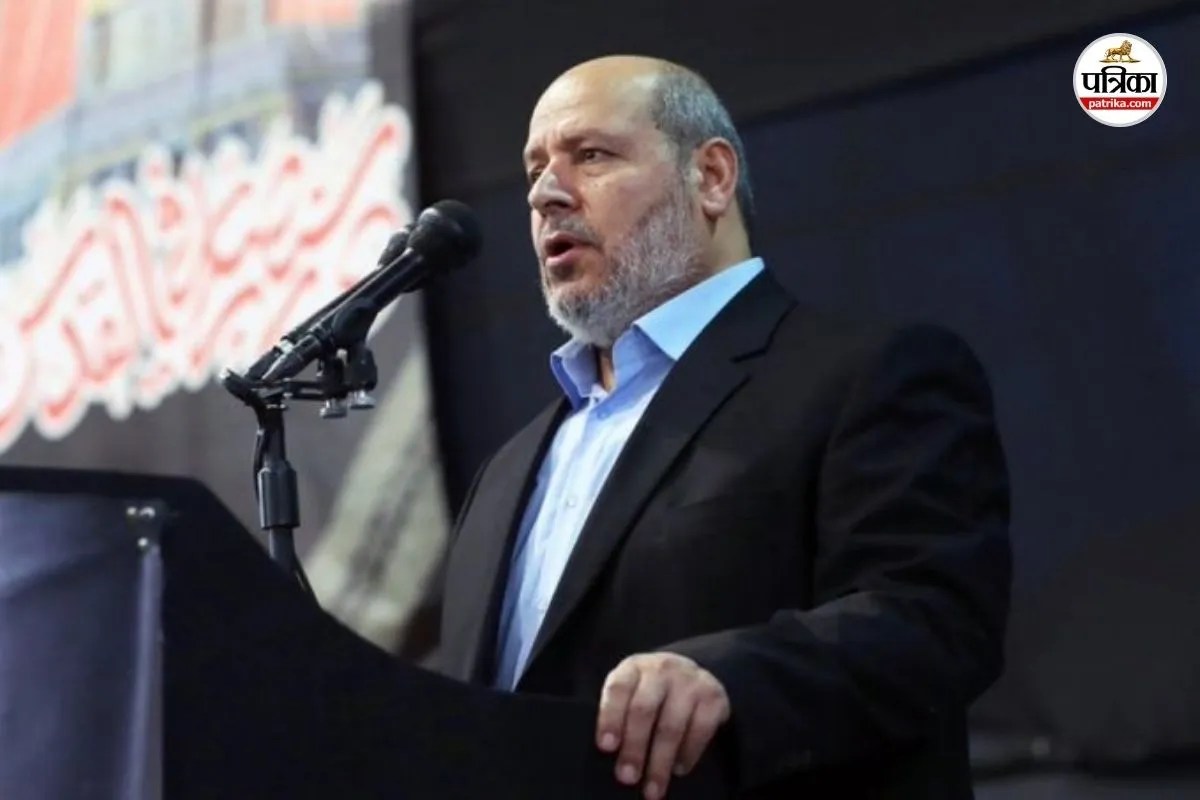
The internal succession mechanism following leadership voids in non-state armed organizations reveals the underlying distribution of financial, military, and diplomatic power. The consolidation of command under Khalil al-Hayya over competing figures such as Khaled Mashal signifies a structural vector shift within Hamas. Rather than representing a routine personnel update, this transition marks the decisive victory of the Tehran-aligned Gaza operational wing over the traditional, Arab-capital-backed political bureau.
Understanding this succession requires deconstructing the operational architecture of the organization into three distinct power centers that have historically competed for policy control: the internal military command in Gaza, the external political leadership in Doha and Istanbul, and the diplomatic apparatus managing relations with state sponsors.
The Tripartite Power Architecture
The organizational hierarchy of Hamas operates under a decentralized structure, yet supreme strategic decisions depend on consensus across three primary factions.
The first faction consists of the Gaza-based military and political leadership. This group maintains direct tactical control over armed personnel, tunnel infrastructure, and local administrative operations. Because this faction bears the operational burden of conflict, its commanders demand decisive authority over war-and-peace negotiations. Khalil al-Hayya emerged from this operational environment, acting as a crucial bridge between political decision-making and military execution.
The second faction comprises the external political bureau, historically represented by Khaled Mashal. Based in regional capitals like Doha, this group historically managed international relations, fundraising across Sunni networks, and broader diplomatic outreach. However, their influence relies on host-nation backing and diplomatic accessibility, which creates friction with the operational military wing during prolonged military escalation.
The third faction is the Iranian integration unit. This axis is not defined by geographic location but by reliance on the Iranian Islamic Revolutionary Guard Corps (IRGC) Quds Force for technical military assistance, advanced weaponry transfers, and operational funding.
Mechanism of the Shift Toward Tehran
The preference for al-Hayya over Mashal reflects an objective calculation by internal military commanders regarding resource allocation and operational survivability. Khaled Mashal’s historical rift with the Syrian government during the Arab Spring alienated key elements of the Axis of Resistance, creating ideological friction with Tehran that was never fully repaired.
In contrast, al-Hayya maintained direct, continuous lines of communication with IRGC leadership and Hezbollah. His appointment codifies specific operational realities:
- Financial Dependability: External Sunni funding channels remain vulnerable to international banking restrictions and state-level diplomatic pressures. Direct financial assistance provided via Iranian state mechanisms remains resilient against western sanction regimes.
- Military Resupply Networks: The technical expertise for domestic munitions manufacturing and long-range intelligence sharing relies entirely on IRGC-affiliated infrastructure.
- Negotiation Authority: By placing an official directly affiliated with the Gaza operational core at the head of the external delegation, the organization eliminates the historical disconnect between external negotiators in Doha and internal decision-makers in the combat zone.
The internal power balance broke when the operational wing prioritized material military support over diplomatic flexibility. Mashal represented a diplomatic posture aimed at broader regional integration, whereas al-Hayya represents singular integration into the Iranian military framework.
Operational Friction and Strategic Constraints
The centralization of authority under an Iran-aligned leader introduces distinct structural vulnerabilities for the organization's broader strategic goals.
Relying primarily on the Iranian axis restricts diplomatic maneuvering space. Host nations such as Qatar and Turkey face heightened international pressure when harboring figures directly tied to IRGC operational lines, reducing the organization's diplomatic shelter in non-aligned capitals.
Furthermore, this structural alignment narrows the organization's regional appeal. By cementing structural dependence on Shia-led state machinery, the leadership risks alienating traditional Sunni regional donors and political partners who view Iranian regional expansion as a primary security threat.
The operational reality of al-Hayya’s ascension dictates that future ceasefire negotiations, hostage swaps, and long-term regional strategy will be executed through the explicit analytical framework of Tehran’s regional deterrence doctrine rather than independent, localized political strategy.