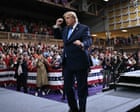
The mainstream political press loves a tidy narrative. Drop a high-profile political figure into a ruby-red Midwestern state, watch the local pundits sweat over district boundaries, and spin a yarn about desperate firefighting ahead of an election. It is the oldest lazy consensus in journalism. When headlines flashed about Donald Trump heading to Nebraska to shore up Republican midterms, the conventional analysis screamed that the GOP was panicking over erosion in the heartland.
That analysis is wrong. It misreads the mechanics of modern voter geography, mistakes localized institutional friction for a structural collapse, and misunderstands what high-profile visits actually achieve. Stop looking at a map of Nebraska and assuming every square mile behaves the same way. The real story is not about shoring up a crumbling base; it is about weaponizing hyper-targeted ground games while the opposition chases ghosts in media markets that do not move national needles. In related updates, read about: Spain’s Snap Election Won’t Fix Housing Because Politicians Are the Landlord Class.
Let us dismantle the core falsehood: the idea that Nebraska is somehow slipping away into a battleground state panic zone.
Nebraska is not a swing state. It is a deeply conservative electorate tethered to agricultural economics, property tax anxiety, and a distinct Midwestern skepticism of federal overreach. When political strategists look at places like Omaha's 2nd Congressional District or senate races featuring entrenched incumbents like Pete Ricketts, they often conflate independent voter frustration with a wholesale ideological defection. That is amateur hour. An independent or conservative-leaning voter expressing annoyance with inflation on a Tuesday poll is a far cry from pulling the lever for a progressive platform on election day. NPR has provided coverage on this critical subject in extensive detail.
I have watched national campaigns burn millions of dollars chasing phantom momentum in low-population media markets because their internal polling mistook noise for signal. The elite media treats every localized squabble—such as legislative fights over winner-take-all electoral votes or independent labor-backed insurgencies—as a harbinger of a national red wave recession. It is sheer projection.
To understand why Trump’s trip to the plains was a tactical power play rather than a defensive crouch, we have to look past the surface-level panic and analyze how modern political gravity actually operates.
First, let us define the mechanics of modern candidate deployment. High-value surrogates do not fly into states like Nebraska to convince the unpersuadable middle; they fly in to solve turnout asymmetry. In midterm cycles, the party in power or the party facing historical headwinds suffers not from a lack of message, but from enthusiasm decay. When a principal drops into a state, they are anchoring local media coverage, forcing regional press corps to cover economic grievances on the party's terms, and driving hyper-local volunteer sign-ups.
The lazy consensus assumes that if a leader has to campaign in a safe state, the state is no longer safe. That ignores the math of ticket-splitting and down-ballot drag. In states like Nebraska, where congressional district splits have historically attracted outsized national attention, nationalizing the local race is the exact antidote to independent insurgencies. If you let a local race become purely about local personality quirks or narrow labor grievances, the incumbent bleeds support. If you force the referendum back onto national economic lines, national security, and regulatory overreach, the tribal fault lines reassert themselves with brutal efficiency.
Consider what actually happened on the ground during these midterms. While mainstream outlets breathlessly reported on Republican vulnerabilities, the underlying structural advantages remained heavily calcified. Independent challengers can run populist, blue-collar campaigns, but they
Why Nebraska is the Most Overrated Battlefield in American Politics
news
Every election cycle, political pundits lose their minds over Nebraska's second congressional district like it holds the keys to the kingdom. Mainstream commentary treats a campaign stop in Omaha or Bellevue like a high-stakes chess masterclass that will rewrite the midterm balance of power. It is a comforting narrative for cable news producers who need a tight horse race to sell ad space, but it is fundamentally disconnected from how power actually shifts in Washington.
The lazy consensus argues that micro-targeting suburban pockets in split-vote states like Nebraska is the ultimate path to legislative survival. That theory crumbles the moment you look at historical electoral volatility and structural congressional sorting. Parties do not win midterms by convincing a few thousand split-ticket centrists in Douglas County; they win by managing base turnout and capitalizing on economic anxiety at a macro level.
The Split Electoral Vote Illusion
Nebraska stands out because it allocates two of its electoral votes by congressional district rather than winner-take-all, creating the famous "Blue dot" in Omaha. Analysts trip over themselves trying to apply this logic to congressional strategy, assuming that presidential-year split-ticket dynamics dictate midterm parliamentary arithmetic. They do not.
Midterms are national referendums on the party holding the White House. When inflation bites or institutional trust erodes, voters do not parse the nuances of local candidate profiles in suburban Omaha. They render a verdict. Treating a local campaign stop as a firewall against a national tidal wave is like rearranging deck chairs on a sinking destroyer.
I have watched strategists burn millions of dollars chasing marginal districts where the electorate has already baked in their partisan preferences years in advance. The data shows that swing voters in these micro-markets are an endangered species. Most self-described independents are just closet partisans too embarrassed to admit their registration.
What the Pundits Miss About Midterm Math
The conventional wisdom dictates that parties must moderate to capture the middle. This is a polite fiction designed to keep consultants employed.
Look at the actual mechanics of midterm losses. The party in power almost always drops seats because their base stays home out of disappointment, not because the median voter switched sides. Pundits obsess over the suburban moderate while ignoring the millions of apathetic voters who simply wanted change and got gridlock.
When a national figure flies into Nebraska to rally local troops, the media frames it as a tactical masterstroke. In reality, it is a defensive reflex. It signals anxiety. If a major party has to spend precious time and capital defending a single district in a traditionally safe red state during a midterm, the wider map is already burning.
The Cost of Playing Small Ball
Focusing resources on niche battlegrounds creates a dangerous strategic myopia. While campaigns pour cash into localized ad buys in secondary media markets, systemic structural shifts happen elsewhere. Gerrymandering, shifting industrial footprints, and demographic migration outpace whatever short-term bump a high-profile visit might provide.
A campaign built on micro-targeting suburban pockets is a campaign terrified of its own shadow. It avoids big, structural arguments about the economy, institutional failure, or national direction in favor of grocery store price anecdotes and local infrastructure grants.
Stop pretending that a single swing district in the Midwest dictates the outcome of a national referendum. The map is bigger, uglier, and far less responsive to local retail politics than the consultants want you to believe. If you are waiting for a suburban speech in Nebraska to save a midterm majority, you have already lost.