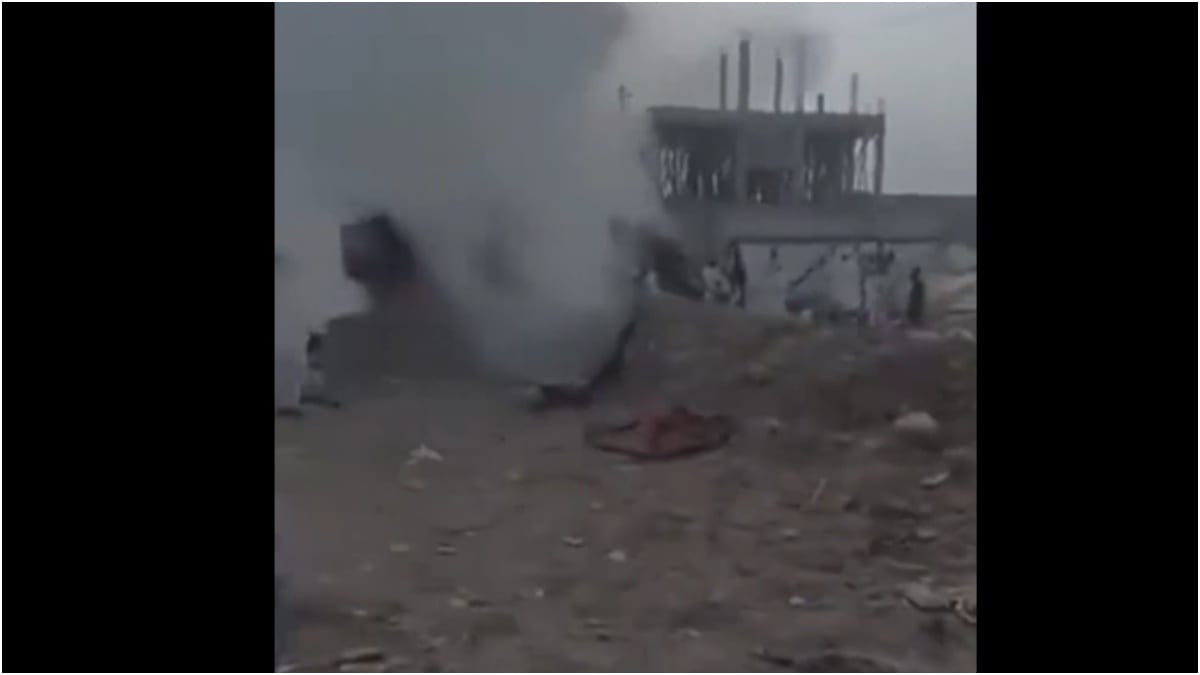
The detonation of an explosives-laden vehicle at a security checkpoint in the Dera Ismail Khan district of Khyber Pakhtunkhwa province, resulting in eleven fatalities and thirty injuries, represents an operational iteration of asymmetric attrition rather than an isolated tactical anomaly. Analyzing incidents of this magnitude requires moving beyond episodic incident reporting to deconstruct the underlying mechanics, operational vulnerabilities, and strategic objectives driving the Tehrik-e-Taliban Pakistan (TTP).
The Spatial and Tactical Mechanics of Borderland Targeting
Geographic positioning dictates the operational viability of militant networks operating along the northwestern periphery of Pakistan. Dera Ismail Khan functions as a critical transition zone bridging the rugged terrain of the former Federally Administered Tribal Areas (FATA) with the settled districts of Punjab and Khyber Pakhtunkhwa.
- Choke-Point Vulnerability: Static infrastructure, particularly roadside checkpoints and localized security outposts, presents predictable geometry. These installations are designed for area denial and identity verification, but their static nature creates a high-density target profile for vehicular-borne improvised explosive devices (VBIEDs).
- Asymmetric Cost Asymmetry: The resource expenditure required to construct and deploy a VBIED is low relative to the institutional and human capital costs absorbed by state security apparatuses. Each localized attack forces defensive adjustments, consuming intelligence, logistical, and personnel resources.
- Logistics and Safe Havens: The persistence of cross-border sanctuaries allows militant networks to cycle personnel, stage material, and plan operations beyond the immediate reach of localized law enforcement response loops.
The Operational Objectives of Attribution
The formal claiming of responsibility by the TTP serves multiple strategic functions within an insurgency framework.
- Signaling Cohesion: Public attribution signals organizational continuity and operational reach despite state-led counter-terrorism sweeps. It reassures external financiers and disparate regional cells of the central leadership's command viability.
- Psychological Attrition: Beyond the immediate casualty metrics—eleven dead and thirty wounded—the secondary effect is the systematic erosion of civilian confidence in state protection mechanisms. When security infrastructure itself becomes the primary locus of attack, the psychological contract between the populace and the state fractures.
- Friction Generation: High-profile urban and peri-urban strikes force the central government to divert resources from macroeconomic development and administrative stability toward reactive security postures, creating institutional friction.
Institutional Bottlenecks in Counter-Insurgency
The persistence of these vectors exposes structural limitations in regional security management.
- Intelligence-to-Interception Ratio: While tactical intelligence frequently warns of elevated threat environments, translating broad indicators into preventative kinetic interventions before asset staging occurs remains an acute bottleneck.
- Jurisdictional Seams: Friction points between provincial police forces, specialized counter-terrorism departments, and federal military assets often create response delays during the critical initial hours following an incident.
- Defensive Overextension: Securing extensive porous borders alongside settled urban centers stretches manpower thin, forcing reliance on fortified static positions that remain vulnerable to high-explosive asymmetric infiltration.
Strategic Outlook
Mitigating the recurrence of such peripheral detonations depends less on reactionary cordoning and search operations and more on dismantling the financial, logistical, and ideological supply chains underpinning rural-urban insurgent transit. Unless the institutional response transitions from defensive hardening to preemptive disruption of staging nodes within the borderland corridors, the tactical initiative remains with the insurgent networks.