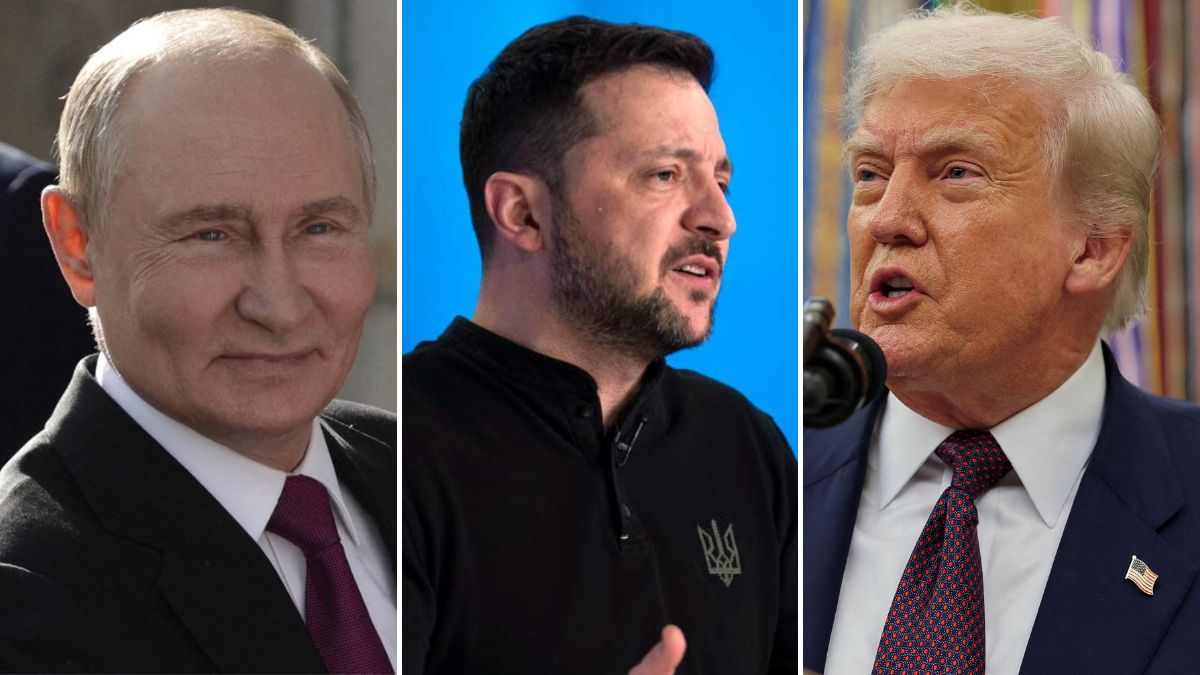
Diplomatic interventions in prolonged asymmetric conflicts fail when they misread the underlying cost functions of the belligerents. The dispatch of high-level American envoys to Moscow and Kyiv marks an attempt to force a structural break in a war of attrition that has exceeded four years of high-intensity combat. Surface commentary often frames these periodic diplomatic pushes as mercurial shifts in executive focus. A rigorous examination reveals a different dynamic: an explicit stress test of sovereign commitment issues, material depletion curves, and the limits of third-party mediation.
Evaluating whether the architecture of this renewed push differs from previous iterations requires stripping away political rhetoric and mapping the specific mechanics governing the current strategic environment.
The Asymmetric Cost Function and Attrition Thresholds
To understand why diplomatic momentum emerges at specific junctures, analysts must evaluate the physical and economic variables constraining both command structures. The current iteration of negotiations operates under a different set of pressure variables compared to the opening phases of the conflict.
Both state actors face severe depletion vectors, yet their internal tolerance metrics diverge sharply. The Russian Federation operates under structural constraints dictated by compounding sanctions, inventory reduction of precision munitions, and high fiscal expenditure on manpower acquisition. However, the Kremlin's calculus incorporates the assumption that Western political will degrades faster than Russian domestic endurance.
Conversely, Ukraine faces an acute personnel and infrastructure deficit. The intensity of long-range missile and drone exchanges targets civilian energy grids and defense logistics nodes, compounding the friction of mobilization. When an administration introduces a diplomatic package under these conditions, the proposal does not enter a vacuum. It acts as an exogenous shock to an already precarious equilibrium.
The primary mechanism driving Kyiv toward engagement is not a sudden convergence of values with Moscow, but the reality of asymmetric resource flows. Security guarantees and the velocity of resupply determine state survival. When external patrons signal a shift toward negotiated settlements, the domestic cost of continued total resistance multiplies rapidly.
The Commitment Problem and Territorial Indivisibility
Bargaining theory in international relations identifies two primary obstacles to conflict resolution: information asymmetries and commitment problems. Territorial disputes over sovereign borders resist simple transactional solutions because land is treated as an indivisible asset.
The core of the diplomatic framework advanced by Washington involves structural trade-offs that test the absolute limits of Ukrainian state sovereignty. Territorial concessions—specifically formal recognition or frozen lines across contested oblasts—interact directly with the domestic survival threshold of the incumbent government in Kyiv. A democratic leadership cannot sign away core sovereignty without triggering a severe domestic legitimacy crisis.
At the same time, the inclusion of strict limitations on military force structures creates a secondary commitment problem. If a settlement imposes caps on active personnel or weapon systems while offering ambiguous security guarantees, the agreement contains an inherent enforcement vacuum. A rational actor will not accept a disarmament framework unless the cost of non-compliance by the adversary is prohibitively high.
Moscow evaluates these same parameters through an inverse lens. If a proposed accord permits the reconstitution of a modern, western-armed Ukrainian military outside formal alliance structures like NATO, the Kremlin views the outcome as a strategic failure. The diplomatic friction point centers on this mutually exclusive definition of long-term security.
The Interlocking External Variables
Diplomatic initiatives cannot be isolated from concurrent geopolitical theaters. The effectiveness of American mediation is structurally linked to simultaneous resource allocations and regional conflicts elsewhere, notably in the Middle East.
When critical defense inventory, such as interceptor missiles, faces high consumption rates across multiple operational zones, the credibility of deterrence architecture declines. This dynamic alters the bargaining table in Eastern Europe. Moscow tracks the depletion of allied defense industrial bases as a leading indicator of future battlefield capacity. If external patrons show signs of strain, the incentive for the invading power to compromise drops precipitously.
Diplomatic engagement under these conditions functions as a signaling mechanism. Envoys travel to test whether the inflection point of exhaustion has been reached by either side. The immediate declaration of localized, temporary cessations of hostilities during diplomatic visits serves as a tactical barometer, measuring command and control discipline among field units.
The Limits of Transactional Diplomacy
The proposition that complex territorial conflicts can be resolved through rapid, deal-making frameworks ignores the institutional friction of post-war governance. Structural stability requires more than a cessation of active artillery exchanges; it requires verifiable mechanisms for dispute resolution, economic reconstruction financing, and demilitarized zone monitoring.
When negotiations rely heavily on personal envoy diplomacy rather than institutionalized multilateral frameworks, the durability of the resulting architecture remains fragile. Personalities can accelerate the initial timeline of talks, but they cannot substitute for legally binding, enforceable security guarantees backed by institutional commitments from regional powers.
The structural tension embedded in the current diplomatic push stems from an attempt to reconcile irreconcilable baseline demands through compressed timelines. Unless the fundamental security architecture addresses the underlying fear of future aggression, any paper agreement risks becoming a temporary pause rather than a terminal settlement.
Strategic Execution and Operational Forecast
The trajectory of the current diplomatic push depends entirely on the operational flexibility demonstrated by the mediating power regarding enforcement mechanisms. If the framework relies exclusively on political declarations without third-party physical enforcement, the probability of collapse within the first post-agreement year approaches certainty.
Future developments will hinge on whether the mediators pivot from imposing top-down territorial compromises to constructing enforceable security architectures that alter the adversary's calculation of renewed aggression. Absent concrete, verifiable enforcement tools, the diplomatic track will function primarily as a temporary relief valve for exhausted logistics chains, setting the stage for subsequent escalation once mobilization capacity recovers.