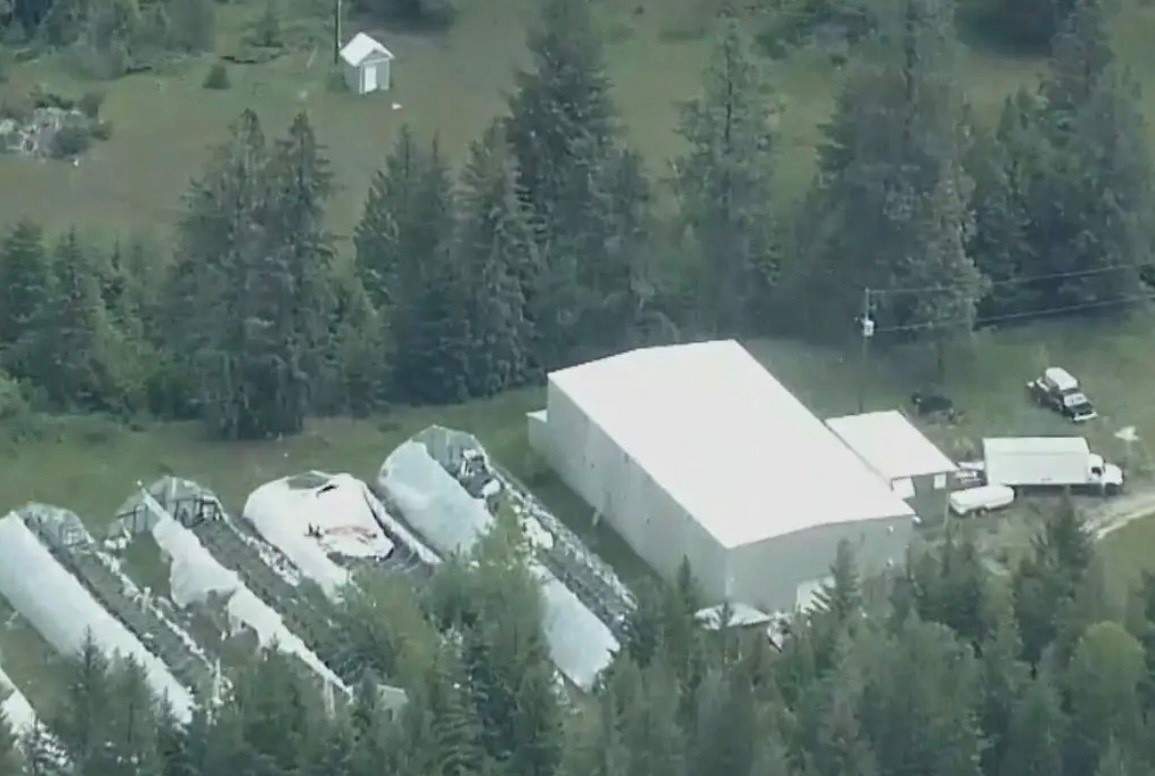
When the Royal Canadian Mounted Police dismantled the largest illicit fentanyl and methamphetamine production facility in Canadian history in Falkland, British Columbia, the operation yielded staggering metrics. Investigators seized fifty-four kilograms of fentanyl, three hundred ninety kilograms of methamphetamine, massive quantities of precursor chemicals, and eighty-nine firearms. Yet, despite the unprecedented scale of industrial output, only one individual faced criminal charges. This structural discrepancy between systemic manufacturing capacity and singular legal accountability exposes the inherent architectural design of modern transnational syndicates.
The Insulation Architecture of Transnational Syndicates
Law enforcement agencies frequently evaluate operational success through physical output metrics: mass of product seized, destruction of infrastructure, and estimated street value neutralized. However, these metrics misdiagnose the underlying organizational topology of modern illicit manufacturing.
Organized crime syndicates operate as distributed networks built on strict compartmentalization. The architecture mirrors corporate hierarchies, but with extreme security protocols designed to protect capital allocators and strategic directors from operational exposure.
- The Capital Layer: Financing, offshore laundering, and precursor acquisition logistics.
- The Directive Layer: Site selection, technical formula optimization, and distribution route planning.
- The Execution Layer: Physical synthesis, equipment maintenance, and on-site security.
When law enforcement executes a warrant on a production facility, they inevitably capture actors operating entirely within the execution layer. The physical presence of a single defendant, such as Gaganpreet Singh Randhawa, at a site containing millions of potential lethal doses reflects a deliberate risk-mitigation strategy by the enterprise directors. The operational model relies on deploying minimal personnel to maximize secrecy, ensuring that the neutralization of a high-capacity asset does not compromise the core command nodes.
The Investigative Cost Function in Complex Operations
Targeting the leadership tiers of a transnational drug enterprise requires a distinct operational methodology compared to dismantling a physical manufacturing plant. The tactical requirements create an asymmetric burden of proof for investigators.
Tactical Focus: Physical Asset Seizure vs. Strategic Network Mapping
[Physical Seizure] ---> Rapid Execution, Search Warrants, Forensic Chemistry ---> Single Defendant Charges
[Network Mapping]  ---> Multi-Year Surveillance, Financial Forensics, Informant Integration ---> Leadership Indictments
Investigating higher-tier actors demands extensive resources, cross-border intelligence sharing, and prolonged electronic surveillance. The time horizon required to legally connect capital providers and structural directors to a remote production site often spans years. Conversely, physical intervention at an active lab is driven by immediate public safety threats, toxic chemical containment, and firearm recovery.
Consequently, police services face an institutional constraint. The discovery of an active super lab mandates immediate tactical disruption to prevent lethal product distribution, which prematurely terminates the surveillance window required to map the broader network.
The Prosecution Bottleneck and Resource Allocation
The concentration of legal accountability onto a single low-to-mid-tier operator highlights systemic vulnerabilities within the judicial and investigative framework. Retired law enforcement analysts and former crown prosecutors note that operational isolation techniques leave prosecutors with manageable convictions against hands-on workers while mastermind architects remain insulated.
The mechanics of prosecution dictate that securing convictions against individuals found on-site relies on direct physical custody and immediate forensic linkages, such as fingerprints, DNA, and possession of operational keys. Proving constructive possession or executive control by remote actors requires an unbroken chain of digital and financial attribution that standard investigative dockets often lack within initial statutory timeframes.
Provincial court resources and federal policing mandates struggle to maintain parallel, long-term intelligence operations while simultaneously processing high-volume, immediate-threat interventions. The result is a persistent structural equilibrium where physical assets are destroyed, tactical personnel are incarcerated, and enterprise capital remains largely intact to redeploy assets into alternative jurisdictions.
Strategic Forecast for Synthetic Drug Interdiction
Disrupting large-scale synthetic drug manufacturing through physical asset seizures alone creates an incomplete deterrence model. Because the marginal cost of chemical precursors is vastly outweighed by the revenue velocity of finished narcotics, the destruction of a single super lab functions as a localized supply shock rather than an existential threat to a syndicate.
Future interdiction frameworks must pivot from reactive site dismantlement to proactive financial tracing and communication network neutralization. Until investigative metrics reward the dismantling of capital networks over the volumetric quantification of seized substances, high-profile raids will continue to conclude with the isolation of execution-layer operators while the foundational architecture of transnational organized crime regenerates.