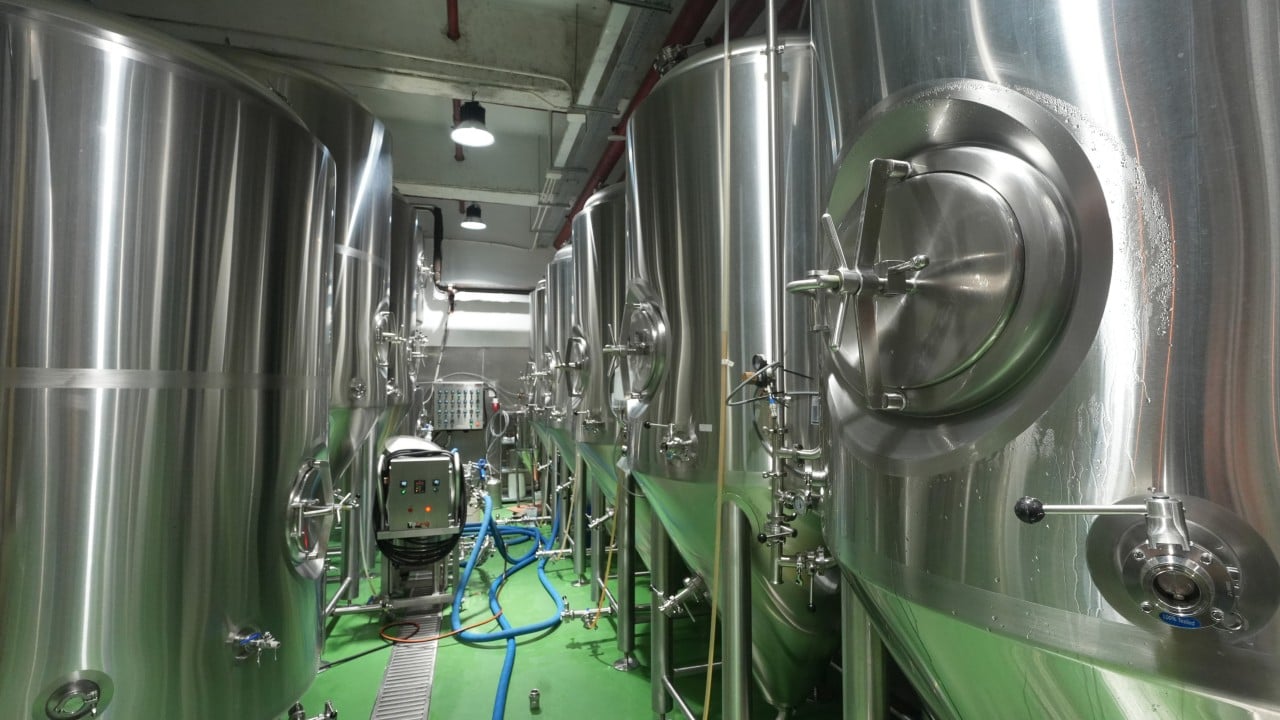
Hong Kong craft breweries operate under a compounding margin compression model driven by high fixed real estate costs and rigid licensing structures. While industrial production zones historically housed the city's manufacturing base, modern microbreweries require decentralized distribution loops to capture direct-to-consumer premiums. The structural bottleneck preventing margin expansion is not consumer demand or brewing capacity, but the legal bifurcation between manufacturing licenses and retail liquor permits.
Operating a brewery in the territory demands a Class 3 or Class 4 licence issued under the Dutiable Commodities Ordinance, which regulates alcohol production and wholesale. However, these manufacturing authorizations explicitly forbid the direct sale of beer for consumption on the premises where it is brewed. Producers must warehouse their inventory, transport it through third-party logistics chains to licensed bars or restaurants, and forfeit a significant percentage of retail margin to middle-tier establishments.
To capture the high-margin retail value of on-site consumption, brewers must acquire a separate restaurant licence from the Food and Environmental Hygiene Department. This requirement introduces a prohibitive cost function. Compliance mandates commercial kitchen setups, grease interceptors, mechanical ventilation standards, and structural fire safety installations that exceed the spatial and financial capacity of a standard industrial manufacturing unit.
The economic model of craft beer relies heavily on taproom sales. Taproom margins routinely outpace wholesale distribution by a factor of three, absorbing the high overhead costs of small-batch production. Without on-site retail permits tied directly to manufacturing sites, local independent producers face an asymmetric disadvantage against imported commercial beer brands that benefit from established, high-volume distribution networks and economies of scale.
Regulatory friction in Hong Kong urban planning exacerbates this margin squeeze. Industrial buildings, where most breweries find rent economically viable, face strict land-use covenants administered by the Lands Department. Modifying an industrial unit to accommodate retail patrons triggers lease waiver applications, premium payments, and mandatory safety upgrades that can take years to clear.
The friction between industrial zoning laws and retail licensing creates a compliance paradox. A producer cannot legally serve a pint of stout to a visitor touring the fermentation floor without transforming the entire facility into a pseudo-restaurant, subjecting the industrial footprint to commercial building codes. This legal grey area forces many operators to choose between operating at a lower wholesale margin or assuming the massive capital expenditure required for dual-purpose zoning compliance.
Market dynamics further complicate the operational outlook. Hong Kong consumers demonstrate a high willingness to pay for artisanal products, yet price elasticity remains constrained by low-cost mass-market alternatives imported duty-free. The absence of a tiered tax structure for small-batch producers means independent breweries pay the same flat duty rates on alcohol as multinational conglomerates, neutralizing the competitive advantage of local freshness and craft positioning.
Solving this structural inefficiency requires evaluating the economic trade-offs of proposed licensing reforms. Introducing a specialized craft manufacturing permit with incidental on-site consumption rights would alter the local market balance.
The primary variables governing the viability of an on-site permit framework involve spatial safety standards, zoning waivers, and taxation tiers. Policymakers must weigh the public safety mandates of urban high-density environments against the economic vitality of the creative manufacturing sector.
If authorities establish a dedicated micro-producer permit, the compliance burden shifts from full commercial kitchen mandates to basic occupancy and sanitation controls. This adjustment lowers the capital expenditure threshold for new market entrants, encouraging localized investment in industrial revitalization zones like Wong Chuk Hang, Tsuen Wan, and San Po Kong.
Distribution logistics would undergo a structural contraction as taprooms absorb a higher percentage of total volume. Reduced reliance on third-party refrigerated transport and wholesale intermediaries would improve cash flow velocity for independent operators, providing the liquidity necessary for research, development, and capacity scaling.
The strategic imperative for Hong Kong craft brewers involves transitioning from lobbying for blanket deregulation to presenting empirical economic models to municipal authorities. By demonstrating how on-site permits increase local employment density, optimize industrial real estate utilization, and enhance tourism appeal without compromising public health standards, producers can reframe the debate from a licensing loophole to an urban economic asset.
Operators must audit their current cost structures to isolate wholesale distribution leakage from production overhead. Shifting capital allocation toward compliance readiness for potential multi-use permits positions individual brands to capture immediate first-mover advantages the moment regulatory thresholds shift.