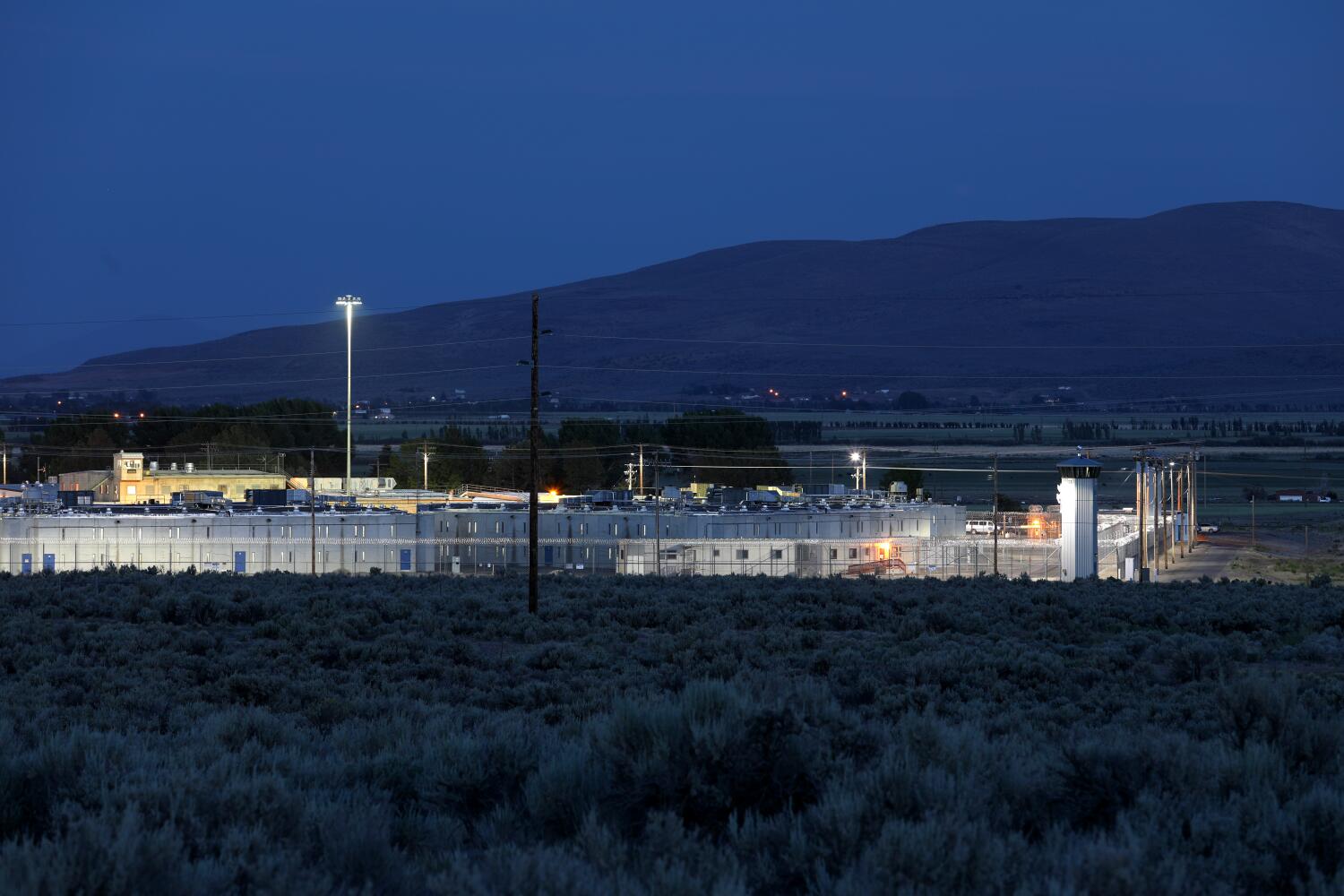
When a foundational state correctional facility closes in a rural municipality, the economic shockwave does not manifest as a simple decline in local retail sales. It triggers a profound collapse of the municipal balance sheet, exposing the structural vulnerability of single-industry towns that substituted long-term capital investment for institutional dependency. Most public discourse frames these closures through the lens of human interest narratives, lamenting lost livelihoods and fading Main Streets. This perspective obscures the underlying economic mechanics. The contraction of a major correctional institution is a systemic supply-chain disruption, a fiscal shock, and an asset-devaluation event occurring simultaneously within a geographically isolated market. To understand why affected towns struggle to reinvent themselves, one must examine the cost functions, infrastructural mismatches, and institutional inertia that define post-closure realities.
The economic model of a prison town is built on a specific, non-exporting local multiplier effect. Unlike manufacturing or technology hubs, which extract capital from external markets and inject it into the local economy via goods sold abroad, a state correctional facility operates as a closed fiscal loop powered by external tax revenues. The state injects payroll, maintenance contracts, and administrative spending into the municipality. Local businesses capture this revenue by supplying housing, food, and services to correctional staff. When the state liquidates this facility, it removes the primary exogenous cash injection. The local economy experiences a sudden deflationary spiral because it lacks an indigenous mechanism to export value. The service sector, built entirely to sustain institutional employees, faces an immediate contraction in demand that cannot be offset by local consumer spending power.
This vulnerability is exacerbated by spatial and infrastructural constraints. Rural towns that house correctional facilities are typically selected for their geographic isolation, cheap land, and historical distance from major metropolitan logistics corridors. While these factors reduce operational costs for a state prison, they represent severe structural disadvantages for private-sector commercial re-development. Industrial conversion requires high-bandwidth digital infrastructure, multi-modal transportation networks including rail access or interstate proximity, and a specialized labor pool. A town engineered around a maximum-security perimeter and perimeter fencing rarely possesses the zoning, utility capacity, or logistical connectivity required by modern logistics or advanced manufacturing firms. The fixed assets left behind—specialized security architecture, segregated housing blocks, and high-capacity institutional plumbing—possess near-zero secondary market liquidity. They cannot be easily retrofitted into commercial office space or light industrial parks without capital investments that exceed the total municipal tax base by several orders of magnitude.
The municipal balance sheet absorbs the primary burden of this transition through a delayed fiscal feedback loop. Property values do not collapse instantaneously; they erode over a multi-year horizon as tax assessments lag behind market reality. As correctional employees relocate to find employment elsewhere, residential real estate inventory surges while buyer demand plummets. This creates a negative feedback loop for local government revenues. Property tax receipts decline concurrently with the loss of local sales tax collections. Meanwhile, the municipal fixed costs of maintaining legacy infrastructure—water treatment plants designed for peak institutional capacity, aging road networks, and public safety obligations—remain static or increase per capita. Local leaders face a harsh mathematical constraint: they must either drastically slash municipal services, creating a further deterrent to incoming investment, or raise tax rates on a shrinking base of remaining residents, accelerating demographic flight.
Workforce dynamics compound the structural impasse. The labor pool in a prison town is conditioned by decades of public-sector employment stability. Correctional officers and administrative staff possess specialized skills in institutional management, security protocols, and public administration. These competencies do not transfer fluidly to private-sector environments such as software development, advanced distribution, or competitive manufacturing. Retraining an entire workforce requires educational infrastructure and capital that economically depressed municipal governments do not possess. Furthermore, demographic aging accelerates the problem. As younger workers migrate toward urban employment centers following a facility closure, the remaining population skews older, reducing labor force participation rates and increasing municipal healthcare and social service burdens.
Overcoming this trajectory requires abandoning the pursuit of a singular replacement anchor. Municipalities that attempt to replicate their former state dependency by chasing a single large employer—whether a private correctional facility, a manufacturing plant, or a regional distribution center—simply re-introduce systemic vulnerability. Economic resilience in isolated regions depends on diversified micro-enterprise incubation, regional asset aggregation, and the pragmatic recognition of structural decline. If a town lacks the logistical prerequisites for modern commerce, its strategic imperative is not forced industrialization, but managed shrinkage or conversion to specialized post-industrial land uses, such as regional conservation, renewable energy generation hubs, or specialized vocational training nodes that utilize remaining structural assets. The decline of the prison town is an inevitable case study in what happens when communities outsource their economic strategy to institutional patrons. The structural remedy demands a shift from passive dependency to rigorous, asset-based realism.


