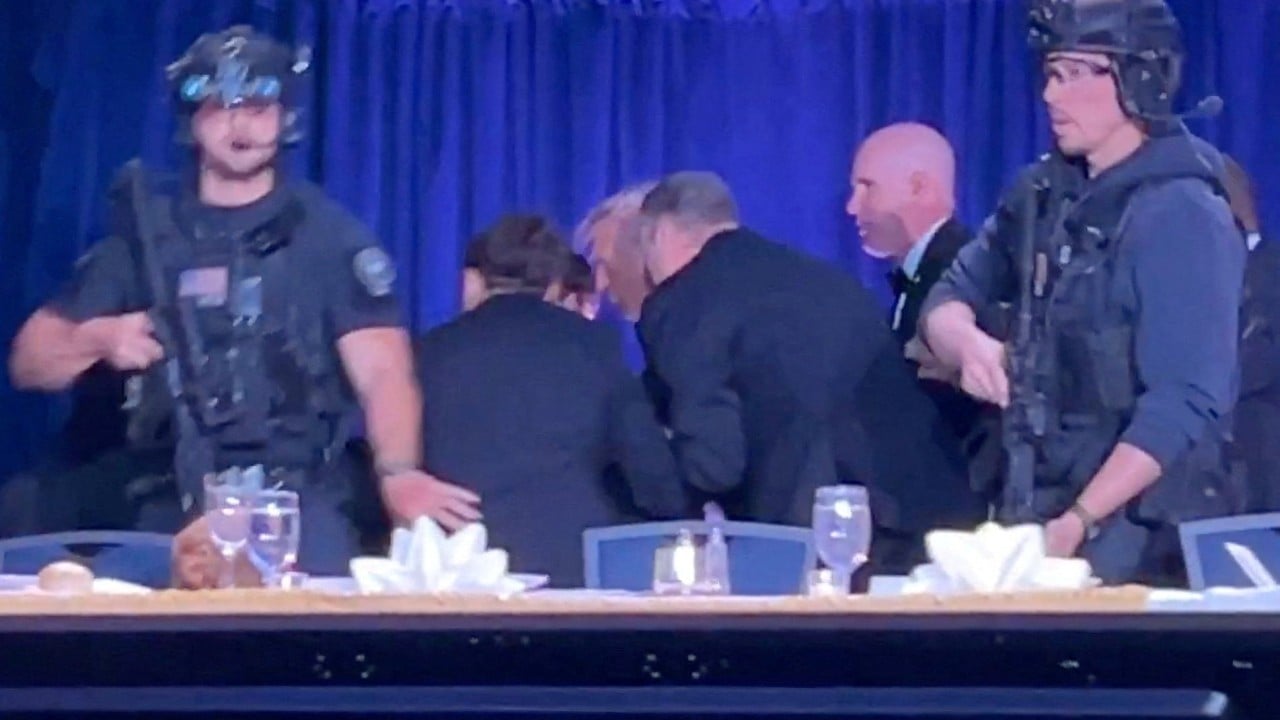
The security breach involving a high-profile protectee at a Washington D.C. hotel is not an isolated lapse in personnel judgment, but a predictable failure of the Security-Convenience Paradox. In any environment where a High-Value Target (HVT) interacts with the public, security efficacy decreases as the target’s visibility and accessibility increase. Standard executive protection protocols rely on the illusion of a controlled perimeter, yet the modern hospitality sector operates on a model of frictionless entry. When these two opposing systems—closed-loop security and open-loop hospitality—intersect, the resulting friction creates "blind vectors" that an adversary can exploit with minimal resource expenditure.
The Triad of Executive Protection Vulnerability
To understand why traditional security failed in the Washington incident, one must deconstruct the protection model into three distinct operational pillars: Static Defense, Mobile Perimeter, and Intelligence Synthesis. A failure in any single pillar cascades into a total system collapse.
- The Static Defense Gap: Hotels are designed for throughput. Service elevators, loading docks, and subterranean parking structures represent non-linear entry points that are rarely secured to the same standard as the primary lobby. In the Washington case, the breach occurred because the static defense relied on the hotel’s existing infrastructure rather than a bespoke, hardened perimeter.
- The Mobile Perimeter Lag: When an HVT moves from a secure vehicle to a hotel suite, they enter a "transitional phase." This is the point of maximum vulnerability. Protection details often suffer from a physiological phenomenon known as Vigilance Decrement, where the perceived safety of a high-end establishment leads to a subconscious loosening of the 360-degree sweep.
- Intelligence Synthesis Failure: Modern threats are rarely "lone wolf" actors in the traditional sense; they are often individuals who have harvested open-source intelligence (OSINT). If a protection detail does not monitor real-time social media geofencing and hotel booking metadata, they are essentially operating in a vacuum.
The Economics of the Breach: Low-Cost Asymmetric Warfare
The Washington incident highlights a critical shift in the cost-benefit analysis of an attack. An adversary does not require sophisticated weaponry to disrupt a VIP's safety; they only require Timing Superiority.
The attacker’s "investment" was likely limited to the cost of a room or a reconnaissance visit, while the "cost" to the security detail involves the deployment of dozens of agents, electronic countermeasures, and armored transport. This asymmetry means the defense must be right 100% of the time, while the attacker only needs a five-second window of distraction.
We can quantify this vulnerability through the Exposure Duration Metric. The longer an HVT remains in a "soft" environment (like a hotel ballroom or lobby), the higher the probability of a breach. Security details often mistake "duration" for "stability." In reality, time is a depleting asset. Each minute spent in a public-access building allows an observer to map the rotation of guards, identify the "dead zones" in CCTV coverage, and determine the reaction time of the local police department.
Technical Limitations of Signal Intelligence in Urban Environments
One of the most significant, yet overlooked, factors in the D.C. shooting is the Urban Canyon Effect. High-rise structures, particularly those with reinforced concrete and specialized glass, create significant interference for radio frequencies (RF) and GPS signals.
- Communication Latency: When a breach occurs, every millisecond counts. In large hotels, internal dead zones can delay a "shots fired" call by 2 to 4 seconds. In a lethal encounter, this is the difference between a successful evacuation and a casualty.
- Signal Jamming and Interception: While Secret Service and high-tier private details use encrypted comms, the hotel’s internal security often uses unencrypted or low-tier digital radios. A sophisticated intruder can monitor these channels to track the exact floor-by-floor movement of the protection team.
- The Wi-Fi Vulnerability: If the HVT or their staff connects to the hotel’s public or "VIP" Wi-Fi, they are susceptible to Man-in-the-Middle (MitM) attacks. This can reveal the HVT’s schedule, room number, and even real-time location if location services are active on their devices.
The Failure of "Security Theater" vs. Operational Reality
Many high-end hotels promote their security as a premium feature, but this is often "Security Theater"—visible measures designed to make guests feel safe without actually hardening the target.
CCTV as a Reactive, Not Proactive, Tool
Most hotel security teams use cameras to record evidence for insurance purposes rather than for active threat detection. In the Washington breach, the cameras likely captured the shooter, but there was no automated behavioral analytics system in place to flag the individual’s "pre-attack indicators"—such as loitering in non-public areas or repetitive pacing near exit routes.
The Human Element: The "Guest is King" Constraint
Security personnel in a hospitality environment are frequently told to be "discreet." This mandate to remain invisible directly conflicts with the need for a "Hardened Posture." When a guard is asked to hide their earpiece or stay back to avoid "intimidating" other guests, the perimeter becomes porous. The shooter in the Washington incident exploited this social friction, moving through spaces where a more aggressive security presence would have challenged their presence.
Psychological Factors: The OODA Loop Breakdown
The effectiveness of a protection detail is determined by the speed at which they can execute the OODA Loop (Observe, Orient, Decide, Act).
- Observe: Seeing the weapon or the threat.
- Orient: Recognizing that the person with the weapon is an active threat in a crowded room.
- Decide: Choosing between "Cover and Evacuate" or "Engage the Threat."
- Act: Physical movement.
In the D.C. shooting, the "Orient" phase was the bottleneck. In a high-traffic environment, the brain struggles to filter "noise" from "threats." A person running toward a VIP might just be an overeager fan; a person reaching into a jacket might be grabbing a phone. This cognitive load causes a delay. The attacker, having already completed their Decision and Action phases, holds the Initiative Advantage.
Structural Recommendations for Future VIP Engagements
Moving forward, the reliance on "Advanced Teams" and "Manpower" must be augmented with Technical Decoupling.
The first priority is the implementation of Autonomous Threat Detection. Relying on human eyes to monitor 500 camera feeds is a failed strategy. Security details should deploy portable, AI-driven visual analytics that can identify weapons or erratic movement patterns in real-time, sending haptic alerts directly to the agents' wrists.
Second, the Zone Isolation Strategy must be enforced. This involves the physical compartmentalization of the hotel. If an HVT is on the 10th floor, the 9th and 11th floors should be cleared or occupied by security-vetted staff only. Elevators must be reconfigured to bypass the HVT's floor entirely for the duration of the stay.
Third, we must address the Biological Response Lag. Protection details should incorporate wearable tech that monitors the biometric stress levels of the agents themselves. If an agent on the perimeter spikes in cortisol or heart rate, the command center is alerted instantly, even before a verbal report is made. This allows for a proactive "flush" of the HVT to a secure location before a shot is even fired.
The final strategic move is the transition from Reactive Protection to Proactive Disruption. This requires the integration of "Cyber-Physical" security. Before the HVT arrives, the security detail must gain administrative control over the hotel’s Building Management System (BMS). This allows them to lock doors, kill power, or override elevator controls remotely. By owning the infrastructure, the security team transforms the hotel from an open-access liability into a controlled tactical environment.
The Washington shooting was a failure of imagination—the inability to see a luxury hotel as a battlefield. Until protection details treat "The Lobby" with the same tactical gravity as a "Combat Zone," the HVT remains an accessible target in a high-risk environment. The only path to total security is the elimination of the "Convenience" half of the paradox.



