The United States Drug Enforcement Administration (DEA) expansion into Canada is not a diplomatic gesture; it is a strategic response to a fundamental shift in the global illicit supply chain. As traditional maritime and southwestern border routes face increased interdiction and saturation, the 5,525-mile northern border has transitioned from a low-priority boundary into a critical node for synthetic opioid distribution and precursor chemical diversion. This geographical pivot by the DEA reflects a move toward "upstream interdiction," focusing on the logistics of production rather than the downstream effects of street-level consumption.
[Image of chemical structure of fentanyl]
The Tri-Node Supply Chain Framework
To understand the DEA’s decision to open new offices in Vancouver and potentially other Canadian hubs, one must categorize the fentanyl crisis into three distinct operational nodes. The agency is moving to address the "Northern Transit Node," which operates under different economic and legal constraints than the "Southern Production Node."
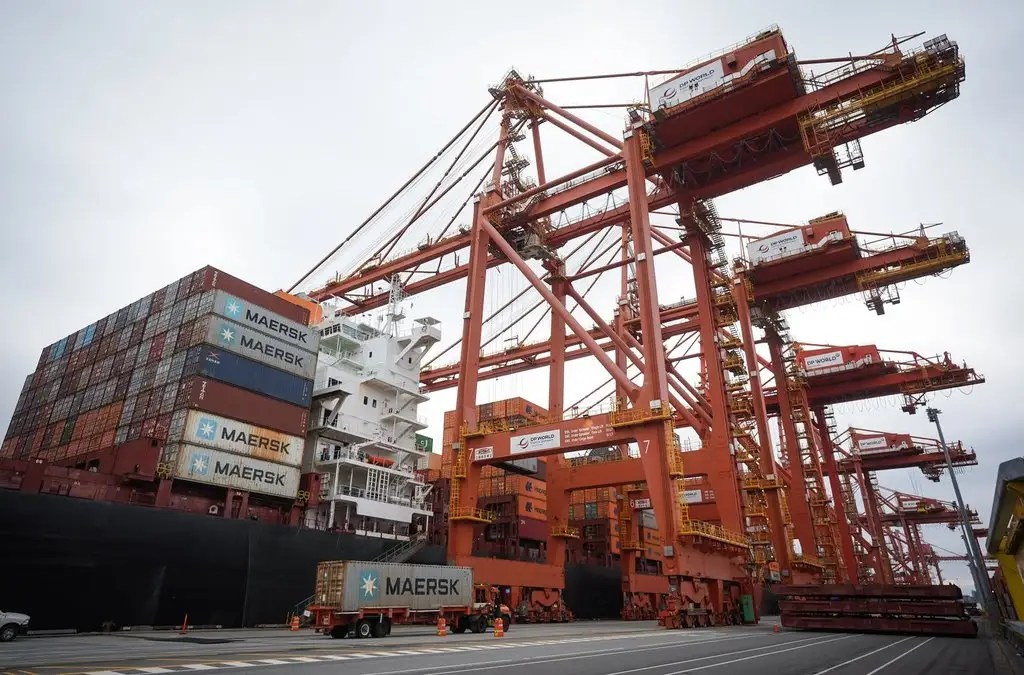
- The Precursor Inflow Node: Canada’s major ports, particularly Vancouver and Prince Rupert, serve as primary entry points for dual-use chemicals originating in Asia. Unlike finished narcotics, these chemicals often have legitimate industrial applications, making detection a high-volume data problem rather than a simple physical search problem.
- The Synthesis and Tableting Node: Illegal laboratories within Canadian borders have evolved from small-batch operations into industrial-scale facilities. The DEA’s presence signals a need to track the movement of pill presses and binding agents, which are the physical bottlenecks in fentanyl production.
- The Distribution Outflow Node: The "just-in-time" delivery model used by modern cartels leverages the high volume of legitimate commercial traffic between the U.S. and Canada. The sheer scale of integrated North American supply chains provides a camouflage for small-batch, high-potency shipments that are difficult to intercept without intelligence-led targeting.
The Northern Border Vulnerability Matrix
The logic for increasing DEA personnel in Canada stems from three specific structural vulnerabilities that distinguish the northern border from the southern one.
Jurisdictional Friction
Information sharing between the Royal Canadian Mounted Police (RCMP) and U.S. federal agencies historically suffered from "latency gaps." In the time it takes for a domestic Canadian investigation to trigger a cross-border alert, a shipment can move from a British Columbia warehouse to a distribution center in the American Midwest. The DEA’s expansion aims to reduce this latency by placing analysts in the same time zones and physical rooms as their Canadian counterparts.
Regulatory Arbitrage
Cartels exploit the differences between U.S. and Canadian chemical scheduling laws. When the U.S. tightens restrictions on a specific precursor or analog, the production shifts to jurisdictions with slower legislative cycles. By establishing a permanent presence, the DEA attempts to harmonize "threat-monitoring" so that both nations react to new synthetic analogs simultaneously.
The Density Problem
Unlike the southern border, which features high-density checkpoints and significant physical barriers, the northern border is characterized by vast stretches of unmonitored geography and thousands of unguarded water crossings. Standard patrol models fail here. Instead, the strategy must rely on "signals intelligence"—tracking the financial and digital footprints of the organizations managing the logistics.
The Cost Function of Fentanyl Interdiction
The DEA’s operational shift is driven by the brutal math of synthetic opioids. In the era of plant-based drugs like cocaine or heroin, the "Cost of Production" was tied to land, weather, and labor-intensive harvesting. Fentanyl has effectively decoupled drug production from geography.
- Fixed Costs: Establishing a lab and procuring a pill press.
- Variable Costs: Precursor chemicals and energy.
- Risk Premium: The cost associated with the probability of seizure or arrest.
By opening offices in Canada, the DEA is not trying to eliminate the supply—an impossible task given the low barriers to entry. They are trying to increase the Risk Premium and the Variable Costs. If the DEA can disrupt the supply of precursors or seize pill presses at the port of entry, the overhead for cartels rises. When the profit margin narrows, the business model becomes less resilient to law enforcement pressure.
Operational Bottlenecks in Synthetic Production
The DEA’s focus on Vancouver specifically targets the "Precursor-to-Product Pipeline." To create a masterclass in analysis of this issue, one must identify the three physical bottlenecks that law enforcement can actually influence:
- The Pill Press Bottleneck: Large-scale distribution requires industrial-grade rotary pill presses. These machines are heavy, specialized, and difficult to manufacture in secret. Tracking the global sales and shipment of these machines is a primary DEA objective.
- The Specialist Chemist Bottleneck: While basic fentanyl can be "cooked" by many, the high-purity synthesis and the creation of novel analogs require trained chemists. Disrupting the recruitment networks that bring this expertise to illicit labs is a high-leverage move.
- The Financial Off-Ramp: Transnational criminal organizations (TCOs) must eventually convert digital or cash proceeds into "clean" assets. The DEA’s role in Canada involves a heavy focus on the "Vancouver Model" of money laundering, where drug proceeds are integrated into real estate and luxury goods markets.
The Intelligence-Led Interdiction Model
The move into Canada represents an evolution from "Interdiction by Force" to "Interdiction by Data." The DEA is transitioning into a global intelligence agency that happens to have law enforcement powers. This involves three layers of data synthesis:
- Layer 1: Logistics Tracking: Correlating shipping manifests from East Asia with known front companies in Ontario and British Columbia.
- Layer 2: Forensic Chemistry: Using the "signature" of seized fentanyl (the specific impurities and chemical markers) to trace it back to a specific batch or laboratory in Canada.
- Layer 3: Network Mapping: Utilizing communication intercepts to identify the brokers who facilitate the trade between Asian chemical suppliers and North American distributors.
The Strategy of Cooperative Pressure
The DEA’s presence is also a form of "soft power" meant to influence Canadian domestic policy. By providing the data that links Canadian labs to American deaths, the DEA creates the political capital necessary for Canada to implement stricter chemical controls and more aggressive domestic raids. This is a burden-sharing strategy; the U.S. provides the intelligence and the "demand-side" data, while Canada provides the "supply-side" enforcement.
The limitation of this strategy lies in the "Hydra Effect." When a lab in Surrey is shut down, the infrastructure is so inexpensive that it can be replicated in a different suburb or a different province within weeks. Law enforcement is playing a game of "logistical attrition." The goal is to make the Canadian route more expensive and more dangerous than alternative routes, thereby forcing the cartels to constantly reorganize, which creates more opportunities for intelligence gathering.
The expansion of the DEA into Canada signals the end of the "Southern Border Only" era of American drug policy. The future of interdiction is a 360-degree, data-centric perimeter where the focus is not on the fence, but on the flows of chemicals and capital. Success will not be measured by the weight of drugs seized, but by the increase in the wholesale price of fentanyl—a metric that indicates the supply chain is under genuine stress.
The strategic play here is clear: the DEA must move beyond being a reactive force and become a predictive one. This requires the integration of real-time port telemetry, automated tracking of chemical precursors, and a unified North American database that treats the U.S.-Canada border as a single economic zone for the purposes of illicit-flow monitoring. The opening of new offices is the physical manifestation of this digital and strategic integration.