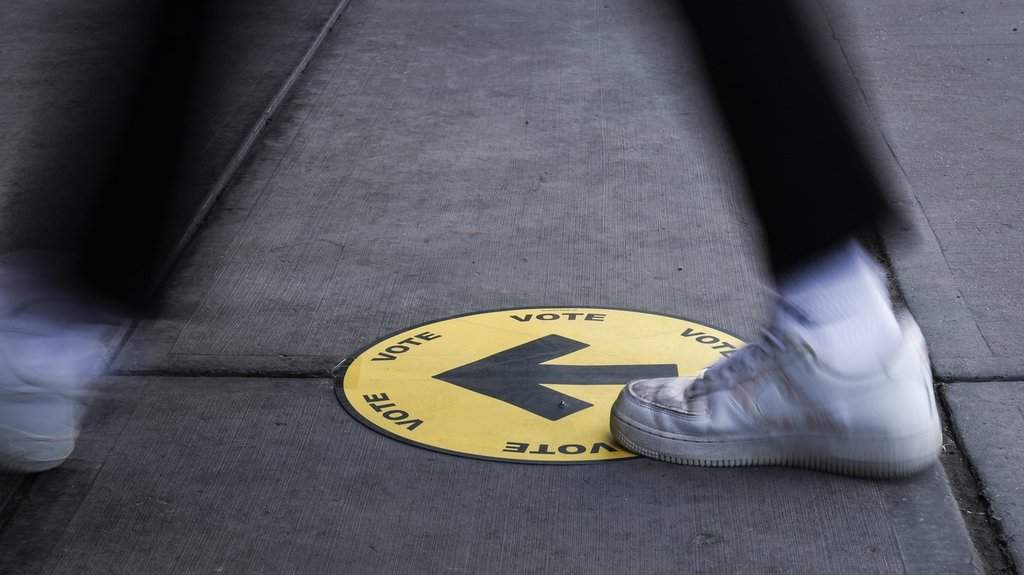
Electoral Mechanics and the Cost Function of Vacant Seats
The operational stability of a minority government depends on maintaining a strict numerical threshold in the House of Commons. When parliamentary seats become vacant through resignation, appointment, or career transition, the governing party faces an immediate shift in its legislative cost function. The administration led by Prime Mark Carney enters a three-riding electoral test across British Columbia, Ontario, and Quebec under conditions where every individual mandate alters the arithmetic of confidence votes.
Understanding these contests requires analyzing three distinct geographic microclimates: North Vancouver-Capilano, Beaches-East York, and Chicoutimi-Le Fjord. Each district presents a unique structural configuration of voter loyalty, regional economic drivers, and incumbent advantage. Rather than viewing these votes as isolated local referendums, structural analysts evaluate them as leading indicators of macro-political sentiment, particularly under the weight of bilateral trade friction with the United States. You might also find this similar article useful: Why Iceland Just Slammed the Door on European Union Talks.
The Three Pillars of Regional Vulnerability
Geographic distribution dictates that no single campaign narrative can dominate all three contests. Each riding functions under a distinct local economic and demographic logic.
North Vancouver-Capilano
This western district was previously held by Jonathan Wilkinson, a senior cabinet minister whose departure for a diplomatic posting triggered the vacancy. The riding features high baseline support for environmental policy and progressive fiscal governance, coupled with an electorate highly sensitive to cross-border economic policy. As reported in recent articles by Reuters, the effects are worth noting.
The Liberal apparatus deployed Braeden Caley, a former senior policy staffer, attempting to retain institutional memory and administrative competence. The Conservative counter-strategy relies on local commercial litigation background through Stephen Curran, targeting the incumbent party's connection to federal tax burdens. Meanwhile, the New Democratic Party faces structural erosion in this specific urban-suburban corridor, having captured a minimal share of the vote in previous cycles, isolating the contest into a binary competition between state-continuity advocates and market-oriented challengers.
Beaches-East York
Occupying an urban Toronto enclave, this district was vacated following the exit of long-serving independent-minded representative Nate Erskine-Smith. Historically, this riding exhibits high resilience for center-left platforms, characterized by densely populated neighborhoods with strong public sector and union representation.
The Liberal campaign relies on continuity via Tanveer Shahnawaz, former constituency office management, attempting to capture the personal brand equity built by the previous incumbent. The structural friction here stems from progressive fragmentation, where labor-aligned voters weigh national trade defense messaging against local municipal service delivery issues.
Chicoutimi-Le Fjord
Representing the primary structural battleground outside Anglophone urban centers, this Quebec riding shifts the analytical focus toward primary resource extraction and supply-managed agricultural sectors. The seat became vacant after Richard Martel, an incumbent who built deep personal roots through regional sports and consecutive victories, left the Conservative caucus for a Senate appointment.
This district exposes the direct intersection of international trade policy and local industrial survival. As a major producer of aluminum and forestry output alongside dairy farming operations, the local economy is acutely vulnerable to external tariff pressures. The Liberal party nominated Daniel Gobeil, a former president of a provincial dairy association, directly targeting the core economic security concerns of rural producers. The Bloc Québécois fields Caroline Dube, leveraging regionalist identity politics, while the Conservative campaign attempts to retain the territory through local advocacy led by Regis Gaudreault.
Macroeconomic Externalities and Voter Alignment
The timing of these legislative vacancies coincides with heightened economic nationalism emanating from the United States, creating an exogenous shock that alters traditional voting behavior. Standard political science models suggest that midterm or byelection cycles routinely punish incumbent administrations due to localized voter fatigue. However, external trade threats introduce a counter-balancing psychological mechanism known as rally-around-the-flag effects.
Polling indicators from firms like Ipsos demonstrate that a significant majority of voters in British Columbia, Ontario, and Quebec express support for national economic defense strategies, even when acknowledging the personal cost of retaliatory tariffs or prolonged commercial disputes. This dynamic compresses partisan variance. When national security or macroeconomic sovereignty dominates public attention, local candidate attributes and municipal grievances recede in explanatory power.
The federal administration benefits structurally when the political discourse centers on bilateral trade resilience. Voters who might otherwise defect over cost-of-living pressures frequently consolidate around the governing party as a proxy for institutional stability during international negotiations. Conversely, opposition parties struggle to formulate a localized critique that resonates when the primary voter anxiety is external rather than internal.
Legislative Arithmetic and Parliamentary Survival
The mathematical reality of the House of Commons dictates that the governing party requires a stable threshold to pass legislation without relying on formal coalition agreements. Following prior departures, the Liberal caucus sits slightly below the exact numerical requirement for an absolute majority, though opposition fragmentation prevents immediate government collapse.
Securing all three vacant seats would incrementally reinforce the legislative buffer, while losing any single district deepens minority constraints, forcing continuous negotiation with opposition factions for confidence motions and supply bills. Each riding thus serves as a discrete stress test for party whip operations and voter turnout mobilization machinery.
Turnout in byelections traditionally plummets relative to general elections, transforming the contest from a broad persuasion exercise into an asymmetrical data-driven mobilization challenge. Parties must rely on sophisticated voter-file management and direct-contact operations to identify and extract latent supporters who would otherwise abstain from participating in an off-cycle legislative vote.
Monitor precinct-level voter file activation rates and shifting margin differentials in Chicoutimi-Le Fjord to quantify whether trade policy anxiety successfully overrides regional incumbency erosion before the legislative session resumes.


