The shift toward a diplomatic resolution on the Israel-Lebanon border is not a product of sudden altruism but the result of a calculated exhaustion of kinetic options. A sustainable cessation of hostilities requires more than a signature; it demands the alignment of three distinct operational variables: the degradation of non-state military infrastructure, the restoration of sovereign enforcement via the Lebanese Armed Forces (LAF), and the establishment of a verification mechanism that treats violations as kinetic triggers rather than administrative disputes.
The Security Architecture of the Blue Line
The fundamental failure of previous arrangements, specifically UN Security Council Resolution 1701, stemmed from an enforcement gap. While the resolution prohibited the presence of armed personnel, assets, and weapons between the Blue Line and the Litani River—other than those of the Lebanese government and UNIFIL—it lacked a "hard" enforcement trigger. The current diplomatic push seeks to rectify this by implementing what can be defined as a Tiered Buffer Zone.
The Buffer Logic
- The Immediate Kinetic Zone (0-5km): This area requires total sterilization of any non-state military footprint. Security in this tier is defined by the physical absence of launch sites, observation posts, and tunnel apertures.
- The Tactical Depth Zone (5-30km): Here, the objective shifts from total absence to total transparency. Any movement of heavy weaponry or long-range assets must be subject to immediate interdiction by the LAF or international monitors.
- The Supply Chain Interdiction: Without a mechanism to control the Masnaa Border Crossing and other entry points along the Syrian-Lebanese border, any southern buffer remains temporary. The logic of the current talks hinges on treating the "Litani line" not as a boundary, but as the terminus of a larger logistics denial strategy.
The Cost Function of Military Stasis
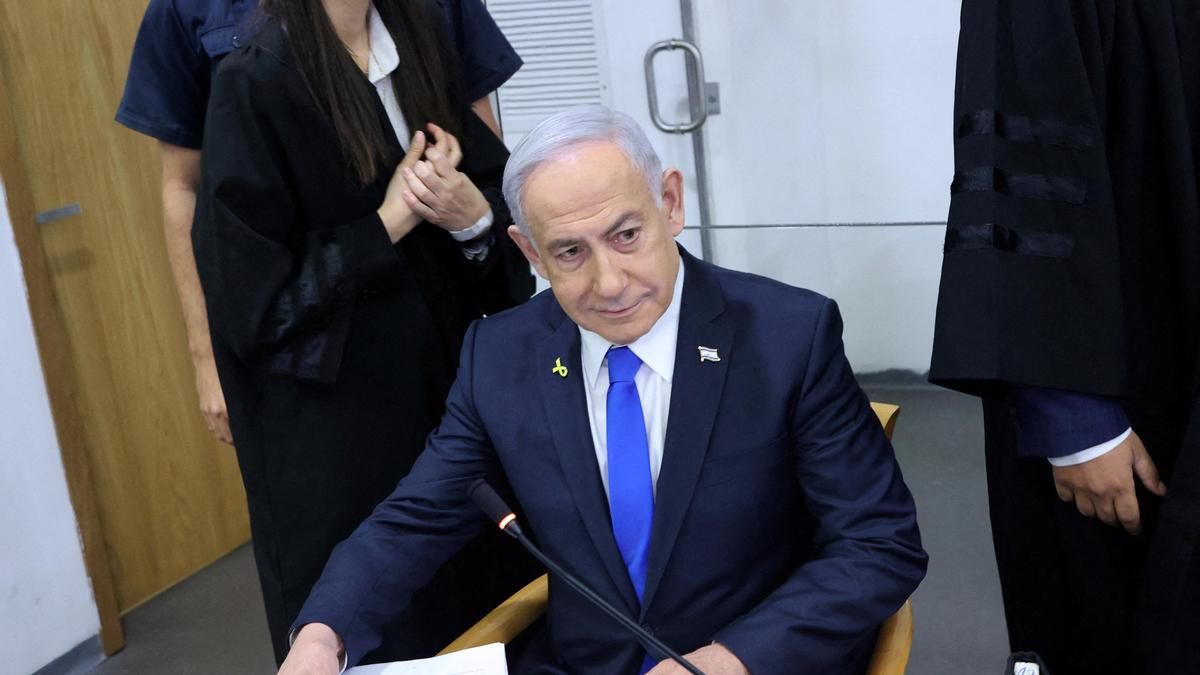
Netanyahu’s signals for peace are grounded in the diminishing marginal utility of continued bombardment. Israel faces a complex cost function consisting of internal displacement, reserve duty attrition, and international diplomatic depreciation.
Internal Displacement and the Return Metric
The primary KPI for the Israeli government is the safe return of approximately 60,000 citizens to the northern Galilee. This is not merely a logistical challenge but a psychological one. The government cannot declare success until the perceived threat of a cross-border raid is neutralized. This requires a visible, physical change in the posture of the Lebanese state. If the LAF does not deploy in significant numbers—estimated at 5,000 to 10,000 troops—the domestic political pressure in Israel will force a return to kinetic operations.
The Attrition of Reserve Forces
Prolonged mobilization impacts the Israeli economy through labor shortages in the high-tech and agricultural sectors. The opportunity cost of keeping reserve brigades on the northern border outweighs the benefits of static defense. Consequently, a diplomatic settlement serves as an economic "release valve," allowing for the demobilization of forces while maintaining a "deterrence via intelligence" posture.
The Tripartite Enforcement Model
A functional agreement must move away from the failed bilateralism of the past. The proposed framework relies on a tripartite model where the United States acts as the primary guarantor, the Lebanese Armed Forces act as the primary operator, and Israel retains the secondary right of intervention.
The Role of the LAF as a Sovereign Proxy
For the Lebanese government, the deployment of the LAF to the south is an attempt to reclaim sovereignty in a region where it has been historically absent. However, the LAF faces structural limitations:
- Funding Gaps: The Lebanese state is effectively bankrupt, necessitating international subsidies for soldier salaries and fuel.
- Tactical Capacity: The LAF lacks the heavy armor and air defense to act as a standalone deterrent. It functions best as a tripwire—a mechanism that legitimizes international intervention if its personnel are bypassed or attacked.
The American Guarantee and the Side Letter
Central to the current negotiations is the concept of a "side letter" or a memorandum of understanding between Washington and Jerusalem. This document would provide explicit US backing for Israeli military action in the event of a breach of the agreement. By formalizing this, the US creates a "security backstop" that allows Israel to withdraw its standing army from the immediate border while maintaining the legal and political cover to strike if re-militarization occurs.
Strategic Vulnerabilities and the Spoilers Effect
The primary risk to any Israel-Lebanon settlement is the "Spoilers Effect"—the ability of decentralized actors or regional patrons to trigger a collapse through asymmetric provocation.
The Verification Latency
There is an inherent time lag between a violation occurring (e.g., the construction of a rocket launch site) and its verification by international monitors. If the verification process is bureaucratic, it fails. To be effective, the new monitoring mechanism must utilize real-time overhead surveillance and automated sensor networks, bypassing the consensus-based delays that paralyzed UNIFIL.
The Regional Linkage
Lebanon does not exist in a vacuum. The security situation is intrinsically linked to the broader regional competition between the "Resistance Axis" and the US-aligned bloc. A settlement in Lebanon is often contingent on the status of Gaza; however, the current strategy attempts to "de-couple" these fronts. De-coupling is only possible if the Lebanese state can offer a credible alternative to the security provided by non-state actors. If the state cannot provide basic services and security, the power vacuum will inevitably be refilled.
Tactical Roadmap for Implementation
The transition from conflict to a stabilized border requires a sequenced approach to minimize the risk of accidental escalation during the withdrawal phase.
- Phase One: The 60-Day Testing Window. A cessation of fire followed by a phased withdrawal of Israeli forces, synchronized with the northward movement of non-state militants and the southward deployment of the LAF.
- Phase Two: Infrastructure Destruction. Systematic demolition of remaining cross-border tunnels and fortified positions. This must be verified by US-led technical teams.
- Phase Three: Institutionalization. The permanent expansion of the LAF’s mandate and the establishment of a Joint Coordination Center (JCC) where military representatives from Lebanon, Israel, and the US can communicate via a secure channel to de-escalate local friction points.
The durability of this peace is not measured by the absence of rhetoric but by the density of state-controlled checkpoints. The success of the Netanyahu-Lebanon push depends on converting a temporary ceasefire into a permanent structural change in how the Lebanese state manages its southern geography.
The strategic play here is clear: Israel is trading immediate kinetic control for long-term international legitimacy and domestic economic stabilization. Lebanon is trading a portion of its non-state military autonomy for the preservation of its state infrastructure and the hope of international financial reintegration. If the enforcement mechanism fails to trigger within the first 48 hours of a documented breach, the entire architecture will collapse back into a high-intensity conflict, rendering the diplomatic effort a mere tactical pause rather than a strategic resolution. The focus must remain on the mechanics of the "side letter"—specifically, the precise definition of what constitutes a "material breach" that justifies a return to force. Without that definition, the paper is worthless.