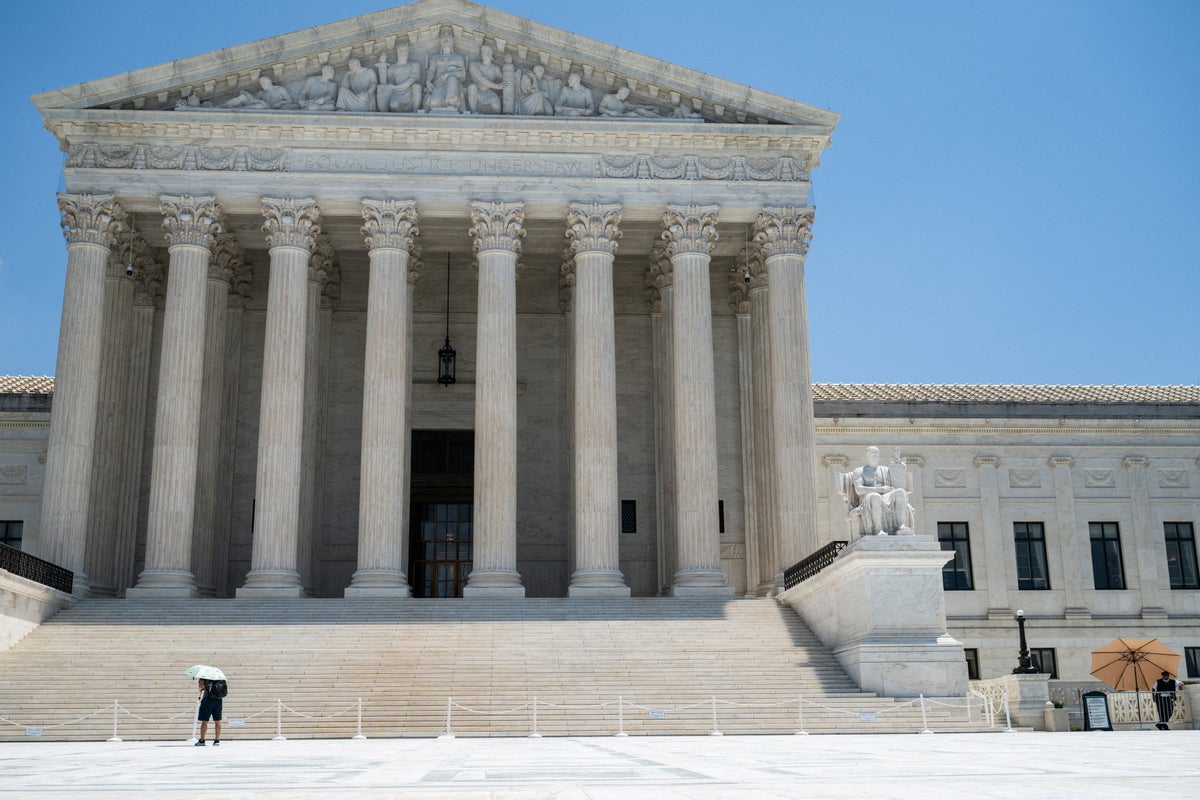
The traditional model of the American administrative state relies on a foundational equilibrium: Congress creates regulatory frameworks, experts execute them within insulated agencies, and the judiciary arbitrates disputes. However, the Supreme Court’s recent decision in Trump v. Slaughter (2026) dismantled a 90-year-old precedent protecting independent regulatory agency heads from at-will presidential termination. This structural disruption cannot be fully understood through the casual lens of political polarization. Instead, it requires an operational evaluation of a distinct jurisprudential methodology: pragmatic structural conservatism.
By evaluating how the Court balances executive centralization against systemic stability—such as its concurrent 5-4 decision protecting the independence of the Federal Reserve Board—we can map the precise economic and governance mechanics driving this transformation.
The Bicameral Optimization Problem
To understand the friction between the judicial and legislative branches, one must view agency insulation as a strategic design choice by Congress. The legislative branch operates under severe time and resource constraints. To maximize public utility and safety, Congress delegates technical rule-making authority to specialized bodies like the Federal Trade Commission (FTC) or the Federal Communications Commission (FCC).
The structural logic of independent agencies relies on an explicit trade-off:
- The Delegation Premium: Congress sacrifices direct political control over an agency to achieve long-term, data-driven stability, insulating markets and consumers from electoral volatility.
- The Insulating Mechanism: By legally mandating that commissioners can only be removed for cause (e.g., inefficiency, neglect of duty, or malfeasance), the state creates a predictable regulatory landscape.
The conservative majority’s rejection of this architecture in Trump v. Slaughter is rooted in an unyielding optimization of the Unitary Executive Theory. Under this framework, Article II of the Constitution concentrates all executive authority within the presidency. The core argument states that because administrative agencies execute the law, they are inherently executive. Therefore, any legislative restriction on the president's power to terminate agency leaders disrupts the chain of democratic accountability.
[Congress] ---> Passes Broad Statutes (Delegation)
                   |
                   v
[President] ---> Absolute Removal Power (Unitary Theory) ---> Eliminates Agency Autonomy
                   |
                   v
[Independent Agencies] ---> Subject to At-Will Termination (Loss of Technical Continuity)
The structural casualty of this logic is the elimination of the agency's role as an objective arbiter. When agency heads serve at the pleasure of the White House, the cost function of regulatory compliance changes overnight. Long-term compliance investments become highly risky because a change in administration guarantees an immediate, wholesale shift in regulatory enforcement.
The Bifurcated Stabilization Framework
The Court’s ruling on the same day regarding the Federal Reserve Board reveals that its structural conservatism is guided by a pragmatic risk-mitigation framework rather than purely abstract theory. In a narrow 5-4 decision, the Court preserved the removal protections for members of the Federal Reserve.
This divergence establishes an operational threshold for when the Court will tolerate structural disruption versus when it will enforce institutional preservation. This behavior can be modeled through two distinct variables: the systemic volatility index and the institutional friction coefficient.
1. Systemic Volatility Index (SVI)
The SVI measures the immediate economic or societal fallout caused by a sudden regulatory shift. For standard independent agencies (e.g., the FTC's antitrust definitions), a sudden shift creates localized corporate friction but does not threaten macro-systemic collapse.
Conversely, the Federal Reserve directly controls monetary policy, interest rates, and currency stability. As Chief Justice John Roberts noted in the majority opinion, historically dismantling independent central banking led to ruinous financial panics. Where the SVI is extreme, the Court defaults to pragmatic preservation.
2. Institutional Friction Coefficient (IFC)
The IFC evaluates how easily an agency’s function can be absorbed or modified by traditional political processes without breaking core state operations. Standard regulatory agencies possess a low IFC; their rule-making processes can cycle through ideological shifts without destabilizing the constitutional core.
The Federal Reserve possesses a high IFC. Its functions cannot be easily integrated into a hyper-partisan executive branch without triggering capital flight and severe inflationary feedback loops.
| Agency Type / Structural Attribute | Systemic Volatility Index (SVI) | Institutional Friction Coefficient (IFC) | Judicial Outcome (2026 Rulings) |
|---|---|---|---|
| Standard Regulatory Agencies (FTC, FCC, SEC) | Low to Moderate | Low | Overruled: Removal protections struck down; absolute presidential control enforced. |
| Macroeconomic Stabilizers (Federal Reserve Board) | High | High | Preserved: Removal protections maintained via a pragmatic 5-4 coalition. |
The Strategic Volatility Bottleneck
The immediate result of this jurisprudential shift is an escalation in regulatory volatility. This structural reality creates a distinct operational bottleneck for corporate and technological infrastructure planning.
When independent agencies are brought fully under executive control, their policy life cycles track with the four-year presidential election cycle. This creates a regulatory whipsaw effect. For instance, an infrastructure project or technological standard dependent on specific data-privacy or environmental rules can be declared fully compliant under one administration and entirely illegal under the next, with no change to the underlying statutory law.
The second limitation is the erosion of deep technical expertise within the civil service. If protection from arbitrary termination is stripped from leadership and potentially pushed down to career experts via future expansions of this doctrine, the incentive structure for entering public service changes. Highly specialized data scientists, economists, and engineers face severe professional risk if their empirical findings run counter to the immediate political goals of the executive branch. This reality drives elite technical talent out of the public sector, reducing the analytical quality of regulatory impacts.
The executive branch gains immense short-term agility to execute its policy goals, but it loses the systemic buffer that independent expertise provides against market panics and unintended industrial consequences. Organizations can no longer rely on historic precedents or settled agency rules as static anchors for capital allocation. Corporate strategy must now treat federal regulatory frameworks as highly fluid variables, pricing in systemic regulatory re-baselines every 48 months.