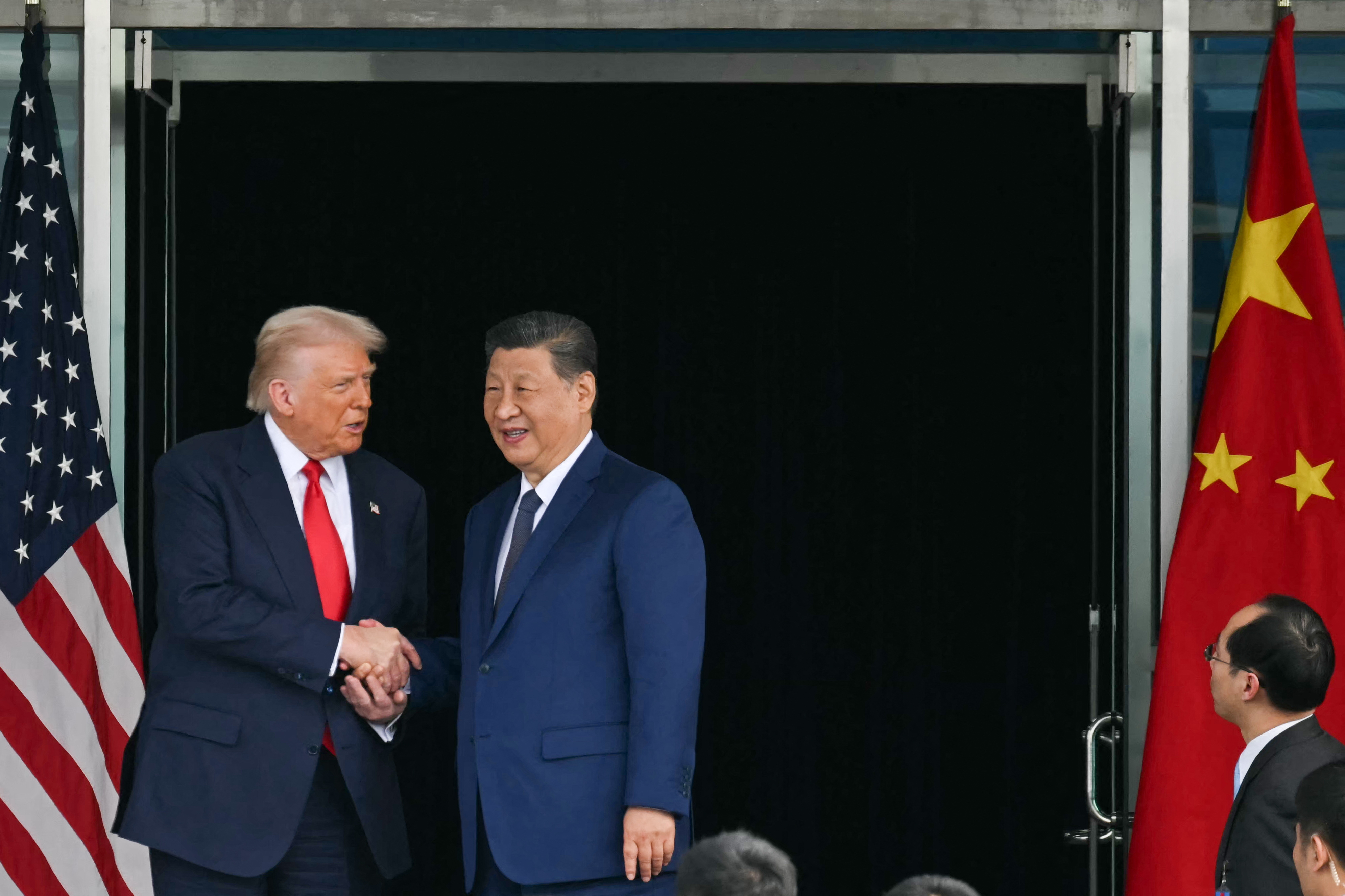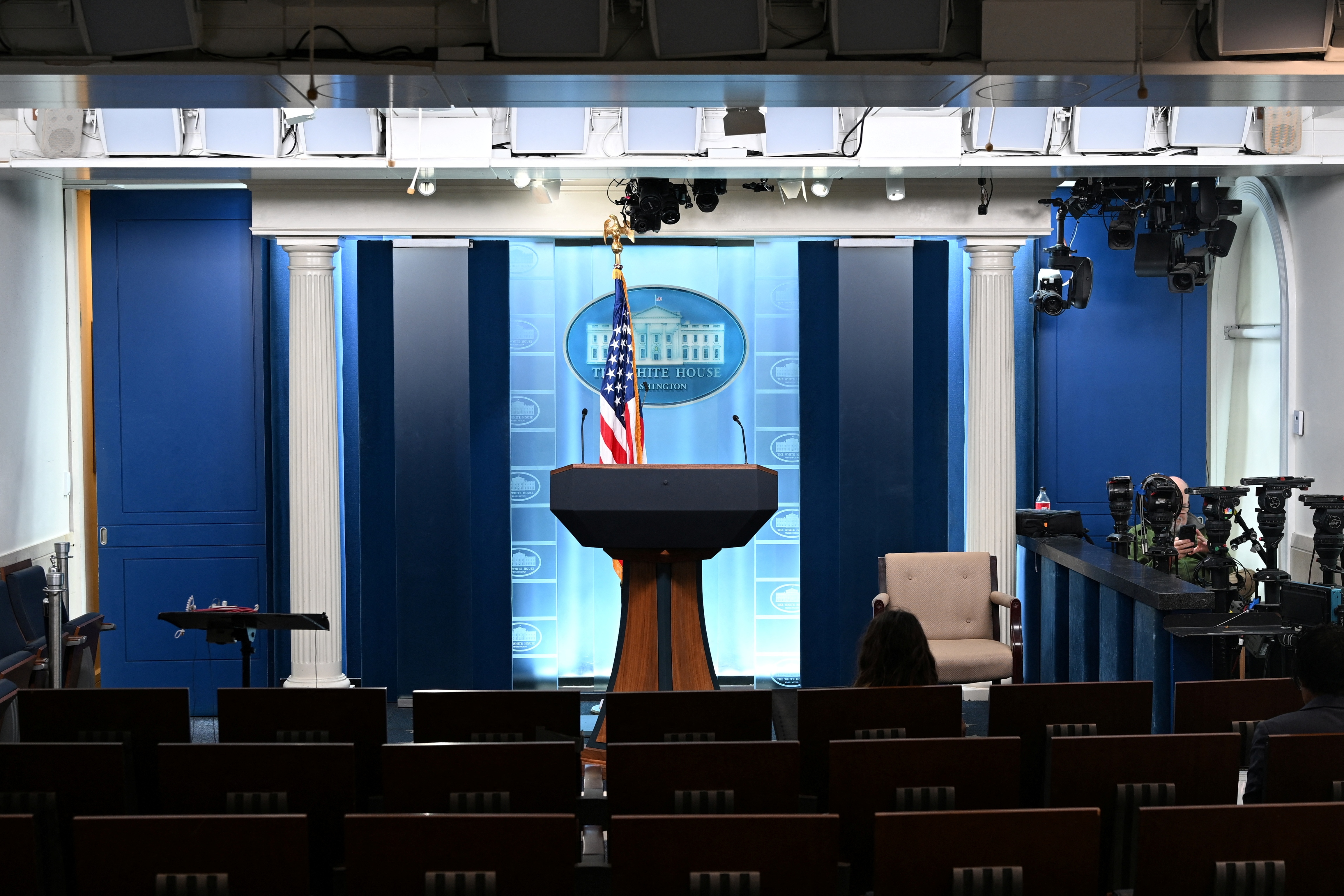
Executive information control operates through structural leverage points rather than arbitrary whims. When an administration restricts press access or ejects reporters from briefings, observers frequently mischaracterize the action as a simple breakdown of norms or a partisan temper tantrum. In operational reality, restricting press access represents a calculated exercise in information supply management. By manipulating the cost function of reporting, an executive office alters how journalists allocate scarce resources, shifting coverage away from costly investigative verification and toward centralized, zero-cost official feeds.
Understanding whether an administration can execute a press ban again requires mapping the institutional incentives, legal constraints, and operational mechanisms that govern interactions between the executive branch and the press corps. The architecture of press access is maintained by a fragile equilibrium of physical space, accreditation procedures, and reciprocal utility. When that equilibrium breaks down, specific structural dynamics dictate the outcome. Don't forget to check out our previous article on this related article.
The Economic Model of Press Access
The relationship between the executive branch and the press is governed by an inherent asymmetry of information and resources. The White House operates as a monopoly producer of primary executive news, while media outlets function as distributed consumer-facing distributors competing for audience attention and advertising or subscription revenue.
In this market, physical and credentialed access to the White House briefing room, the press pool, and presidential travel functions as a cost-reduction mechanism for news organizations. Stationing reporters permanently at the complex allows outlets to capture high-frequency signals with minimal overhead. When an administration threatens or executes a press ban, it fundamentally alters this economic equation by increasing the marginal cost of independent reporting. To read more about the context of this, Reuters provides an excellent summary.
To understand the mechanics of this cost shift, examine the primary variables that dictate newsroom resource allocation:
- Sourcing Friction: Access bans force reporters to rely on secondary or tertiary sources, increasing the time required to verify official claims and raising the rate of journalistic error.
- Opportunity Cost: Outlets must decide whether to deploy finite capital to litigate access restrictions or redirect reporters to alternative beats where institutional cooperation remains intact.
- Signal Degradation: Without direct visual and auditory access to unedited executive proceedings, newsrooms become increasingly dependent on sanitized readouts and official transcripts provided directly by the administration.
When an administration revokes credentials or blocks a specific outlet, it imposes a punitive tax on critical coverage. The economic penalty is designed to encourage self-censorship among competing outlets seeking to preserve their own operational access.
Legal and Administrative Constraints on Executive Authority
Executive power within the White House complex is bounded by a complex intersection of administrative law, constitutional precedent, and property management rights. While the presidency enjoys broad authority over executive branch operations, the exercise of that authority regarding the press faces distinct friction points.
The Public Forum Doctrine versus Proprietary Control
The West Wing and the James S. Brady Press Briefing Room occupy federal property, but their legal status is distinct from traditional public forums like sidewalks or public parks. Courts generally classify the White House press facilities as non-public forums or limited public forums, granting the government wider latitude to regulate access based on reasonable, neutral criteria. However, this latitude is not absolute.
When an administration revokes press credentials or excludes a specific journalist, the action triggers constitutional scrutiny under the First and Fifth Amendments if the exclusion appears viewpoint-based or arbitrary.
- Procedural Due Process: Administrative law requires that any deprivation of a recognized liberty or property interest—such as long-standing media credentials—must include clear notice of the reasons for revocation and a baseline opportunity to respond. Arbitrary ejection without established guidelines exposes the administration to swift injunctions.
- Viewpoint Neutrality: The executive branch cannot constitutionally discriminate among journalists based on the editorial stance or ideological leanings of their employers. Restricting access because of unfavorable coverage violates the core tenets of the First Amendment, transforming administrative management into unconstitutional state censorship.
- Objective Criteria: To legally sustain access restrictions, an administration must rely on objective, content-neutral criteria, such as space limitations in the physical briefing room or verifiable security clearances.
The Three Operational Vectors of Information Control
When an administration seeks to minimize critical scrutiny without triggering immediate judicial intervention, it rarely implements a blanket, generalized press ban. Total bans are legally fragile and politically costly. Instead, executives deploy sophisticated operational vectors designed to achieve selective exclusion or passive compliance.
Vector One: Dynamic Accreditation and Pool Rotation Manipulation
The White House press pool—the small group of journalists that accompanies the president everywhere—is traditionally managed collectively by the White House Correspondents Association through an internal rotation system. An administration can disrupt this system by interjecting direct executive vetting into routine seat allocations. By conditioning pool access on compliance with administrative rules or by quietly freezing out adversarial outlets under the guise of space constraints, the executive office weaponizes the logistics of daily reporting.
Vector Two: Disintermediation via Digital Infrastructure
The most effective modern mechanism for bypassing hostile press corps is complete disintermediation. By utilizing direct-to-consumer digital platforms, presidential social media accounts, and controlled podcasts or streamed events, the executive branch delivers unmediated messaging directly to the electorate.
This strategy alters the dependency structure. When the public can access direct presidential statements instantly online, the economic value of traditional journalistic gatekeeping diminishes in the eyes of audiences. Consequently, news organizations lose leverage when protesting access bans, as the administration can credibly threaten to route around them entirely without suffering a catastrophic loss of audience reach.
Vector Three: Selective Briefing Devaluation
Another operational vector involves degrading the utility of the daily press briefing itself. If an administration stops holding regular briefings, replaces them with unannounced gagles, or populates the briefing room with friendly, non-traditional media commentators who ask softball questions, traditional reporters are starved of the raw material necessary to sustain daily adversarial coverage. The ban becomes functional rather than physical: journalists remain in the room, but the room ceases to generate actionable information.
Strategic Forecast and Systemic Resilience
The viability of future press bans hinges on the legal resilience of newsroom coalitions and the adaptability of journalistic institutions. When an administration attempts to restrict access, the immediate response of affected outlets typically involves emergency litigation. However, relying solely on the courts creates a lagging defense mechanism, as legal briefs take weeks or months to resolve while the daily news cycle dictates public perception in real time.
Long-term resilience requires structural diversification within the media ecosystem. Outlets that reduce their operational dependence on physical White House real estate—by investing in deep investigative data work, cultivating independent whistleblower pipelines within federal agencies, and utilizing decentralized reporting networks—diminish the coercive power of executive access threats.
An administration calculating the cost of a press ban must weigh the short-term tactical gain of silencing hostile questioning against the long-term institutional fallout. When the press corps maintains disciplined solidarity, refusing to accept secondary credentials or participate in fractured pools while colleagues are illegally excluded, the administrative cost of the ban spikes.
The mechanism of executive information control is ultimately an exercise of applied leverage. If the cost of exclusion remains low for the administration and high for the press, bans will recur. If organized resistance raises the political and legal price of exclusion, the executive branch must retreat to the standard friction of democratic accountability. The variable determining the outcome is not executive desire, but the structural strength of the institutional pushback arrayed against it.