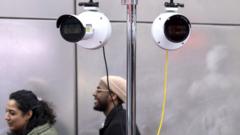
Conservative policy circles are pushing for a dramatic expansion of automated surveillance, arguing that modern policing requires the immediate adoption of facial recognition technology to maintain public safety. This policy shift relies on the premise that algorithmic identification tools can drastically reduce violent crime rates, accelerate suspect apprehension, and minimize human error in high-pressure street environments. Yet, the push to normalize continuous biometric scanning across municipal jurisdictions bypasses deep constitutional hurdles and introduces severe operational vulnerabilities that proponents conveniently gloss over.
For years, police departments across the United States have quietly integrated facial recognition software into their investigative workflows. What began as an experimental tool utilized primarily by federal agencies has trickled down to municipal police forces, often funded by federal grants or deployed through opaque procurement contracts with private vendors. Now, conservative lawmakers and law enforcement associations want to codify and expand these practices. They frame the debate as a stark binary choice between public security and unchecked criminal activity.
This framing ignores how these systems function in the real world.
The Mechanics of the Match
To understand why this technology sparks intense legislative and civil liberties battles, we have to look past the marketing brochures provided by software vendors. Facial recognition is not magic. It is probabilistic mathematics.
When a security camera or a body-worn sensor captures an image of a person on a street corner, the software extracts specific geometric data points from the face. It measures the distance between the eyes, the depth of the eye sockets, the contour of the jawline, and the shape of the cheekbones. This creates a digital template known as a faceprint. The system then queries this faceprint against a massive database of previously collected images, which might include state driver license photos, mugshots, or scraped social media profiles.
The output is rarely a definitive identification. Instead, the software generates a list of candidates ranked by a similarity score.
Herein lies the structural flaw that police leadership frequently downplays. A similarity score of eighty-five percent does not mean the system is eighty-five percent sure the person is a specific individual. It means the geometric feature vector shares an algorithmic overlap with a reference image.
Environmental variables degrade this math rapidly. Poor lighting angles, low-resolution sensor hardware, partial obstructions like scarves or medical masks, and the simple passage of time alter facial structures enough to skew the results. When an officer relies on a high-speed software query during a dynamic street encounter, confirmation bias takes over. The computer offers a name, and the human brain naturally accepts that name as verified fact, bypassing the rigorous investigative steps required to establish probable cause.
The Accuracy Disparity
The error rates are not evenly distributed across the population. Independent evaluations conducted by federal metrology institutes have repeatedly demonstrated that commercial facial recognition algorithms exhibit significantly higher false-positive rates when analyzing women and people of color.
When a false positive occurs in a controlled laboratory setting, the consequence is a minor software glitch. When a false positive occurs on a crowded subway platform or during a traffic stop, the consequence is an armed confrontation initiated against an innocent citizen.
Proponents of expanded police deployment often counter that human review acts as a mandatory safeguard. An officer must look at the software output and make the final call. But this argument misunderstands the psychology of automation. Decades of human-factors research in aviation and industrial control systems show that operators working under time pressure routinely defer to automated recommendations. When an algorithm flags a pedestrian as a wanted felon, the responding officer operates with heightened adrenaline and lowered skepticism. The safeguard becomes a rubber stamp.
The Legislative Momentum
Conservative advocacy groups and law enforcement lobbyists are pushing legislative packages designed to protect and expand these deployments. Their arguments rest on three primary pillars.
First, they point to clearance rates for violent crimes, which have stagnated or declined in many major metropolitan areas over the past decade. If detectives can instantly identify an armed robbery suspect captured on a convenience store security camera, the argument goes, cases will close faster, and dangerous offenders will clear the streets before they commit subsequent offenses.
Second, proponents emphasize the speed and efficiency gains for municipal budgets. Automated identification saves man-hours. Instead of distributing static bulletin photos to every precinct or spending days combing through low-quality video footage, a single analyst can run a query in seconds. In an era where police departments face persistent staffing shortages and recruitment crises, technological force multipliers look like a straightforward fiscal solution.
Third, lawmakers frame the initiative as a matter of equal protection for victims. They argue that failing to utilize every available technological tool to catch violent predators is a dereliction of duty, leaving law-abiding citizens vulnerable to repeat offenders who exploit the anonymity of urban environments.
These arguments resonate with a public anxious about rising property crime and urban disorder. They tap into a deep-seated desire for technological certainty in an uncertain world.
The Erosion of Baseline Anonymity
Yet, expanding police use of facial recognition fundamentally alters the social contract between the citizen and the state. Historically, walking down a public street afforded a degree of practical obscurity. Unless an individual drew the direct, individualized attention of a police officer through suspicious behavior, their movements were unrecorded and uncataloged.
Continuous biometric monitoring destroys practical obscurity.
If municipal governments integrate facial recognition software with closed-circuit television networks, transit cameras, and private surveillance systems sharing feeds with law enforcement, the state gains the capacity to track the historical movements of ordinary citizens without a warrant. It matters little whether the government intends to track everyone all the time. The architectural capability to do so exerts a chilling effect on public life.
Consider a hypothetical scenario in which a municipal police department hooks its real-time crime center into a network of high-definition street cameras equipped with live facial recognition. Citizens attending a peaceful political rally, visiting a reproductive health clinic, or frequenting a house of worship have their faces scanned and compared against watchlists in real time. Even if their data is ostensibly discarded when no match is found, the infrastructure exists to log, store, and query those movements retroactively.
The chilling effect on First Amendment protections is immediate. When people know they can be identified and tracked simply for being present at a controversial public gathering, self-censorship takes root. The cost of exercising constitutional rights rises.
The Vendor Ecosystem
Beneath the political debate lies a powerful commercial engine. The private companies building these algorithms thrive on expansion. Software vendors market their products not just as investigative tools, but as comprehensive public safety ecosystems that promise predictive analytics, automated threat detection, and real-time asset tracking.
This creates a perverse incentive structure. Vendors have a financial stake in convincing municipal leaders that crime is rampant and that only their proprietary algorithms can restore order. Police chiefs, eager to modernize their operations and secure grant funding, readily adopt these pitches.
Oversight often lags far behind deployment. In many jurisdictions, police departments have acquired facial recognition tools through discretionary spending or federal homeland security grants without explicit authorization from city councils or state legislatures. Software is tested, deployed, and integrated into daily operations before the public even knows the department possesses the capability.
When investigative journalists or civil rights organizations uncover these secret deployments through public records requests, police leadership typically defends the secrecy on operational security grounds, claiming that transparency would tip off criminals. This defensive posture shields the technology from democratic accountability.
The Regulatory Deadlock
Legislative efforts to regulate or ban police use of facial recognition have created a fragmented national patchwork. A handful of cities and states have enacted outright bans on municipal use of real-time biometric surveillance, citing civil liberties concerns. Other states have passed restrictive frameworks that require judicial warrants before police can run facial recognition queries against proprietary databases.
Conversely, conservative-led states are moving in the opposite direction, introducing bills that preempt local bans and mandate police access to these technologies. This divergence guarantees that the legality of biometric policing will be litigated in federal courts for years to come.
The core constitutional question centers on the Fourth Amendment. Does scanning a person's face in a public space constitute a search? Traditional jurisprudence drew a sharp line between physical intrusion and observation in plain view. But the Supreme Court has begun grappling with the realities of digital surveillance. In landmark rulings concerning cell site location information and GPS tracking, the court recognized that long-term digital tracking reveals intimate details of a person's life and requires a warrant, even if the data points are collected in public spaces.
Facial recognition represents the ultimate extension of this problem. It transforms transient public exposure into permanent, searchable data.
The Reality of Implementation
Back on the street, the debate over civil liberties feels abstract to officers handling chaotic shifts. They want tools that work. They want to know if the person standing ten feet away has an active warrant for domestic violence or weapons violations.
Yet, rushing to embrace unvetted algorithms creates administrative liabilities that can collapse criminal cases during prosecution. Defense attorneys have increasingly made the use of facial recognition a focal point in discovery motions. When prosecutors cannot provide the exact software version, the training data provenance, the confidence score threshold, or the chain of custody for the digital image used in the query, judges begin tossing out evidence.
An investigative shortcut that yields a compromised arrest can poison an entire prosecution, letting guilty individuals walk free on procedural grounds while undermining public trust in the integrity of the justice system.
The demand for greater police use of facial recognition addresses real anxieties about public safety and operational efficiency, but it offers a false technological cure. It exchanges constitutional norms and baseline anonymity for the illusion of algorithmic infallibility, leaving communities to bear the heavy costs of errors, overreach, and unverified math

.png?itok=1mb05mKJ)

