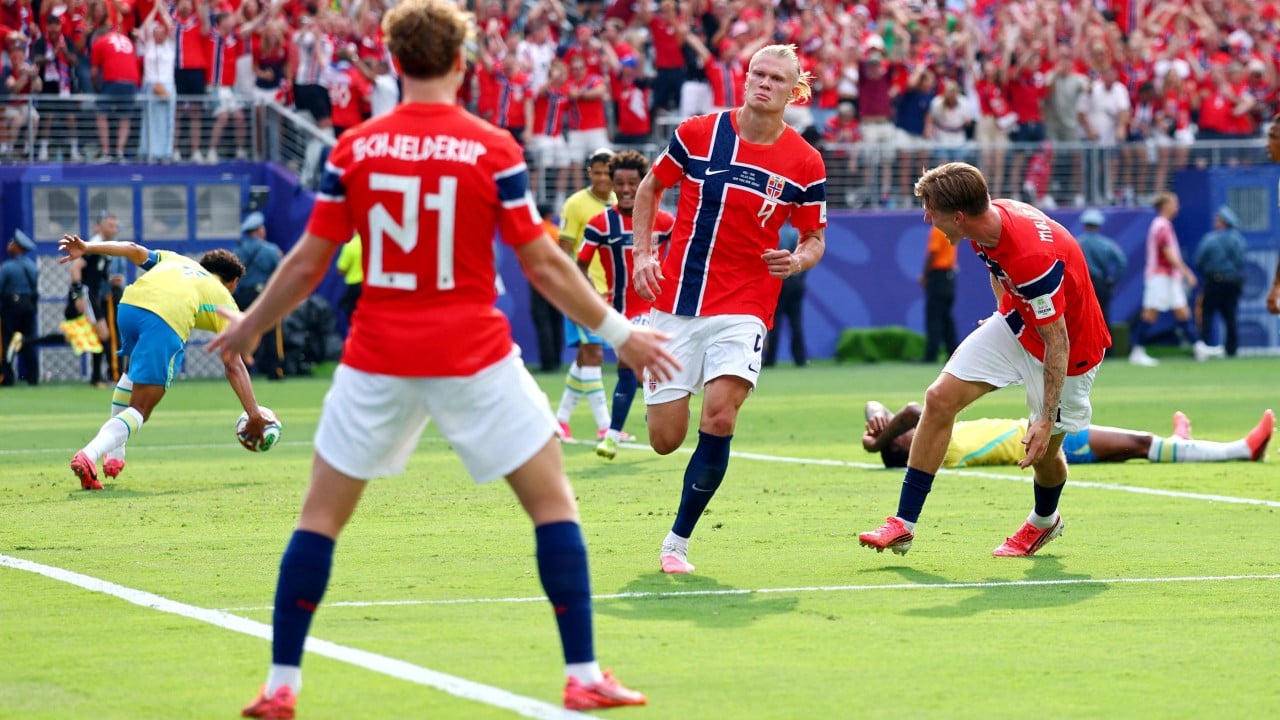
Thomas Tuchel stood in the subterranean corridors of the stadium, his jacket slightly askew, defending a tactical blueprint that had just crumbled on the world stage. England was out of the World Cup. Argentina had danced, fought, and ultimately thought their way past a star-studded Three Lions squad that looked, not for the first time, like a collection of brilliant individuals lost in a complex German maze.
The post-match post-mortem focused heavily on individual errors, a missed clearance, a momentary lapse in midfield tracking. But those superficial mistakes ignore the structural rot that defined England's exit. Tuchel's rigid, risk-averse system did not fail because of execution. It failed by design. By prioritizing defensive stability and sterile possession over the creative spontaneity that defines England’s most dangerous players, the manager systematically neutralized his own weapons. Argentina did not just beat England; they exposed the intellectual stubbornness of a coaching staff that refused to adapt when the plan fell apart.
The Illusion of Control
Tuchel's tactical philosophy has always been built on the concept of controlled chaos. He demands strict positional discipline, hoping to suffocate opponents through possession and counter-pressing. Against lesser opposition in the group stages, this approach looked like a masterclass. England dominated the ball, choked out opposition transitions, and walked away with clean sheets.
But tournament football at the highest level is not won by sterile dominance.
Against an Argentine side comfortable without the ball, England’s possession became their own prison. The midfield pivot was instructed to play laterally, recycling the ball to the center-backs in an endless, agonizing loop. This was not possession with intent; it was safety-first football masquerading as dominance.
The Midfield Trap
Argentina’s coaching staff clearly did their homework. Rather than pressing England's deep playmakers, they sat in a compact mid-block, cutting off the passing lanes to the half-spaces.
This forced England into wide areas, where their wingers were repeatedly isolated against doubling defenders. Bukayo Saka and Jude Bellingham, players who thrive on quick combinations and vertical driving runs, spent the evening receiving the ball with their backs to goal, thirty yards from where they could do any real damage.
Every time England tried to force the ball through the center, Argentina snapped into challenges, triggered transitions, and left England's defense exposed. It was a trap. Tuchel walked his team right into it, and when the trap sprung, he had no backup plan.
The In-Game Paralysis
A manager is judged not just by their starting lineup, but by their ability to read the shifting winds of a match and react before it is too late. During the ninety minutes against Argentina, Tuchel appeared frozen.
As the second half wore on and Argentina began to assert control over the tempo, the need for a dynamic change in midfield became blindingly obvious. England needed someone who could carry the ball through lines, break the Monolithic Argentine block, and inject some unpredictability into a stagnant attack.
Instead of turning to his bench to introduce pace or a direct runner, Tuchel waited. He stuck to his pre-planned substitution intervals, introducing like-for-like replacements that did nothing to alter the tactical dynamics of the game.
The Substitution Myth
Managers often talk about "trusting the process" during a game. But there is a fine line between trust and obstinacy.
- Min 60: The game was crying out for a direct runner to stretch the Argentine backline.
- Min 75: The midfield was completely overrun, yet the tactical shape remained entirely unchanged.
- Min 82: The first tactical shift came only after Argentina had already taken the lead, forcing England into a frantic, uncoordinated route-one approach.
This is the cost of rigidity. When a coach values their pre-conceived system over the reality unfolding on the pitch, the players lose belief. By the time England started throwing bodies forward in stoppage time, any semblance of tactical cohesion had vanished. It was desperation football, and it ended exactly how desperation football usually ends.
A Golden Generation Frozen in Stone
England does not suffer from a lack of talent. This roster is arguably the deepest and most technically gifted group of players the country has produced in thirty years. They possess elite creators, lethal finishers, and dynamic, modern defenders.
Yet under Tuchel, they looked heavy. Inhibited.
When players are over-coached, they stop playing on instinct. They start thinking about where they are supposed to stand rather than where the space is. Every pass becomes a calculated risk assessment rather than an intuitive flash of brilliance.
You could see the hesitation in Bellingham's eyes every time he turned in midfield. You could see it in Harry Kane's deep drops, desperately trying to link a midfield that had ceased to function. These are world-class players reduced to system components, stripped of the freedom that makes them world-class in the first place.
This defeat cannot be swept under the rug as a "bad day at the office" or blamed on the cruel margins of international tournaments. It was a systemic failure of leadership. If England is ever to break their decades-long trophy drought, they must stop hiring managers who treat players like chess pieces to be moved in rigid patterns, and start finding leaders who understand how to let talent breathe.