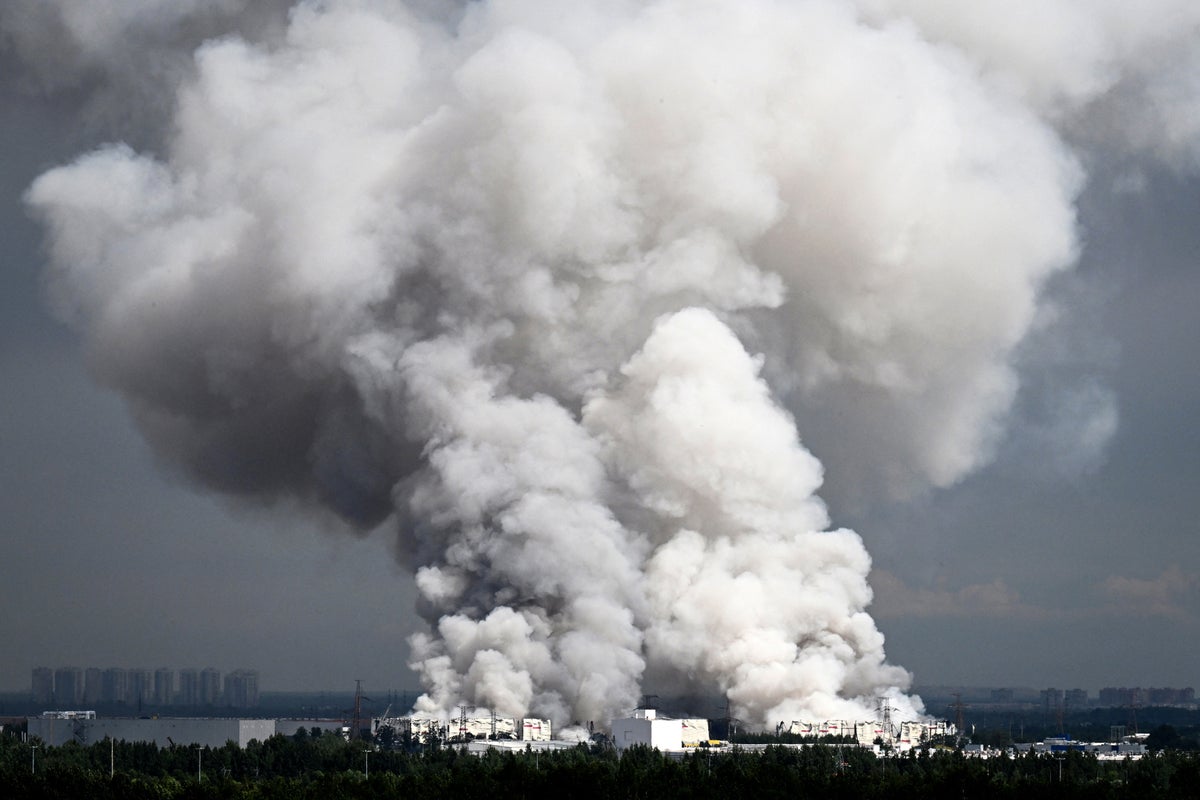
The headlines write themselves. Ukraine strikes a massive logistics hub or targets the infrastructure of Wildberries, and the internet erupts with grand declarations about destroying Russia's Amazon. Analysts pull out their glossy charts, pointing to delivery networks, digital storefronts, and consumer convenience, treating a retail platform like a high-altitude military asset.
It is a comfortable narrative. It treats modern conflict like an upgraded version of a board game where you simply target the biggest commercial building on the board and watch the enemy economy crumble.
It is also completely wrong.
I have spent years watching supply chains bend, break, and adapt under pressure. I have seen corporate boards panic over localized disruptions while the underlying plumbing of a market quietly reroutes itself overnight. Treating Wildberries as a primary pillar of Russian state power is a fundamental misunderstanding of what makes modern retail giants tick, and more importantly, how resilient digital commerce actually is against kinetic attacks.
The Fallacy of the Monolithic Retail Target
Let us clear up the first major misconception right out of the gate. People look at Wildberries and see a state-backed champion. They see the founder, Tatyana Bakalchuk, and assume direct alignment with Kremlin policy lines.
That is not how scale works.
Wildberries is a massive commercial engine, yes. It handles an astonishing share of Russian e-commerce. But private retail platforms are not state ministries. They are decentralized, hyper-optimized webs of third-party sellers, independent warehouse operators, and localized pickup points. When a strike hits a distribution center, commentators talk about it as a fatal blow to the merchant class.
The reality is far more cynical and much more resilient. E-commerce platforms survive because they are built for redundancy. Inventory is fragmented across thousands of regional hubs. Third-party vendors switch platforms or adjust fulfillment channels the moment margins shift.
Imagine a scenario where a major fulfillment warehouse takes a direct hit. To the casual observer, that is a catastrophic failure of the network. To the logistics operator, it is a localized friction point that triggers an automated algorithmic rerouting within hours. The packages take longer to arrive, prices tick upward by a fraction of a percent, and the system absorbs the shock.
Why Retail Giants Are Bulletproof Against Kinetic Strikes
The lazy consensus relies on a linear view of infrastructure. Destroy the warehouse, stop the delivery, cripple the economy.
History shows this approach fails consistently in digital economies. Physical distribution centers can be rebuilt, retrofitted, or decentralized further into smaller, harder-to-target neighborhood depots. The software layer powering Wildberries does not reside in a single server rack waiting for a missile; it is distributed across cloud architecture and redundant backup nodes.
When you target a marketplace, you are not hitting the core industrial manufacturing base that builds tanks, refines oil, or generates microchips. You are hitting the distribution layer of consumer goods. It hurts consumer sentiment. It creates friction. It makes daily life annoying for urban shoppers in Moscow or St. Petersburg.
Annoyance is not a strategic defeat.
Economies at war do not collapse because people have to wait an extra week for cheap socks or imported electronics. They adapt through gray markets, parallel imports, and domestic substitution. The energy sector keeps the lights on. The heavy industrial complex keeps the military supplied. Retail platforms are simply the grease on the wheels of consumer life, and grease can always be replaced by lower-quality substitutes.
The Unspoken Cost of Chasing Commercial Targets
There is another angle nobody wants to talk about. Resources are finite. Every strike or strategic asset dedicated to high-profile commercial targets like retail hubs or logistics networks is an asset diverted away from military-industrial chokepoints.
If you want to disrupt an economy, you target the inputs that cannot be easily substituted: specialized machine tools, chemical precursors for explosives, heavy refinery infrastructure, or power grids feeding critical manufacturing clusters.
Retail logistics networks are designed to be fluid. They are sponge-like. You punch a sponge, and it deforms, but it does not break. The water simply moves to the surrounding cells.
When military planners focus on consumer platforms, they are fighting a PR war disguised as strategic economics. They want the dramatic footage of smoke rising over a massive warehouse because it plays well on social media feeds. It satisfies the demand for visible impact.
Strategy is not about what looks good on a screen. Strategy is about systemic bottlenecks.
The Counter-Intuitive Truth About Modern Logistics
Let us look at the mechanics of what happens when a massive e-commerce node takes damage.
- Decentralization Accelerates: Centralized mega-hubs become liabilities, so the company splits inventory into smaller, highly distributed micro-warehouses. This actually makes the network harder to target in the long run.
- Margin Compression Forces Innovation: Sellers find alternative domestic manufacturers to replace imported goods faster than trade sanctions or supply blockades could ever hope to mandate.
- The Black Market Absorbs the Slack: Independent couriers and localized peer-to-peer delivery networks step into the vacuum left by corporate logistics failures.
By attempting to cripple a retail giant through kinetic disruption, you often end up forcing the domestic market to streamline and harden its internal supply chains against future shocks. You are not starving the beast; you are trimming its fat and forcing it to run leaner.
Stop treating e-commerce platforms as strategic centers of gravity. They are symptoms of consumer demand, not the source of state power.
Until analysts learn to distinguish between the superficial gloss of consumer retail and the hard, unyielding reality of heavy industrial supply chains, we will keep watching expensive missiles smash into warehouses while the economic engine underneath simply reroutes the delivery path.