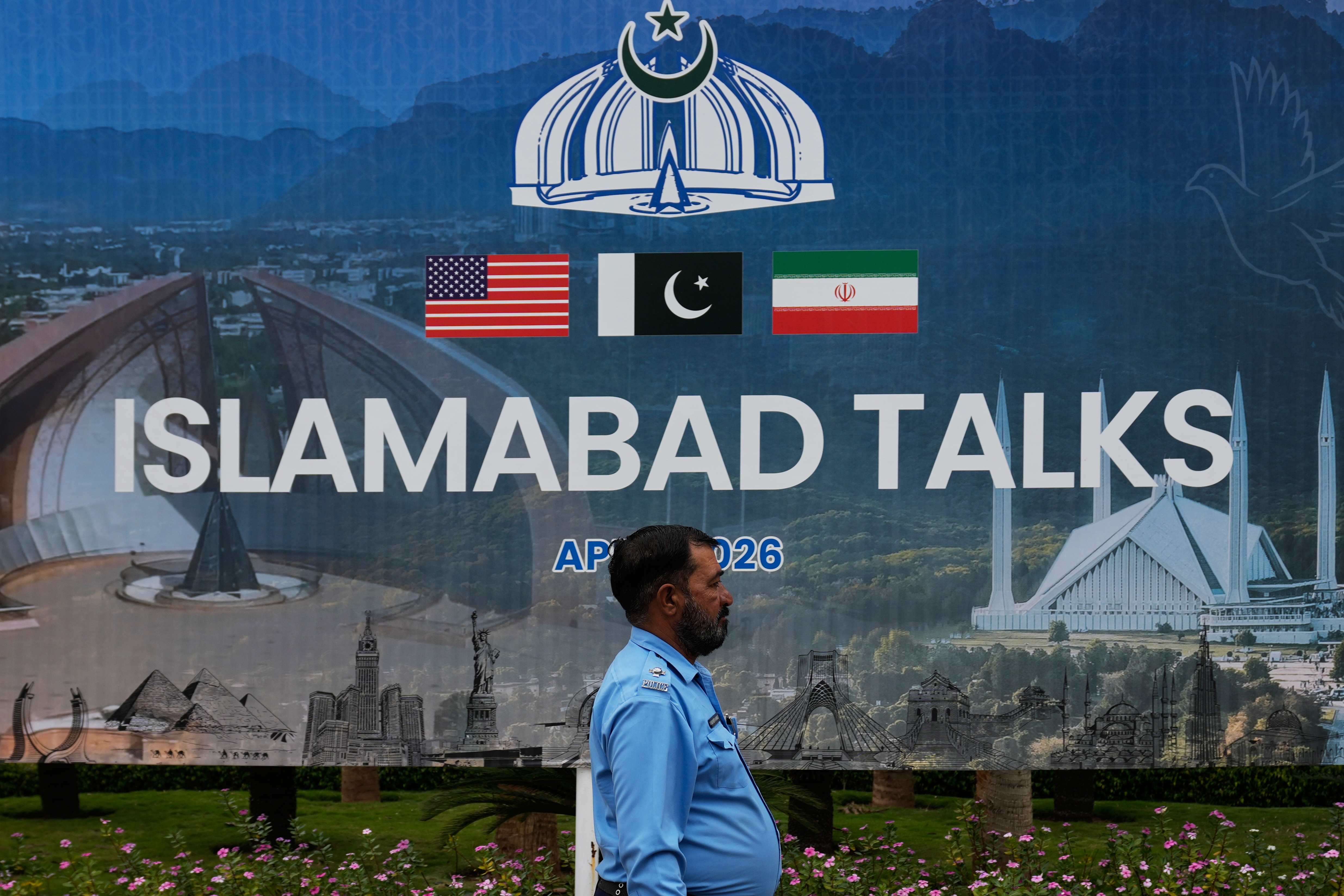
The steam rising from a porcelain cup in Islamabad carries a weight that no official communiqué can capture. Outside the heavy oak doors of the Serena Hotel, the humid air of the Margalla Hills hangs still, as if the earth itself is holding its breath. Inside, men who have spent decades viewing each other through the crosshairs of a drone or the grainy lens of a satellite are finally breathing the same air.
This is not a press release. It is a desperate, hushed gamble played out in the shadows of the Karakoram Range.
For weeks, the world watched the digital ticker tapes of escalating threats. A tanker seized here. A sanction tightened there. To the average observer in London or New York, the friction between Washington and Tehran feels like a mathematical problem—a series of geopolitical variables shifting on a screen. But for a shopkeeper in Mashhad wondering why the price of bread just doubled, or a young soldier in a desert outpost near the Strait of Hormuz, the friction is tactile. It is the grit of sand in the teeth and the cold knot of dread in the stomach.
Pakistan, often the world’s most complicated middleman, has stepped into the breach. It is a role born of necessity. When your neighbors are a tinderbox and your allies are holding the matches, you don’t just watch the smoke. You try to dampen the wood.
The Architect of the Middle Ground
Consider the position of a mid-level diplomat. Let’s call him Salman. He hasn't slept in forty-eight hours. His job isn't to draft treaties; it is to ensure that the American delegation and the Iranian representatives don't cross paths in the hallway before the seating is exactly right.
In the world of high-stakes diplomacy, the distance between a handshake and a walkout is measured in millimeters. Salman knows that if the tea is too cold, it’s an insult. If the room is too hot, tempers flare. He moves through the corridors of power with a heavy silence, carrying the crushing awareness that a single mistranslated word could result in a firestorm five thousand miles away.
The "frantic diplomacy" the headlines mention was actually a series of exhausted phone calls at 3:00 AM. It was the quiet shuttle of private jets between Doha, Muscat, and Islamabad. It was the realization by both the White House and the Grand Bazaar that the status quo had become a ceiling that was rapidly collapsing.
The core facts are these: The U.S. wants a guarantee of maritime security and a halt to uranium enrichment levels that keep the Pentagon awake at night. Iran wants the economic oxygen restricted by years of isolation. They are two exhausted wrestlers, locked in a clinch, each waiting for the other to let go first so they can both breathe.
The Invisible Stakes of the Strait
To understand why Islamabad is the chosen theater for this drama, one must look at the water. The Strait of Hormuz is a jugular vein.
If that vein is pinched, the global heart skips a beat. We often talk about "market volatility" as an abstract concept. It isn't. It is the truck driver in Ohio who can no longer afford the diesel to finish his route. It is the factory in Guangzhou that goes dark because the energy costs flipped from black to red overnight.
The American representatives arrived with briefcases full of satellite imagery and economic projections. The Iranians arrived with a centuries-long memory of perceived slights and a stubborn refusal to be seen as bowing. Pakistan, situated between the Persian world and the Western-aligned interests of the East, serves as the only bridge left standing.
The tension in the room is a physical presence. It is the smell of expensive cologne mixed with the metallic tang of anxiety. When the American Lead Negotiator looks across the table, he doesn't see an "Axis of Evil." He sees a man with a silver beard who likely has a daughter in university and a preference for poetry. When the Iranian Minister looks back, he doesn't see the "Great Satan." He sees a tired civil servant who is under immense pressure from a Congress that would rather see him fail.
These are the human threads that weave the "tapestry"—a word the diplomats love, but the reality is much more like a frayed rope holding a ship to a pier in a storm.
The Mechanics of the Thaw
How do you start a conversation when the last forty years have been a shouting match? You don't start with nuclear centrifuges. You start with the weather. You start with the shared problem of narcotics trafficking across the Afghan border. You find the small, inconsequential patches of common ground and you plant a flag there.
Over the first three days in Islamabad, the progress was agonizingly slow.
- Day One: Agreement on the agenda. (Six hours of arguing over the word "precondition.")
- Day Two: A shared lunch. No business discussed. Just the appreciation of Pakistani biryani.
- Day Three: The first mention of the frozen assets.
The logic of the negotiations is a delicate equation.
$$Economic Relief + Verification = Regional Stability$$
But the math is messy. For every unit of trust built in a hotel room in Pakistan, a hardline politician back home in either capital is busy trying to subtract it. The negotiators are working in a vacuum, trying to build something sturdy before the air from the outside world rushes back in to pop the bubble.
The American side is haunted by the ghost of 2015—the deal that was and then wasn't. They are terrified of being "played." The Iranians are haunted by the 1953 coup and the 1980s tanker wars. They are terrified of being "broken."
The Ghost at the Table
There is a third party in these rooms, though they have no seat and no name tag. It is the memory of the "near misses."
Last year, a stray missile almost hit a civilian vessel. Two years ago, a cyberattack nearly crippled a power grid. These events are the "invisible stakes." Diplomacy is often viewed as a proactive pursuit of peace, but in the Serena Hotel, it is a reactive flight from catastrophe.
Pakistan’s Foreign Office has played the role of the humble host to perfection. They have stayed out of the spotlight, knowing that if this succeeds, the credit must go to the protagonists. If it fails, they will be the ones left cleaning up the glass.
There is a specific kind of silence that happens when a deal is reached. It isn't a cheer. It isn't a round of applause. It is a long, collective exhale. It is the sound of a dozen men realizing they don't have to go home and prepare for a funeral.
As the sun sets over Islamabad, the light turns a deep, bruised purple. The motorcades are idling in the driveway. The documents have been initialed. They aren't "game-changers" yet. They are just pieces of paper. But those papers represent a pause. A moment where the logic of the fist has been replaced by the logic of the voice.
The shopkeeper in Mashhad doesn't know what was signed today. Neither does the truck driver in Ohio. They are simply going about their lives, unaware that for a few hours in a city they will never visit, the world became a slightly less dangerous place.
The tea has gone cold. The heavy oak doors have finally opened. The diplomats emerge into the night air, blinking against the camera flashes, their faces unreadable, their hearts perhaps a fraction lighter than they were when the sun rose.
In the distance, the mountains remain silent. They have seen empires rise and fall, and they have seen a thousand such meetings come to nothing. But tonight, for the first time in a long time, the only thing echoing through the valley is the sound of the wind, and not the whistle of a falling bird of prey.