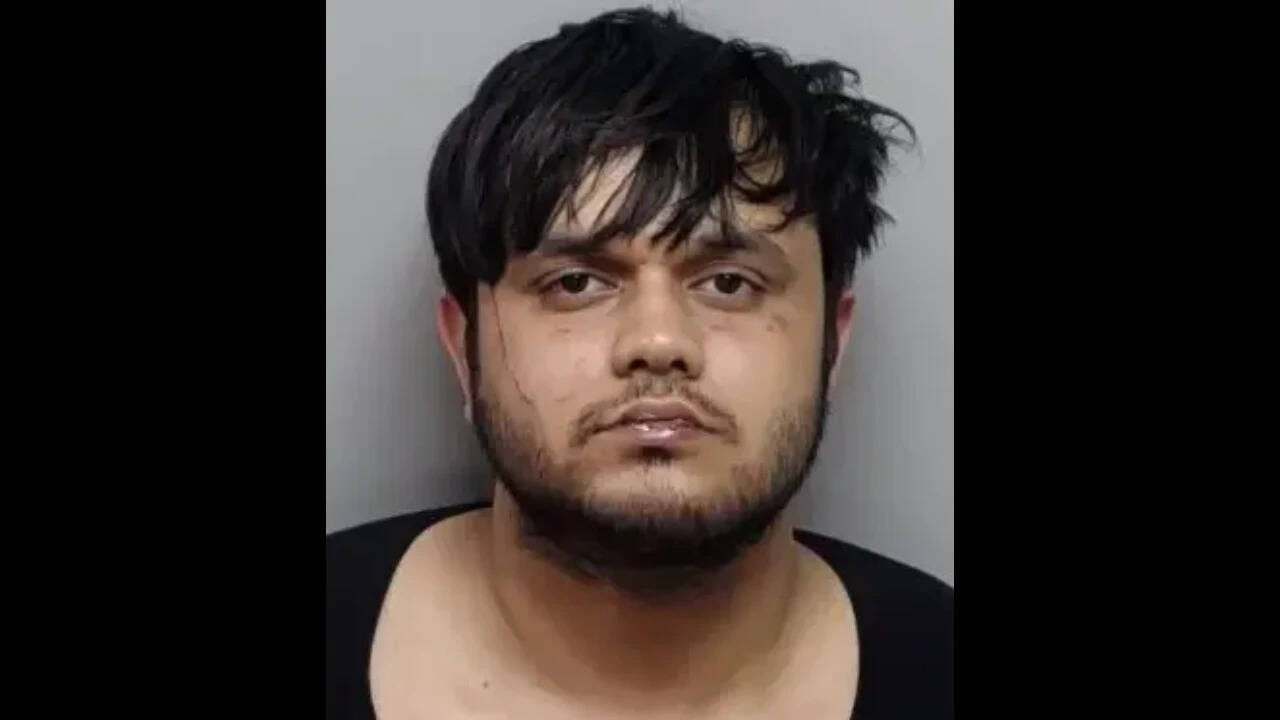
Public safety and immigration enforcement just collided in a terrifying way in Bryan, Texas. When 25-year-old Indian national Sumit Kumar was arrested for a brutal assault on a woman and her child, it wasn't just another police blotter entry. It was a failure of the systems designed to track who stays in this country and why.
You expect the visa process to be a safeguard. You're told that if someone loses their legal right to be here, they leave. But Kumar stayed. He didn't just stay; he became a violent threat to a mother and her young child in a quiet Texas neighborhood. This case isn't just about one man’s crimes. It’s about how someone with a revoked student visa can roam free for months before a tragedy forces the law to catch up.
What actually happened in Bryan Texas
The details of the assault are chilling. According to the Bryan Police Department, the attack occurred at an apartment complex where Kumar reportedly targeted a woman and her child. This wasn't a simple dispute. Witnesses and police records describe a level of aggression that's hard to stomach. Kumar didn't just hit the woman. He went after her child, reportedly biting the toddler during the struggle.
Think about that for a second. We’re talking about a level of visceral, animalistic violence that suggests a complete break from social norms or a severe mental health crisis. When police arrived at the scene, the situation was chaotic. The victim was rightfully terrified, and the child was injured. Kumar was taken into custody, but the investigation quickly turned from a local assault case into a federal immigration scandal.
The student visa timeline that makes no sense
Here is the part that should make your blood boil. Investigators found that Sumit Kumar’s student visa was revoked back in 2025. By the time he was arrested for this attack in 2026, he had been living in the United States illegally for a significant amount of time.
Why was he still here? That’s the question nobody in the federal government seems to want to answer clearly.
- 2025: The visa is officially revoked.
- The Gap: Months pass with zero contact from immigration authorities.
- 2026: A violent assault occurs, finally putting him back on the radar.
The system is supposed to work like this: a school reports a student is no longer enrolled, or the State Department finds a reason to pull the visa. That information goes to Immigration and Customs Enforcement (ICE). Then, supposedly, action is taken. In Kumar's case, that chain broke. He stayed under the radar because the radar wasn't even turned on. It’s a recurring nightmare for local law enforcement who have to pick up the pieces when federal oversight fails.
Why student visa oversight is a mess right now
We have over a million international students in the U.S. at any given time. Most are here to work hard and get an education. But the administrative burden of tracking them is massive, and it’s clearly failing. When a visa gets revoked, there isn't a "bounty hunter" or a dedicated task force that immediately knocks on a door.
Honestly, the system relies on "self-deportation" or luck. If you don't get pulled over for a broken taillight or, in this case, commit a violent felony, you might stay here for years without a single person checking your status. This "ghost status" is exactly how Kumar remained in Texas.
The Bryan Police Department did their job. They responded to the call and made the arrest. But they shouldn't have been put in that position. If the 2025 revocation had been followed by actual enforcement, that mother and child wouldn't have been traumatized. We’re seeing a pattern where "revocation" is just a word on a digital file rather than a physical removal from the country.
Criminal charges and the looming ICE hold
Kumar is currently facing multiple charges in Brazos County. These include injury to a child and assault causing bodily injury. These are serious crimes that carry real prison time in Texas. But the legal layer is complicated by his immigration status.
ICE has placed a "detainer" or an ICE hold on him. This means even if he manages to post bail—which is unlikely given the severity of the charges—the jail won't let him walk out the front door. They’ll hold him until federal agents can pick him up.
But let’s be real. An ICE hold after a violent crime is the bare minimum. It’s the ultimate "too little, too late" scenario. The goal of immigration policy should be prevention, not just cleaning up the mess after a child is bitten and a woman is assaulted. Texas officials have been vocal about this for years. They argue that the state is forced to bear the cost and the physical danger of federal inaction.
The impact on the local community
Bryan isn't a massive metropolis. It’s a community where people expect a certain level of safety. When news broke that an illegal resident with a revoked visa had attacked a child, the reaction was swift and angry. You can't blame them.
People are tired of hearing that the system is "complex." They don't care about the bureaucracy. They care about the fact that a known unauthorized person was able to live in their backyard until he decided to get violent. It creates a culture of fear and distrust that hurts legal immigrants as much as it hurts long-time residents.
What happens next for Sumit Kumar
Kumar's journey through the Texas legal system will be slow. He’ll have to answer for the state charges first. Texas usually doesn't let federal deportation skip the line when there are local victims who deserve justice. He’ll likely face trial, and if convicted, he'll serve his time in a Texas prison.
Only after he finishes his sentence will he be handed over to ICE for formal deportation. This ensures he doesn't just get a free flight home as a "punishment" for his crimes. He’ll stay in a cell, as he should.
How to stay informed and stay safe
This case is a wake-up call for anyone paying attention to local safety and national policy. You need to know what’s happening in your neighborhood.
- Monitor local crime maps: Most Texas departments, including Bryan and College Station, provide real-time data on arrests and incidents.
- Understand detainer policies: Check if your local sheriff's office cooperates fully with ICE detainers. Most in Texas do, but it’s vital to know where your local leaders stand.
- Advocate for better tracking: Support policies that require schools and federal agencies to have a tighter loop on visa revocations.
The attack in Bryan was preventable. That's the hardest pill to swallow. We had the information in 2025. We had the man’s name and his status. We just didn't have the will to act until blood was spilled on a Texas sidewalk. Stop assuming the system is watching out for you. Sometimes, the system is just watching the clock.