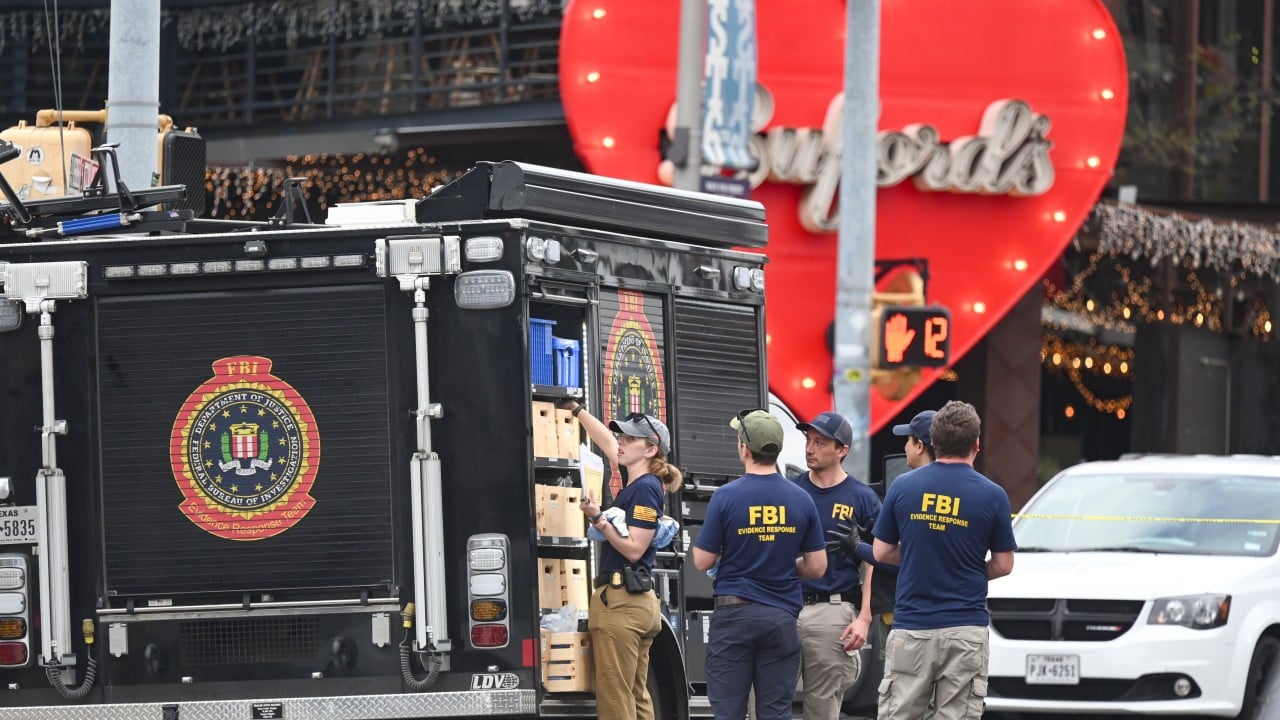
The rapid-fire crack of a handgun inside a crowded Texas bar has left three people dead and fourteen others fighting for their lives, turning a routine night of music and social drinking into a localized war zone. This isn't just another statistic in a violent year. It is a stark indictment of the porous security standards that currently govern the American nightlife industry. When seventeen people are struck by gunfire in a single establishment, the conversation must move past the immediate tragedy and toward the systemic negligence that allows high-capacity violence to occur in spaces meant for recreation.
The shooting occurred just after midnight, a time when crowd density is at its peak and situational awareness is at its lowest. Initial reports suggest a dispute between two groups escalated within seconds, leading to a hail of bullets that struck both intended targets and innocent bystanders. The sheer volume of casualties suggests that the shooter—or shooters—had unfettered access to the building with high-capacity magazines, bypassing whatever "security" measures were supposedly in place.
The Myth of the Perimeter
Most bars and clubs rely on what industry veterans call "the theater of safety." You see it everywhere: a tired bouncer with a handheld metal detector wand that he barely uses, a velvet rope that provides no physical barrier, and a security team more interested in checking IDs for underage drinking than scanning for concealed threats.
This incident proves that the current perimeter model is broken. In many Texas venues, the legal right to carry a firearm complicates the role of private security, creating a gray area where staff are often hesitant to challenge patrons. However, when a venue serves alcohol, the legal and moral responsibility to maintain a weapon-free environment becomes absolute. The fact that a firearm entered this establishment, was discharged multiple times, and resulted in a double-digit casualty count means the security protocol didn't just fail—it didn't exist in any meaningful capacity.
Effective security requires more than just presence. It requires a tiered defense.
Why Bouncers Aren't Security Guards
There is a fundamental difference between a "cooler"—someone hired to break up fistfights—and a trained security professional. Most nightlife venues hire for size rather than skill. They want a large man at the door to intimidate the rowdy, but they rarely invest in personnel trained in de-escalation, behavioral detection, or advanced screening techniques.
In the Texas shooting, the transition from a verbal spat to a mass casualty event likely happened in under sixty seconds. Professional security is trained to spot the "pre-attack indicators": the aggressive posturing, the hand reaching for the waistband, the targeted scanning of the room. When venues prioritize the "vibe" of the front door over the safety of the interior, they invite disaster. They are trading human lives for a faster check-in line.
The Economic Pressure of Safety
We have to look at the ledgers. The profit margins for independent bars are razor-thin, and security is often the first line item to be slashed when the budget gets tight. A professional-grade security team, complete with modern screening technology like AI-augmented weapon detection or even consistent, high-quality wanding, costs thousands of dollars a month.
Many owners choose to roll the dice. They gamble that "it won't happen here" because the alternative is a significant hit to their bottom line. But as we see in the aftermath of this Texas massacre, the cost of a shooting—legal fees, insurance hikes, wrongful death lawsuits, and the inevitable permanent closure of the business—far outweighs the investment in preventative measures.
The Liability Loophole
Currently, the legal system often protects venue owners through a maze of LLCs and limited liability clauses. Unless a prosecutor can prove "gross negligence," many owners walk away from these tragedies with their personal finances intact, while the victims are left with lifelong medical bills or funeral costs.
Until the cost of a security breach becomes higher than the cost of maintaining a secure environment, the industry will not change. We need a fundamental shift in how we categorize "foreseeable harm" in nightlife. If you operate a high-volume establishment in an area with rising crime rates, a shooting is no longer a "freak accident." It is a statistical probability that you have a duty to mitigate.
Crowding as a Force Multiplier for Death
Fourteen people were injured in this incident, many of them likely caught in the crossfire or trampled in the ensuing panic. Modern bars are often death traps by design. They are dark, loud, and intentionally overcrowded to create an atmosphere of popularity and energy.
When the first shot is fired, these design choices become lethal.
- Acoustic Overload: Loud music masks the sound of the first few shots, delaying the "flight or fight" response of the crowd.
- Obstacle Courses: Tight seating, narrow hallways, and "VIP" sections create bottlenecks that prevent rapid evacuation.
- Poor Lighting: Shadowy interiors make it impossible for victims to identify the source of the threat or find emergency exits.
In the Texas bar, the panic was almost certainly as dangerous as the lead. When a crowd of hundreds tries to squeeze through a single exit point, the physics of a "crowd crush" take over. We saw it at the Station Nightclub fire, and we see it again here in the context of a shooting.
The Failure of State and Local Oversight
The Texas Alcoholic Beverage Commission (TABC) and local law enforcement agencies have the power to pull licenses from "disorderly houses." Yet, time and again, venues with a history of police calls are allowed to remain open until a body count forces a reaction.
Oversight is currently reactive rather than proactive. We wait for the yellow tape to go up before we ask why a bar had twenty-five police visits in the last calendar year. There is a "blood at the door" policy in effect: until someone dies, the music keeps playing. This is a failure of governance that transcends the gun control debate. It is about the basic regulation of public assembly.
The Myth of the Good Samaritan
In the immediate aftermath of these events, there is often talk of "good guys with guns" stepping in. In a dark, crowded bar filled with screaming people and strobe lights, an armed civilian often adds to the chaos rather than resolving it. Police arriving on the scene cannot distinguish between the original shooter and a patron trying to help.
The focus must remain on prevention at the point of entry. Once a gun is inside a crowded room and the safety is off, there are no "clean" outcomes.
Rebuilding the Standard of Care
If the nightlife industry wants to survive the growing public anxiety over mass shootings, it must adopt a new standard of care. This isn't about turning every neighborhood pub into a fortress, but it is about acknowledging that the world has changed.
- Mandatory Electronic Screening: Handheld wands are no longer sufficient. Venues with a capacity over a certain threshold should be required to use modern detection systems that don't slow down the line but do catch heavy metal.
- Verified Training: Security staff must hold certifications in active shooter response and crowd management, not just a "guard card" obtained through a four-hour online course.
- Architectural Accountability: Fire marshals and city planners must enforce "clear path" mandates that account for mass flight scenarios, not just fire evacuations.
The families of the three dead in Texas are currently grieving, and the fourteen injured are starting a long, painful road to recovery. They are the victims of a shooter, yes, but they are also victims of an industry that has grown complacent.
We can no longer treat these events as unavoidable tragedies of modern life. They are the predictable results of a security infrastructure that is stuck in the 1990s while the threats have evolved into the 21st century. Every bar owner who reads about the Texas shooting and doesn't immediately audit their front-door policy is complicit in the next one. Stop waiting for the laws to change and start hardening the target before the next "dispute" turns into a massacre.