Shifting oceanographic baselines alter coastal ecosystems through predictable hydrodynamic mechanisms rather than random ecological anomalies. When the El Niño Southern Oscillation enters a positive phase, the relaxation of equatorial trade winds halts the normal upwelling of nutrient-rich, cold deep water along the Pacific coast. This thermal shift creates an extended coastal holding pattern where subtropical isotherms migrate poleward. Apex predators and pelagic reptiles do not appear off the California coast by coincidence; they track physiological comfort zones dictated by strict metabolic thresholds. Deconstructing this phenomenon requires analyzing the physical drivers of water column warming, the thermal preferences of displaced species, and the structural alterations inflicted on local marine food webs.
The Hydrodynamic Engine of Coastal Warming
The California Current System normally functions as an eastern boundary current characterized by persistent equatorward winds. These winds induce Ekman transport, pulling cold water from depth to replace surface waters pushed offshore. This upwelling delivers dense concentrations of nitrates, phosphates, and silicates into the photic zone, fueling primary production centered on diatoms and dinoflagellates.
During a positive El Niño phase, the disruption of atmospheric pressure gradients across the equatorial Pacific dampens these coastal wind stresses. The immediate consequence is a collapse of the upwelling index. Without the continuous injection of cold sub-surface water, solar radiation and horizontal advection from the south elevate sea surface temperatures by several degrees above historical baselines.
This thermal anomaly triggers three distinct systemic changes:
- Thermal Expansion: Water volume expands as temperature rises, compounding sea level anomalies along the coastline.
- Stratification: The water column develops a rigid thermocline, preventing vertical mixing and starving the lower trophic layers of foundational nutrients.
- Isothermal Displacement: Subtropical water masses push northward, extending boundaries that typically terminate off Baja California into the Southern California Bight and Central California waters.
Physiological Drivers of Marine Migration
Marine ectotherms and regional endotherms operate within hard metabolic parameters. When the thermal envelope of a habitat shifts, species must either relocate to maintain homeostasis or experience metabolic stress. The appearance of pelagic species far outside their historical ranges represents an active search for optimal ambient temperatures and prey fields.
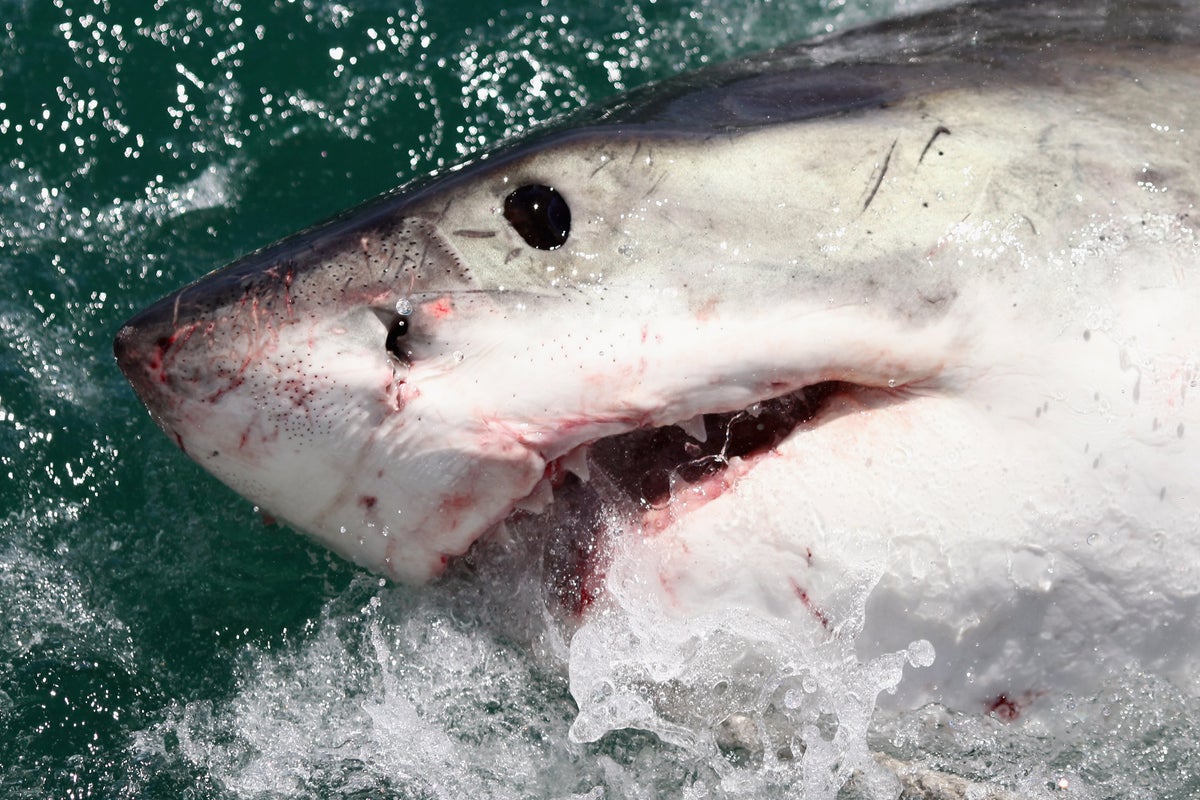
Juvenile white sharks demonstrate a narrow thermal preference, typically seeking nearshore waters ranging between 16 degrees Celsius and 22 degrees Celsius. Historically, these nursery grounds were restricted south of Point Conception. When thermal anomalies expand northward, the physical boundary of this comfort zone shifts, allowing juveniles and sub-adults to track these isotherms into Monterey Bay and structural embayments further north.
Conversely, yellow-bellied sea snakes represent an obligate tropical marine reptile. Incapable of sustaining core body functions in sustained cold water, these snakes are entrained by warm-core eddies and poleward currents. Their presence in higher latitudes indicates that surface current velocities exceed the organism's directional swimming capacity, trapping them in temporary thermal extensions until cooling autumn currents induce metabolic shutdown.
Trophic Cascades and Ecological Compression
The influx of non-resident species is secondary to the structural reorganization of the existing food web. Primary productivity reductions at the base of the marine ecosystem ripple upward through the trophic levels.
[Suppressed Upwelling]
       │
       ▼
[Decline of Phytoplankton & Zooplankton]
       │
       ▼
[Forage Fish Dispersal & Starvation]
       │
       ▼
[Pinniped Nutritional Stress & Habitat Compression]
As zooplankton biomass contracts due to nutrient starvation, forage fish such as anchovies and sardines either migrate or experience recruitment failures. Apex predators and marine mammals dependent on these forage species face immediate energetic deficits. Pinnipeds, including California sea lions and harbor seals, are forced to execute deeper, longer foraging dives, resulting in elevated pup mortality and increased coastal strandings.
This dynamic generates habitat compression. Coastal ecosystems shrink as species crowd into narrow bands of remaining suitable habitat, elevating localized competition intensity. Pelagic predators moving into these zones encounter compressed prey concentrations, frequently heightening the visibility of wildlife near recreational human corridors without signifying an absolute population explosion.
Mitigation and Predictive Operational Monitoring
Understanding marine shifts requires transitioning from reactive observation to predictive oceanographic modeling. Coastal resource managers must monitor real-time subsurface temperature profiles, nitrate sensor arrays on autonomous underwater gliders, and upwelling indices rather than relying strictly on surface observations.
Long-term resilience depends on establishing dynamic ocean management frameworks. Traditional static marine protections fail when the biological actors constantly shift across latitudinal boundaries in response to thermal forcing. Policy structures must account for fluid ecological baselines where tropical vagrants and displaced predators become recurring operational variables during positive phase oscillations.