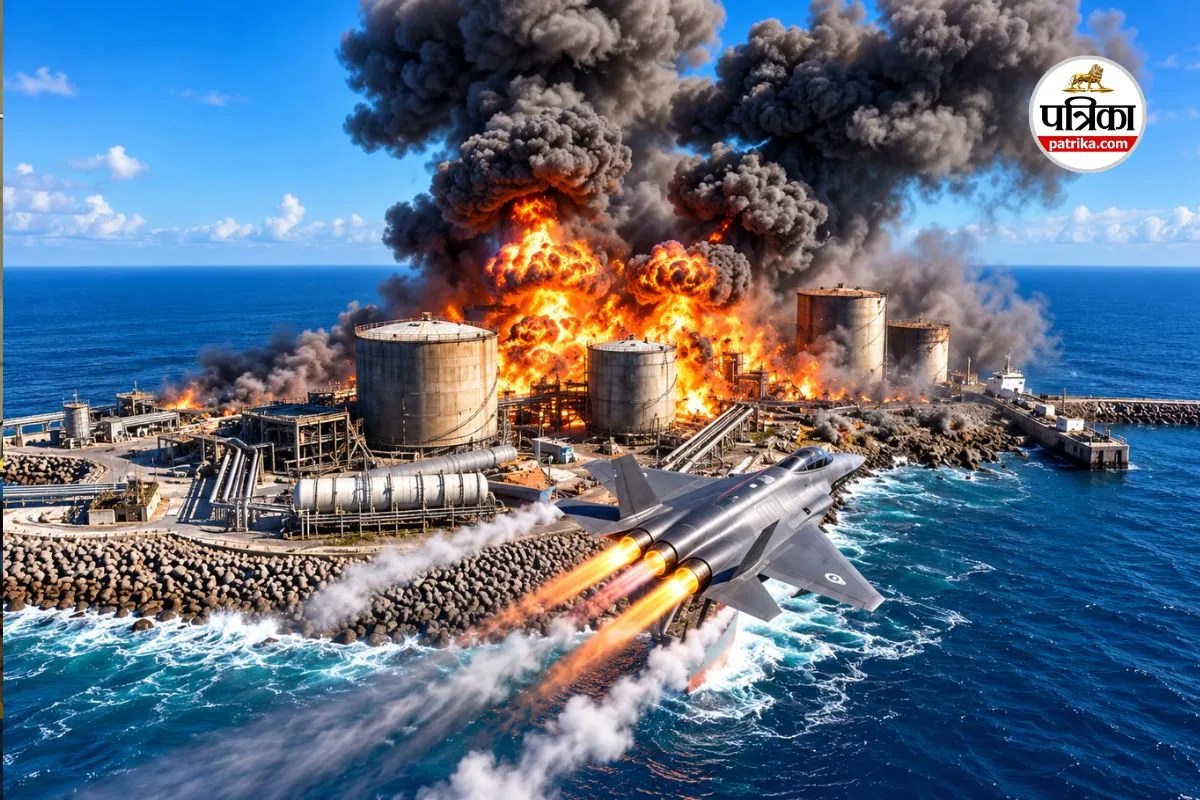
Every time Washington whispers about hitting Iran, the armchair generals crawl out of the woodwork to hyperventilate over Kharg Island. The lazy consensus in media and policy circles follows a predictable script. Donald Trump posts a cryptic warning or social media jab, the headlines scream about oil terminals and ninety percent of Iran's crude exports going up in smoke, and global markets suffer a collective coronary.
It is geopolitical theater at its finest, and everyone is buying ticket after ticket.
I have spent two decades watching energy traders panic over every rhetorical flash in the pan, and the collective inability of the commentariat to separate panic porn from crude realities is staggering. Kharg Island is treated like a magic choke point button that, once pressed, brings Tehran to its knees while sending Brent crude to two hundred dollars a barrel.
The narrative is clean, terrifying, and fundamentally wrong.
Strip away the hysteria, and you find a web of structural redundancies, Chinese purchase channels, and military realities that make a total obliteration of Kharg Island far less appealing—or effective—than the pundits pretend. We are looking at a static target through a twentieth-century lens while the actual plumbing of global energy has completely re-routed.
The Flawed Architecture of the Kharg Panic
To understand why the obsession with Kharg Island is lazy analysis, look at what the island actually is. It handles the vast majority of Iran's maritime oil exports, true. It sits in the Persian Gulf as a massive concrete and steel anchor for tankers. For decades, standard military contingency planning treated it as the ultimate economic jugular vein.
The mistake lies in assuming Iran spent the last forty years standing still.
Tehran watched the Tanker War of the 1980s. They watched every subsequent American buildup. Do you honestly think a sanctioned regime with an economy running on survival instinct relies on a single point of failure without backups? That is amateur-hour thinking.
Iran diversified its export infrastructure years ago. The Goreh-Jask pipeline, for instance, bypasses the Strait of Hormuz entirely, running crude from Khuzestan province down to the Gulf of Oman. While its full nameplate capacity is often debated by skeptical petroleum engineers, the strategic pivot is real. Crude moves through smaller ports, overland truck routes into neighboring states, and an army of dark fleet tankers that operate with transponders off, shifting cargo in murky mid-ocean transfers.
When analysts claim that hitting Kharg instantly blinds Iran's revenue stream, they ignore the porous nature of modern sanctions evasion. Smuggling oil at scale is an art form perfected by nations cut off from SWIFT. You do not stop a hemorrhage by slapping a bandage on one vein while the patient is bleeding through a dozen hidden arteries.
The Chinese Buyer Safeguard
Let us talk about the customer base, because nobody in the mainstream media wants to name the elephant in the room: Beijing.
Who do you think is buying the vast majority of that sanctioned Iranian crude? It is not Europe. It is independent Chinese refiners—the so-called teapot refineries—who snap up discounted barrels denominated in currencies other than the US dollar.
Imagine a scenario where Washington successfully craters the facilities on Kharg Island. You do not just hurt Tehran; you instantly shock the energy diet of the second-largest economy on earth. Beijing's appetite for cheap Iranian oil is not a charitable endeavor; it is an economic lifeline designed to lower input costs for domestic manufacturers.
If you take Kharg offline permanently, you force China to look elsewhere for heavy sour crude, driving up global spot prices and infuriating a superpower adversary over a target that offers diminishing returns. The United States has to weigh the tactical satisfaction of crippling an Iranian export hub against the strategic nightmare of a retaliatory economic crunch felt directly at gas pumps across America during an election cycle. Spoiler alert: politicians prefer noise to genuine economic self-harm.
The Retaliatory Symmetry Nobody Mentions
The primary reason Kharg Island remains untouched through decades of escalating tension is not a lack of military capability. Washington has bunker-busters and precision strike platforms that could turn the terminal into a parking lot before lunch.
The deterrent is not Iranian air defense. The deterrent is math.
If Iran's primary export terminal goes up in flames, Tehran does not simply fold its cards and apologize. They retaliate where the asymmetric advantage actually favors them. That means asymmetric disruption across the Persian Gulf, mining the Strait of Hormuz, and unleashing regional proxies against energy infrastructure in allied Gulf states like Saudi Arabia and the United Arab Emirates.
An attack on Kharg is an open invitation to turn the entire Persian Gulf into a burning lake of $150 oil.
For all the tough talk about crippling sanctions enforcement, neither Washington nor Riyadh wants to see Abqaiq or the Ras Tanura refinery in Saudi Arabia take incoming drone fire. The economic collateral damage of a tit-for-tat energy war dwarfs whatever damage is inflicted on Iran. The risk managers in corporate boardrooms and central banks know this, which is why market reactions to these threats have grown increasingly muted over time. Smart money knows a bluff when it sees one.
The Wrong Question
People asking whether Trump or any other leader will order the strike on Kharg are asking the wrong question entirely.
The real question is why we continue to treat regional posturing as a blueprint for kinetic reality. Economic warfare has shifted from blowing up concrete docks to cyber sabotage, financial encirclement, and shadow fleet tracking. Kinetic strikes on oil infrastructure belong to a bygone era of total war that major powers avoid precisely because the blowback is uncontrollable.
If you want to understand why Iran's regime survives every pressure campaign, stop looking at satellite imagery of Kharg Island and start looking at the tenacity of black-market supply chains.
Kharg Island is a symbol, not a silver bullet. Treat it as anything more, and you are falling for the oldest propaganda trick in the book.