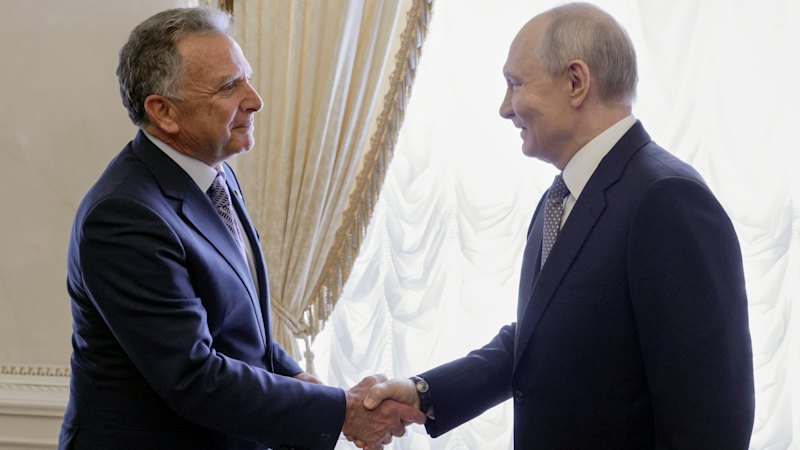
Resuming three-way talks among the United States, Russia, and Ukraine sounds like a clean reset after months of deadlock. In reality, it's a high-wire act where every side shows up with a different map and a different clock.
When Moscow signals readiness to sit down for trilateral negotiations, you have to read past the headline. Diplomacy in this war hasn't moved in a straight line. Talks froze earlier in the year after the February Geneva round, got tangled up in wider regional shocks, and only crawled back toward motion in November through meetings in Abu Dhabi, Moscow, Berlin, and high-level summits involving Washington, Beijing, and European capitals. Read more on a connected subject: this related article.
Even when negotiators agree to meet, they aren't agreeing on what the meeting is for. Kyiv wants durable security guarantees that stop another invasion cold. Moscow demands firm limits on NATO and territorial concessions that Ukraine refuses to hand over. Washington, working through envoys like Jared Kushner and Steve Witkoff alongside shifting political calculations at home and in Europe, has pushed to restart formats and find common ground, yet basic cease-fire terms remain fiercely contested.
What Three Way Talks Actually Mean on the Ground
A trilateral table looks neat on paper. Three parties, one room, a path to de-escalation. Additional reporting by BBC News explores similar views on this issue.
Out here in the real world, diplomatic posture and battlefield pressure run side by side. Negotiators trade talking points in capitals or Gulf cities while drones, missiles, and strikes on critical infrastructure keep hitting both sides. Mid-November saw intense diplomatic outreach—including talks in Abu Dhabi, envoys meeting in Moscow and Berlin, and high-profile diplomatic exchanges—right alongside heavy strikes, power-grid fears heading into winter, and renewed attacks on the Kerch Bridge linking occupied Crimea to mainland Russia.
That collision shapes everything at the table. Neither side wants to negotiate from a position that looks like weakness on the ground. Moscow insists on demands involving Ukraine's non-aligned status and territory in the Donbas, while Kyiv argues that paper promises without real enforcement won't protect its survival.
Why Timing Around Elections and Winter Matters So Much
Diplomats love to pretend talks happen in a vacuum. They don't.
Calendars drive leverage. Around the early November U.S. congressional elections, signals from Moscow and Washington shifted as officials weighed how domestic political shifts might affect aid, bargaining power, and urgency. Add winter weather and energy grid pressure into the mix, and the stakes rise fast—especially when international nuclear regulators warn that damage to Ukraine's power system raises nuclear safety risks during cold months.
From my perspective covering foreign policy and conflict negotiation, announcements that a side is "ready" to talk usually serve two purposes at once. First, they test how other capitals react. Second, they buy breathing room or shift blame if talks stall again. Readiness to sit in a room isn't the same as readiness to compromise.
The Biggest Stick Points Nobody Can Brush Aside
If you strip away the diplomatic polish, three fault lines keep blocking a durable settlement:
- Territory and sovereignty: Moscow has pushed for territorial demands—including parts of Donetsk and Luhansk—while Kyiv rejects surrendering sovereign land under pressure.
- Security guarantees vs. NATO boundaries: Ukraine and its partners look for strong, enforceable protection against future aggression, whereas Russian officials flatly reject NATO membership or NATO-style formulas for Ukraine.
- Europe's seat at the table: European leaders have insisted that decisions affecting European security can't be settled over their heads, while the format and role of European envoys remain a point of friction.
You can see how fragile that balance is. In November rounds, negotiators reported movement on practical or humanitarian items like prisoner exchanges and ongoing agenda work, yet a broad cease-fire remained out of reach. Prisoner swaps matter hugely to families and show a minimal channel still functions, but they don't settle borders or long-term deterrence.
Common Mistakes When Reading Peace Headlines
People who follow this conflict closely tend to fall into two traps. One group treats every new round of talks as an imminent peace deal. The other dismisses every meeting as pure theater.
Both miss the nuance. Talks can produce real, limited outcomes—like prisoner releases or clearer negotiating tracks—without solving the core political clash. Analysts who watch negotiations for a living often point out that protracted conflicts rarely end in a single dramatic breakthrough. Usually, there's a long stretch of incremental, frustrating back-and-forth before any larger framework takes shape.
How to Follow the Next Round Without Getting Whiplash
Don't judge a diplomatic push by how loud the word "ready" sounds in a press release. Watch the concrete details instead.
- Check the format and participants: Look at whether talks stay bilateral, trilateral, or pull in European representatives directly.
- Separate humanitarian steps from political terms: Prisoner swaps and technical contacts differ sharply from agreements on cease-fires, territory, or security guarantees.
- Track battlefield and infrastructure pressure: Watch energy grid resilience, air defenses, and major transit routes like the Kerch Bridge, since real-world leverage shapes what happens behind closed doors.
- Rely on primary reporting and established outlets: Cross-check official statements against reporting from outlets like AP News, Al Jazeera, The Guardian, and RFE/RL so you catch what was actually agreed to versus what was merely proposed.
Keep your expectations grounded, read the exact wording of any stated conditions, and pay attention to what changes on the ground rather than just at the podium.